- Home
- Face Exercises
Facial Exercises for Sagging Face: How to Lift and Firm Naturally

A full-face routine to rebuild structure and maintain results over time
Facial exercises became my foundation for improving overall face sagging.
As I aged, I noticed softer contours and less definition — not just in one area, but across the cheeks, jawline, and neck. Instead of adding more products, I focused on rebuilding muscle tone with a structured full-face routine.
On this page, I’ll show you how that routine works, what kind of lift is realistic, which exercises I used and how I maintain results.
Like any muscle routine, consistency is what makes facial exercises work — building tone and support over time.
 Before picture in my early 50s. In the after picture I'm about 63 years old.
Looking for something specific?
If you want to go deeper into one area, these guides break it down:
• Do face exercises really work
• How facial muscle toning works
• Facial exercises vs Botox comparison
Why your face starts to sag
The changes start deeper than the skin. It’s not just skin laxity — the structure underneath shifts over time.
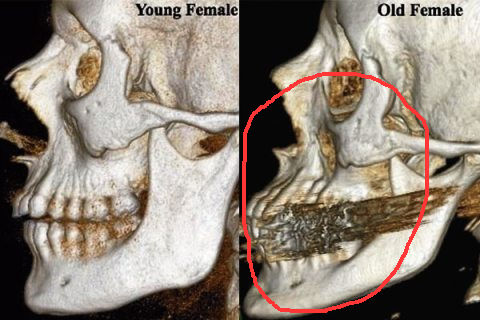
I had no idea our facial bones changed this much — and most people don’t either.
Here's what happens:
- Bone Shrinkage: The facial bones lose volume, reducing the support they provide to your skin and soft tissues.
- Fat Shifting: Fat pads in your face shrink and move, creating hollows in some areas while causing sagging in others.
- Loss of Elasticity: Collagen and elastin, the proteins that keep skin firm and bouncy, gradually break down over time.
These changes often lead to sagging cheeks, jowls, and double chins. If fullness under the chin is part of the problem, see how to lose a double chin for targeted tips and exercises.
Starting facial exercises early can help support overall facial structure — especially cheeks, jawline, and neck.
Note: Many people don't realize that a lot of what causes sagging in the face also affects the neck. I break down the causes of a sagging neck and what’s really going on there.
Because sagging has multiple causes, I approach it in layers — and muscle support is the starting point.
How facial exercises help
Facial exercises help by building muscle support under the skin — especially cheeks, jawline, and neck. If your lower face is where you’re noticing the biggest change, I’ve also shared a few jowl exercises that help firm that area.
One thing to note: the neck is one of the hardest areas to firm up at home. But I’ve found a few moves that have helped me improve that turkey neck look. And because the skin there matters too, I’ve also shared what I do for how to tighten sagging neck skin at home.
Over time, these can help make your face look firmer and more defined.
Think of it like your body: you build support first, then you maintain it. A full-face routine rebuilds structure, then a simpler plan keeps it steady.
Here’s my honest take — what exercises help with, and what they don’t change.
What exercises can do
- Improve muscle tone and lift in areas like cheeks, jawline, and neck
- Help features look a little more defined over time
- Support better circulation (so skin can look more awake)
What they can’t do
- Replace volume that’s been lost from bone/fat changes
- Permanently tighten very loose skin
- Create a dramatic “facelift” result
Why consistency matters
Muscles respond to regular training — not occasional bursts. Small sessions done consistently beat long routines done once in a while.
Do face exercises really work?
Yes — if you stay consistent, facial exercises can make a visible difference because they strengthen the muscles under the skin (especially cheeks, jawline, and neck). That added support can help your face look a little firmer and more defined over time.
If you want to see what kind of improvement may be possible, take a look at these jowl before and after photos.
A study in JAMA Dermatology found that 20 weeks of facial workouts improved facial contours and made participants look younger on average.
If you want the deeper “how it works” breakdown (and what’s realistic), these two pages help:
- Facial Muscle Toning – science + how it works
- Do Face Exercises Work? – realistic expectations
Tip that kept me motivated: early changes can be subtle, so I take pics (same lighting/angle) every 2–3 weeks — not just rely on what I see in the mirror.
In my case, I saw the most dramatic changes between months 6 and 9 — especially along my jawline and neck.
Note: If you’re comparing this approach to injectables, I walk through the pros and cons here.
Which facial routine is right for you?
Not all facial exercise programs are created equal. An effective program should:
- Target All Major Facial Muscles: A comprehensive approach ensures balanced results and prevents an overdeveloped look in certain areas.
- Incorporate Massage Techniques: Massage stimulates circulation and collagen production, enhancing the benefits of exercise.
- Be Easy to Follow: A simple routine encourages consistency, which is key to achieving long-term results.
- Avoid spot-training only: it’s fine to focus on an area that bugs you — but results usually look better when the whole face/neck gets basic support too.
My long-term facial exercise results
A sagging face is often marked by softer cheeks, jowls, and less definition through the mid and lower face. Over time, this can make features look bottom-heavy and tired.
I focused on rebuilding muscle tone with a structured full-face routine — not just treating the surface. Below is how my face looked in my early 50s compared to my early 60s after staying consistent.
If jowls are really the main thing you’re noticing, you might want to take a look at my jowl lift without surgery guide—it walks through a few simple ways I approach this area at home.
 My face in my early 50s compared to age 63 after consistent facial exercises.
In my early 50s, my skin looked dull despite regular exfoliation and expensive skincare. The structure underneath felt softer too.
By my early 60s, stronger facial muscles created smoother contours and reflected light more evenly — giving my skin a healthier glow.
Note: Some studies suggest facial exercises may improve skin function. Research is still limited, and experts aren’t fully sure how it works.
The routine I used - Targeted muscles
The chart below shows all the muscles used during the workout. In the first 6–12 months, it's recommended to do the routine about three times a week—it takes less than 15 minutes per session.
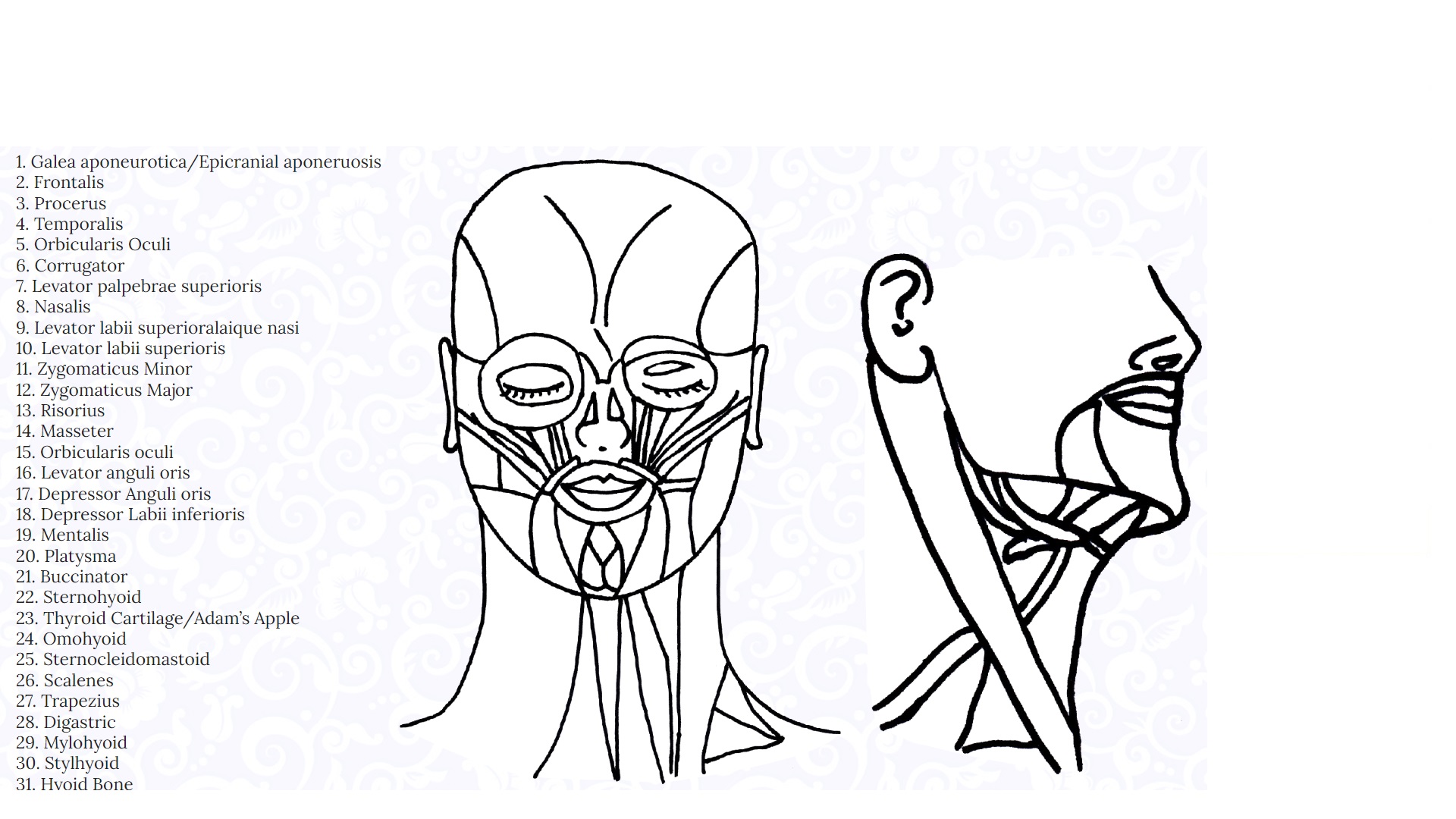
 Courtesy of Carolyn's Facial Fitness, LLC
This is the exact system I followed during my first year. If you’re curious about the full program and how it’s structured, you can view the details here.
If you want to see exactly what changed over time, I shared my full results (with photos from January to August) in my Carolyn’s Facial Fitness review.
Takeaway:
Facial exercises changed the way my face looked and felt—and honestly, it was one of the best low-cost investments I’ve made in my skin. If you’re dealing with sagging cheeks, jowls, or dull skin, just know that you can make a difference with consistent effort and the right routine.
Quick note on skincare:
I treat facial exercises like the “structure” step, and skincare as the “finish” step. If you want my simple routine (hydration, gentle exfoliation, and the ingredients I like for mature skin), I keep it all here: Tighten Naturally.
The key is to stick with it. Start small, be patient, and support your results with a few simple skincare habits like exfoliation, hydration, and facial massage.
FAQs
Q:What causes face sagging?
Q:What causes face sagging?
A: Many factors contribute to facial sagging, but the most important are:
- loss of collagen
- loss of and redistribution of facial fat
- loss of and reabsorption of facial bone mass
The facial fat that once sat high in the cheek area is reduced, and this causes the skin to sag downward. Picture a balloon with some air let out.
Facial bone changes cause the skin to droop too, especially around the eyes and jaw bone area. See this picture on how facial bone change with age.
Eventually, these change affect the shape of our face. The face tends to get bottom-heavy (i.e., droopy cheeks, jowls, and double chin) as time goes on.
Q: Some massage therapists like to use a jade stone roller as a form of massage. Which face rollers do you suggest for a sagging face?
Q: Some massage therapists like to use a jade stone roller as a form of massage. Which face rollers do you suggest for a sagging face?
A: Personally, I like to use my hands. The index finger, middle finger, and ring finger provide enough gentle pressure to stimulate lymph nodes, massage face muscles and is a great way to relax and reduce a lot of tension in the face and neck. For best results, make circular motions using firm pressure. Start at your jowls and massage in an upward direction along the sides of your face. Make sure to apply a little face cream or face serum, so you're not tugging on the skin. Click here to see a video of the Sagging Skin Face Massage.
Q: How does facial massage help sagging skin?
Q: How does facial massage help sagging skin?
A: A face massage helps increase blood flow and helps stimulate fibroblast cells, improve connecting tissues and increase collagen and elastin... All necessary for healthy, firm skin tone. We're not talking about results like a facelift, but regular facial massages helps keep good skin tone and lessen age related sagging.
Q: How does a jade roller or gua sha stone help firm up facial skin?
Q: How does a jade roller or gua sha stone help firm up facial skin?
A: These devices can help improve and drain the lymphatic system. As we get older, our faces tend to hold more fluid around the lower half of our face, making our faces look saggy and bloated. A regular facial massage can help slim and contour the face and neck area - giving you a firmer look
Q: Does Botox help with sagging cheeks?
Q: Does Botox help with sagging cheeks?
A: Botox is not typically used to address sagging cheeks. Botox (Botulinum toxin) is a neurotoxin that is commonly used for cosmetic purposes to reduce the appearance of wrinkles and fine lines by temporarily paralyzing specific facial muscles. It is commonly used for areas such as the forehead, between the eyebrows (glabellar lines), and around the eyes (crow's feet).
Sagging cheeks, on the other hand, are usually caused by a loss of skin elasticity and volume, which occurs naturally with aging. To address sagging cheeks, other treatments like dermal fillers, fat transfers, or surgical procedures (such as facelifts) are typically recommended.
Dermal fillers, like hyaluronic acid-based fillers, are commonly used to restore lost volume in the cheeks and lift the sagging skin. These fillers help to plump up the cheeks, providing a more youthful and lifted appearance.
Q: How long does it take for face skin to tighten when using face exercises?
Q: How long does it take for face skin to tighten when using face exercises?
A: That really depends on your age and skin condition. But, it can at least a few months before you start to see any results. More results can be seen up to 12 months later. It takes time, but it's something you just do on a weekly basis.
Q: What are the best essential oils for sagging skin? I've read that neroli oil and lavender oil have skin tightening properties, but I'm not sure how to use them since I have very sensitive skin.
Q: What are the best essential oils for sagging skin? I've read that neroli oil and lavender oil have skin tightening properties, but I'm not sure how to use them since I have very sensitive skin.
A: Essential oils won't lift saggy skin, but keeping dry skin hydrated can help improve the appearance of wrinkles and skin elasticity. Lavender, frankincense, and Neroli oil have antifungal, antioxidant, and antibacterial properties, but like all essential oils, they are very concentrated. You should dilute them and make your own essential oil blend by mixing a drop or two of these essential oils with carrier oils (like coconut oil or jojoba oil).
Additional Reading:
Facial Toning Benefits Over 40
Face Exercise - Key Tips for Success
Facial Exercises for Fuller Cheeks
Facial Exercises VS. Botox: Pros and Cons
Have a question or want to share your experience?

I'd love to hear from you! Visit my Questions & Comments page to ask a question, share a tip, or tell me what's worked for you.
Stay Connected with Me
Want to see what I’m up to? I’ll keep you posted on new products I’m trying, little tricks I’ve discovered, new finds, and a few personal updates too.

About the Author:
Linda Robison is a Certified Facial Fitness Specialist and founder of Anti-Aging Beauty Zone, where she shares practical tips, products, techniques, and at-home options for women over 40. She personally tests many of the methods she writes about.
Experience: Linda spent nearly 15 years as an Anti-Aging Health Advisor at the Life Extension Foundation and has over 30 years of experience testing facial anti-aging techniques, including training in Carolyn’s Facial Fitness. Her work has been featured in GB News and Beauty Box Magazine. You can view her background on LinkedIn and follow her on Pinterest.
Found this helpful? Tap the ♡ in the bottom right corner.
FOLLOW OR SAVE

Stay Connected with Me
Want to see what I’m up to? I’ll keep you posted on new products I’m trying, little tricks I’ve discovered, new finds, and a few personal updates too.

Affiliate disclosure: As an Amazon Associate and affiliate for other brands, I may earn a commission from qualifying purchases, at no extra cost to you. [Read Disclosure.] A quick note: I create the content on this site and sometimes use AI tools for writing and images. I review everything for accuracy, and my before-and-after photos are my own.

Anti-Aging Beauty Zone (ABZ): Small Changes, Big Results!
ALL CONTENT COPYRIGHT© 2013-
ALL RIGHTS RESERVED REGARDLESS OF LINKS OR ATTRIBUTIONS
ALL CONTENT COPYRIGHT© 2013-
ALL RIGHTS RESERVED
REGARDLESS OF LINKS OR ATTRIBUTIONS