- Home
- Skincare Guide
- Moisturizers
Antioxidant Facial Moisturizer: How to Choose One That Truly Helps

You’re probably seeing the word antioxidant everywhere on face creams — and a lot of them sound interchangeable. But once you flip the jar over, the ingredient lists often tell a very different story.
An antioxidant-rich face cream is just a moisturizer — but with added ingredients designed to help skin handle daily stress from sun exposure, pollution, dryness, and normal aging.
You’ll see “antioxidants” on a lot of moisturizer labels, but that doesn’t always mean they’re doing much. Some formulas sound great on paper — then leave you wondering why your skin doesn’t feel any different once you start using them.
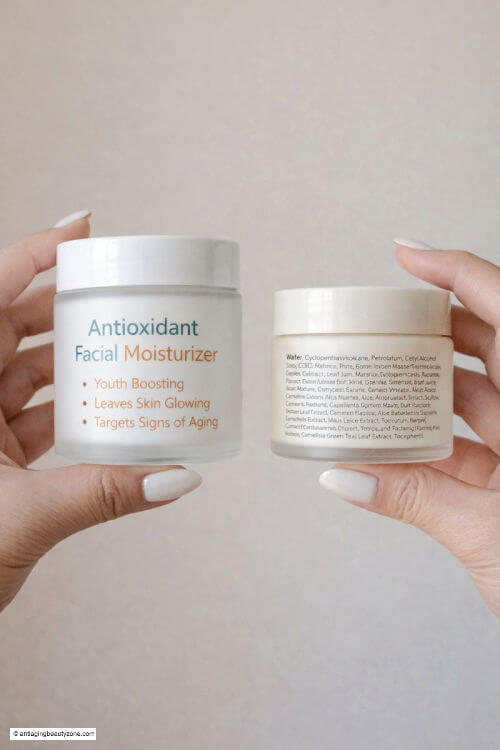
That’s why I focus less on front-label claims and more on what’s actually inside the jar.
Below, I’ll show you how I evaluate these formulas — which ingredients are worth paying attention to, where they should appear on the label, and how to choose a cream that fits your skin type and routine.
How I evaluate antioxidant facial moisturizers
When a jar says “antioxidant,” I don’t assume it’s automatically better. I treat this like a decision guide.
Here’s what I look at every time:
1) Which antioxidants are actually doing the work:
I look for familiar, well-studied ingredients like vitamin C, vitamin E, green tea, CoQ10, and resveratrol — not just trendy words on the front label.
2) Where they show up on the ingredient list:
If antioxidants are buried at the very bottom, they’re often there more for marketing than real support.
3) Whether the base formula fits your skin’s needs:
Antioxidants matter, but how your skin feels usually comes down to barrier support — things like ceramides, fatty acids (omega oils), and humectants like hyaluronic acid or glycerin.
4) Day vs. night use:
For daytime, I pay attention to how well the formula layers and whether it works alongside sunscreen.
5) How it fits into a real routine:
The best moisturizer is one you’ll actually use consistently — especially after gentle exfoliation over 40, retinol, or vitamin C. That’s usually when skin is most ready to drink up hydration. If creams feel heavy on you, you might do better with a light face oil. Here’s my quick guide on how to use face oils without looking greasy.
Which moisturizer is best for your skin right now?
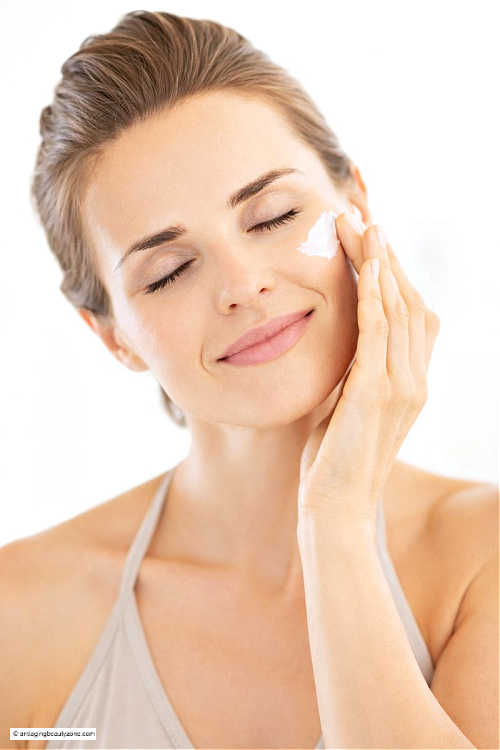
If you’re feeling stuck, don’t overthink it. Pick the description that sounds most like your skin right now — not what it was last year or what a label promises.
If your skin feels dry, tight, or crepey:
A richer, barrier-supporting cream (like omega-3–rich moisturizers) usually works best. Look for ceramides and fatty acids (like omega oils), paired with antioxidants such as vitamin E or green tea. This is often what helps mature skin feel comfortable again.
The skin on your hands can lose moisture even faster than the face, which is one reason they often start to look thin or wrinkled earlier. If you’re noticing this, see my guide on what causes wrinkled hands and how to improve their appearance.
If your skin is sensitive or reactive:
Calmer is better. Shorter ingredient lists, fragrance-light formulas, and gentler antioxidants like green tea or vitamin E usually support the skin without triggering irritation.
If you want a simple daytime option:
Antioxidants support the skin, but they don’t replace sun protection. You can use an antioxidant moisturizer under sunscreen — or choose one with SPF if you’re confident you apply enough. Mineral filters like zinc oxide are common here.
If you prefer cleaner or more minimal formulas:
Organic or “cleaner” formulas can make sense — as long as the antioxidants are present in meaningful amounts and the texture matches your skin’s dryness level. Fewer extras can make it easier to see how your skin actually responds. Here are some organic moisturizers to consider.
ABZ note: there’s no single “best” antioxidant moisturizer. Skin needs change with age, season, stress, and environment. The smartest choice is the one that supports what your skin needs most right now — not what sounds best on the front of the jar.
Final thought
Choosing an antioxidant moisturizer gets much easier when you stop chasing label claims and start matching the formula to how your skin actually feels.
Focus on a solid base first, then add a few proven antioxidants on top.
If your skin feels better — and you’ll actually use it consistently — you’ve made the right choice.
Choosing the right moisturizer also gets easier when you see how it fits into a full anti-aging skincare routine alongside cleansing, exfoliation, and daily sun protection.
Antioxidant moisturizer FAQs
Do have any questions about antioxidant facial moisturizers or moisturizers with sunscreen? Feel free to ask them here at this link.
Q: Do antioxidants moisturize skin?
Q: Do antioxidants moisturize skin?
A: Not directly. Antioxidants help protect skin from oxidative stress, while moisturizers mainly hydrate and support the skin barrier. Many good formulas include both.
Q: What does an antioxidant moisturizer do?
Q: What does an antioxidant moisturizer do?
A: It hydrates and adds antioxidant ingredients that help skin handle everyday stress like sun exposure and pollution. Over time, that can support a brighter, healthier-looking complexion.
Q: Do antioxidants help with wrinkles?
Q: Do antioxidants help with wrinkles?
A: They can help support the look of aging skin by reducing oxidative stress, which plays a role in dullness and uneven tone. Results vary, but they’re a smart add-on to a solid daily routine.
Q: Can antioxidants replace sunscreen?
Q: Can antioxidants replace sunscreen?
A: No. Antioxidants can support skin, but they don’t replace UV protection. If you’re outside, use sunscreen (or a moisturizer with broad-spectrum SPF) as your main protection.
Q: Is hyaluronic acid an antioxidant?
Q: Is hyaluronic acid an antioxidant?
A: Hyaluronic acid is best known as a hydrator because it helps skin hold onto water. Some forms may also have antioxidant activity, but most people use it mainly for hydration.
Question: What should I look for on an ingredient label?
Question: What should I look for on an ingredient label?
Answer: Look for antioxidants you recognize listed higher on the ingredient list, not just at the bottom. That usually means you’re getting enough to matter.
Stay Connected with Me
Want to see what I’m up to? I’ll keep you posted on new products I’m trying, little tricks I’ve discovered, new finds, and a few personal updates too.

About the Author:
Linda Robison is a Certified Facial Fitness Specialist and founder of Anti-Aging Beauty Zone, where she shares practical tips, products, techniques, and at-home options for women over 40. She personally tests many of the methods she writes about.
Experience: Linda spent nearly 15 years as an Anti-Aging Health Advisor at the Life Extension Foundation and has over 30 years of experience testing facial anti-aging techniques, including training in Carolyn’s Facial Fitness. Her work has been featured in GB News and Beauty Box Magazine. You can view her background on LinkedIn and follow her on Pinterest.
Found this helpful? Tap the ♡ in the bottom right corner.
FOLLOW OR SAVE

Stay Connected with Me
Want to see what I’m up to? I’ll keep you posted on new products I’m trying, little tricks I’ve discovered, new finds, and a few personal updates too.
Affiliate disclosure: As an Amazon Associate and affiliate for other brands, I may earn a commission from qualifying purchases, at no extra cost to you. [Read Disclosure.] A quick note: I create the content on this site and sometimes use AI tools for writing and images. I review everything for accuracy, and my before-and-after photos are my own.
Anti-Aging Beauty Zone (ABZ): Small Changes, Big Results!
ALL CONTENT COPYRIGHT© 2013-
ALL RIGHTS RESERVED REGARDLESS OF LINKS OR ATTRIBUTIONS
ALL CONTENT COPYRIGHT© 2013-
ALL RIGHTS RESERVED
REGARDLESS OF LINKS OR ATTRIBUTIONS