- Home
- Eye Makeup
- Eyeliner
Eyeliner Makeup for Older Women: How to Make Your Eyes Pop

Your eyes are still your best feature—let’s help them stand out.
Eyeliner can start looking a little different after 40. A line that once looked crisp may suddenly seem too dark, too heavy, or harder to apply on softer, more textured lids.
I didn’t give up eyeliner—I just changed the colors, placement, and formulas I use. A few small tweaks can help your eyes look brighter, softer, and more defined without piling on more makeup.
And if you want help with the whole eye area—not just eyeliner—my eye makeup tips for older women bring together mascara, brows, concealer, puffiness, and brightening ideas.
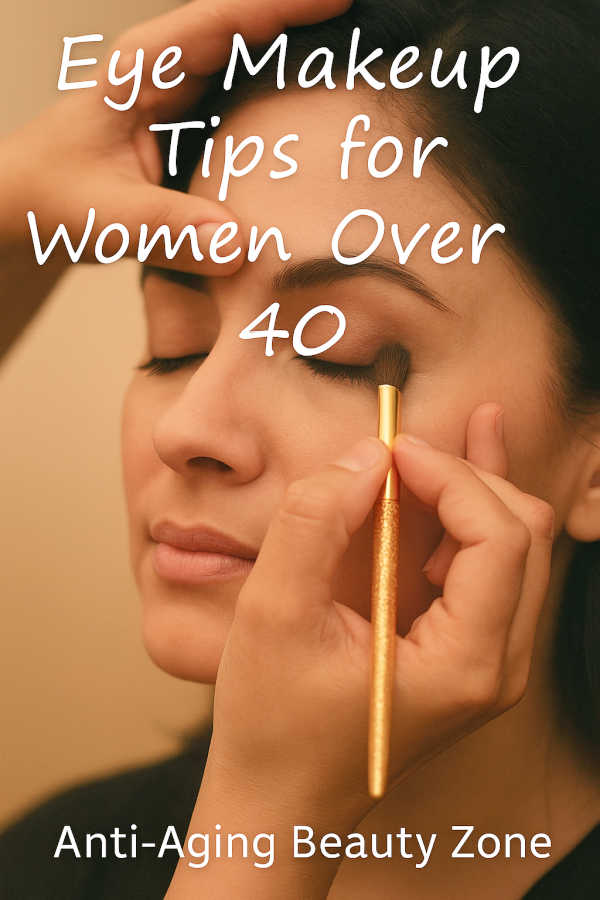
Explore more eyeliner help
- Best Eyeliners for Aging Eyes — tested product picks that glide more smoothly and stay put on mature lids.
- Eyeliner Tips for Aging Eyes — quick fixes for skipping, smudging, hooding, and harsh lines.
- How to Apply Eyeliner Over 40 — my step-by-step photo and video tutorial.
- Eyeliner by Eye Shape — placement ideas for your natural eye shape.
- How to Find Your Eye Shape — start here if you’re not sure which eye shape you have.
- Tiny Eyeliner Flick for Hooded Eyes — you'll love this subtle lifting technique for mature lids when a full wing feels too heavy.
- Summer Eyeliner Tips Over 40 — smudge-proof tricks for keeping eyeliner in place on mature lids in heat and humidity.
Do older women need different eyeliner?
You don’t need an eyeliner made especially for older women, but you may need to adjust how you use it.
As lids become softer, drier, or more hooded, thick lines and very dry pencils can look heavier or become harder to apply. A softer line, a smoother formula, and slightly different placement usually work better.
Black eyeliner is not off-limits—I still wear it. But brown, charcoal, plum, navy, and deep green can give plenty of definition with a softer finish.
Not sure what to try next?
- Want help picking a color? See my eyeliner color guide for older women.
- Trying to decide between gel and liquid? See how both looked on my own mature eyes.
- Having trouble with skipping, tugging, or smudging? See which eyeliner formula may work better for your eyes.
Eyeliner on upper lids: what really works
I used to think liner on the upper lid made my eyes look smaller. Turns out, it was the way I applied it.
What works best for me is keeping the line thin, soft, and close to the lashes.
Focus most of the liner toward the outer part of the eye. This gives definition and a little lift without taking up too much lid space.
Use a light hand. A thick line can make smaller or hooded eyes look more closed in, while a softer line keeps the eye looking open.
Black is still an option. I still wear it, but I apply less and soften the edge. Brown, charcoal, plum, navy, and deep green are good choices when you want something less stark.
Choose a formula that glides. A creamy pencil or gel usually works better on textured lids than a dry pencil that skips or pulls.
For exact placement and the way I press pencil or gel into the lash line, see my How to Apply Eyeliner Over 40 tutorial.
Eyeliner on lower lids: less is more
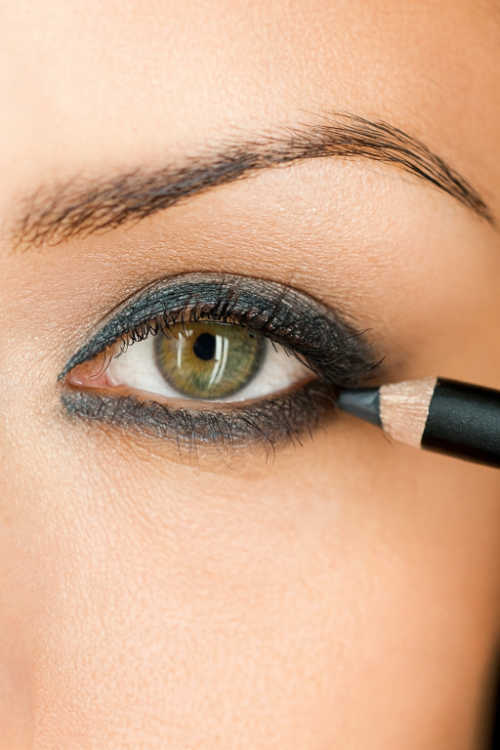
Lower eyeliner can still look beautiful after 40, but placement matters more than it used to.
I usually get the best result by keeping it soft and limiting it to the outer third of the eye.
Avoid a heavy line all the way across. It can make the eyes look smaller and draw more attention to dark circles, puffiness, or fine lines.
Choose a softer shade. Brown, bronze, taupe, charcoal, or plum often looks less harsh than solid black under the eyes.
Keep the inner corner clean. Leaving that area bare helps the eyes look more open and awake.
You can place the color along the lower lash line or lightly on the outer waterline, depending on what feels comfortable and looks best on your eyes.
Skip eyeliner? Try these liner-free tricks
Some days I want definition without a noticeable eyeliner line. That’s when I press a little cream shadow or powder shadow close to the upper lashes instead.
Brown, taupe, charcoal, plum, or deep green can give the eyes soft definition without the sharper look of a pencil or liquid liner.
I sometimes use Mommy Makeup’s Any Wear Cream in Golden Caramel along the lash line when I want a quick, softer look.
Brightening eyeliner colors for tired-looking eyes
The right eyeliner color can help the whites of your eyes look brighter without making the whole eye area look heavy.
Try nude instead of bright white on the lower waterline. A creamy nude or off-white usually looks softer and more natural.
Use deep color instead of flat black. Navy, plum, charcoal, and deep green can still define the eyes while looking a little softer.
Keep shimmer separate from the liner. A small touch of champagne or pearl at the inner corner can brighten the eyes without making the eyeliner itself look too shiny.
Hunter green surprised me because it still gives plenty of definition, but it looks softer around my eyes than black.
You can see exactly how it looks on my Hunter Green Eyeliner for Mature Eyes page.
Choosing eyeliner after 40, 50, and 60
There isn’t one eyeliner that works for everyone. The best choice depends more on your lids, eyes, and everyday routine than your exact age.
If your lids are dry or textured, look for a creamy pencil or gel formula that glides without pulling.
If your liner smudges or transfers, try a firmer waterproof pencil or long-wear gel that sets after application.
If your eyes are sensitive or watery, look for an ophthalmologist-tested formula and avoid very soft pencils that can leave residue.
If you want something quick and easy, a soft brown, charcoal, or deep plum pencil pressed close to the upper lashes is usually forgiving.
The formula often matters more than the shade. A smooth liner that stays where you put it will usually look better than one that skips, tugs, or melts into the lid crease.
Need more help choosing?
Final eyeliner makeup thoughts
You don’t have to give up eyeliner after 40, 50, or 60. A few small changes in color, placement, and formula can make it much easier to wear.
What works best for me is keeping the line soft, using less on the lower lid, and choosing a formula that glides without tugging.
Black can still work, but softer shades like brown, charcoal, plum, navy, or deep green are often easier to wear.
From here, use the guides below for more help with application, product choices, eye shape, and quick fixes.
Keep exploring eyeliners:
- Hunter Green Eyeliner for Mature Eyes — see how this softer shade looks on my eyes.
- Best Eyeliners for Wrinkled Eyelids — product ideas for lids where liner tends to skip or drag.
FAQs about eyeliner makeup for older women
Should older women avoid black eyeliner?
Should older women avoid black eyeliner?
No. Black eyeliner isn’t automatically aging. The problem is usually a line that is too thick, too sharp, or placed too heavily under the eye.
Use a lighter hand, keep the line close to the lashes, or gently soften the edge. If black still feels too strong, brown, charcoal, navy, plum, or deep hunter green eyeliner can give you definition without looking quite as harsh.
Is pencil, gel, or liquid eyeliner best for mature eyes?
Is pencil, gel, or liquid eyeliner best for mature eyes?
There isn’t one formula that works for everyone.
A creamy pencil is often easiest to control and soften. Gel can give you a smooth, thinner line when used with a small brush. Liquid gives a crisp result, but it can be less forgiving on textured or hooded lids.
My guide to choosing eyeliner for mature eyes can help you match the formula to dryness, skipping, smudging, watery eyes, or sensitive lids.
Should I line my waterline if my eyes are dry or sensitive?
Should I line my waterline if my eyes are dry or sensitive?
You can, but don’t force it if your eyes become irritated or watery.
Try a small amount first and avoid repeatedly going over the area. You may find it more comfortable to place liner between the upper lashes instead of heavily lining the whole waterline.
I show how I tightline my eyes in my step-by-step eyeliner tutorial
How do I stop eyeliner from transferring onto my upper lid?
How do I stop eyeliner from transferring onto my upper lid?
Keep the line thin and give it a moment to dry before fully opening your eye.
A little eye primer or translucent powder may help if your lids become oily. You can also lightly press a matching eyeshadow over the liner to help set it.
If transfer keeps happening, the formula may be too creamy for your lids. My Eyeliner for Mature Eyes: Choose the Right Formula guide explains what to look for.
What is the easiest eyeliner look for shaky hands?
What is the easiest eyeliner look for shaky hands?
A softly smudged pencil or eyeshadow liner is usually more forgiving than a sharp liquid line.
Rest your elbow on a counter, use short strokes instead of trying to draw one long line, and build the color slowly. It doesn’t have to be perfectly straight because you can soften the edge afterward.
Can I use eyeshadow as eyeliner for a softer look?
Can I use eyeshadow as eyeliner for a softer look?
Yes. Eyeshadow can give you soft definition without the sharp edge of a traditional eyeliner.
Use a small angled brush and press the shadow close to the lashes rather than sweeping it across the lid. Brown, charcoal, plum, navy, and deep green can all work well.
For more staying power, slightly dampen the brush or place the shadow over a very thin pencil line.
You might like these
Gel vs Liquid Eyeliner for Mature Eyes: Which Looks Smoother?
See how gel and liquid eyeliner compare on mature eyes for smoothness, control, softness, and definition — and why I usually prefer gel.
Reviews for Anti-Aging Skincare and Beauty Products
Reviews for Anti-Aging Skincare and Beauty Products
8 Fun Skincare Products That Help Women Over 40 Look Less Tired
Feel tired? These 8 fun and affordable skincare finds under $15 help women over 40 refresh puffy eyes, dull skin, and boost your glow fast.

Stay Connected with Me
Want to see what I’m up to? I’ll keep you posted on new products I’m trying, little tricks I’ve discovered, new finds, and a few personal updates too.

About the Author:
Linda Robison is a Certified Facial Fitness Specialist and founder of Anti-Aging Beauty Zone, where she shares practical tips, products, techniques, and at-home options for women over 40. She personally tests many of the methods she writes about.
Experience: Linda spent nearly 15 years as an Anti-Aging Health Advisor at the Life Extension Foundation and has over 30 years of experience testing facial anti-aging techniques, including training in Carolyn’s Facial Fitness. Her work has been featured in GB News and Beauty Box Magazine. You can view her background on LinkedIn and follow her on Pinterest.
Found this helpful? Tap the ♡ in the bottom right corner.
FOLLOW OR SAVE

Stay Connected with Me
Want to see what I’m up to? I’ll keep you posted on new products I’m trying, little tricks I’ve discovered, new finds, and a few personal updates too.

Affiliate disclosure: As an Amazon Associate and affiliate for other brands, I may earn a commission from qualifying purchases, at no extra cost to you. [Read Disclosure.] A quick note: I create the content on this site and sometimes use AI tools for writing and images. I review everything for accuracy, and my before-and-after photos are my own.

Anti-Aging Beauty Zone (ABZ): Small Changes, Big Results!
ALL CONTENT COPYRIGHT© 2013-
ALL RIGHTS RESERVED REGARDLESS OF LINKS OR ATTRIBUTIONS
ALL CONTENT COPYRIGHT© 2013-
ALL RIGHTS RESERVED
REGARDLESS OF LINKS OR ATTRIBUTIONS