- Home
- Skincare Guide
- Moisturizers
- Organic Moisturizers
Best Organic Face Moisturizers for Mature Skin: What to Look For

Finding a good organic face moisturizer for mature skin can be confusing. Some promise to help with dryness, fine lines, or sensitive skin. Others advertise natural ingredients, but that doesn't always tell you much about how the cream will feel or work.
I've tried quite a few moisturizers over the years, and I've learned that what matters most is finding one that suits your skin.
✅ Quick answer
The best organic face moisturizer for mature skin depends on your skin's needs. For dryness, look for moisturizing plant oils and ingredients like hyaluronic acid or glycerin. If your skin is sensitive, choose a simpler, fragrance-free formula. Organic ingredients are worth considering, but the whole formula matters more than the label alone.
 How to choose a natural, organic facial moisturizer for mature skin?
When I look for an organic face moisturizer, I'm interested in products made with organic and naturally sourced ingredients. But I also want something that feels good on my skin, keeps dryness under control, and doesn't contain ingredients that irritate my face.
I've learned that a product doesn't have to be 100% organic to be a good moisturizer. The whole formula matters, not just the organic ingredients.
I also see moisturizers advertised as having "clean" ingredients. But that word doesn't have one standard meaning. I prefer to look at the actual ingredient list and decide whether the formula makes sense for my skin.
My 3 moisturizer picks: which one might suit your skin?
I've narrowed this down to three different options, depending on what your skin needs and how you like your moisturizer to feel.
- For dry mature skin: Carolyn's Hydrating Creme Masque is my longtime personal favorite. I like that I can use a little as a moisturizer or apply more when my skin needs extra hydration.
- For women who want a rich face and neck cream: Annmarie Restorative Facial & Neck Cream combines botanical oils, plant butters, and other moisturizing ingredients in a convenient pump bottle.
- For women who prefer facial oils: ZENMED Omega Ceramide+ Elixir in Oil contains certified organic sunflower seed oil and other plant oils. It's an option for women who prefer facial oils or want something they can layer with their regular moisturizer when their skin feels extra dry.
All three contain organic ingredients, but that doesn't mean the entire moisturizer is certified organic.
I'll explain what makes each one different below so you can decide which is worth considering for yourself.
My favorite organic-ingredient moisturizer for dry, mature skin
I've used Carolyn's Facial Fitness Hydrating Creme Masque for years, and it's still one of my favorite products when my skin needs extra moisture.
What I like is that it's versatile. You can use a small amount as a moisturizer or apply a thicker layer as a hydrating mask.
How I use it: Although Carolyn's directions say to rinse the masque off after 5–30 minutes, I usually apply a thin layer and leave it on.
Within minutes, there's nothing left to wipe off.
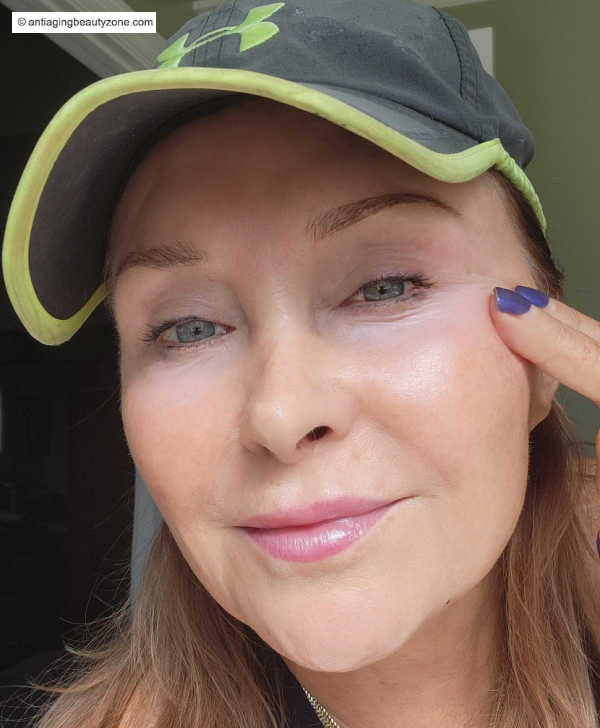 Applying a thin layer of Carolyn's Hydrating Creme Masque to my
As you can see in the picture above, It seems to melt and soak right into my skin, so there's nothing to rinse it off.
I make sure to apply it everywhere including my upper lip, where those vertical lines tend to form. I've noticed they look more noticeable when my skin is dry. Moisturizing doesn't erase them, but I love how soft that area feels afterward.
How it feels: One thing I love about this masque is how quickly it starts to soften and spread. You can actually see it melting and running down my fingertips in the photo below! That makes it easy to smooth a thin layer over my face without having to rub or tug at my skin.
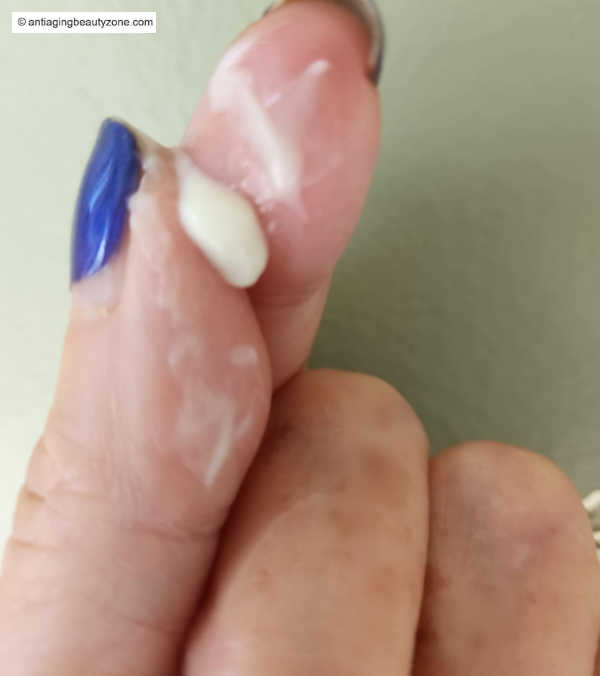 A small amount of Carolyn's Hydrating Creme Masque before applying.
It's hard to explain how good this feels on my skin! As soon as I spread it on, I feel a cool, wet feeling, almost like my skin just got a splash of moisture. And the best part? It doesn't leave my face looking or feeling greasy.
My take: Now that I'm over 60, keeping my skin well hydrated and moisturized is important. This creme masque is my everyday moisturizer because I love how it feels without leaving my face looking all shiny or greasy.
What's in Carolyn's Hydrating Creme Masque?
According to Carolyn's ingredient information, her Hydrating Creme Masque contains 91% organic ingredients. That's impressive, but what keeps me coming back is how good it feels on my skin and how well it moisturizes.
I also like that it combines moisturizing oils, hyaluronic acid, and botanical ingredients in one product.
Some of the key ingredients include:
- Organic aloe, olive oil, and jojoba oil to help soften and moisturize dry skin.
- Hyaluronic acid to help skin hold onto moisture.
- Organic green tea and white tea extracts for their antioxidant properties.
- Calendula and evening primrose oil for additional skin-conditioning benefits.
- Vitamin E to help condition the skin.
Keep in mind that organic ingredients can still cause irritation, especially if your skin is sensitive.
You can learn more about it here: CFF Hydrating Creme Masque.
How to choose an organic moisturizer for mature skin
As we get older, our skin's needs can change. A moisturizer that worked beautifully in our 40s might not feel rich enough in our 50s or 60s.
Before buying another cream, think about what bothers you most. Is your skin dry, sensitive, or just not holding onto moisture like it used to?
A good moisturizer can also help soften the appearance of fine lines caused by dryness. But I wouldn't expect an organic cream to erase deeper wrinkles. For me, keeping mature skin well moisturized is worthwhile because dry skin can make lines look more noticeable.
Here's a simple way to narrow down your choices.
| If your skin is... | Look for... |
|---|---|
| Dry or rough | Richer creams with shea butter, jojoba, rosehip, or other plant oils that help soften skin and hold in moisture. |
| Dehydrated or tight | Glycerin or hyaluronic acid to help skin hold onto water, along with moisturizing oils or creams. |
| Sensitive or easily irritated | Simple, fragrance-free formulas with fewer ingredients that might irritate your skin. |
| Oily or combination | Lightweight lotions or gels that moisturize without feeling heavy or greasy. |
Other organic moisturizers worth considering
Carolyn's Hydrating Creme Masque is still my personal favorite, but we don't all need the same kind of moisturizer.
Here are two other options worth considering. One is a rich face and neck cream from Annmarie Skin Care, and the other is a plant-based facial oil from ZENMED.
Both contain organic ingredients, but I haven't personally tried either of these particular products.
For mature skin that needs a richer cream
Annmarie Restorative Facial & Neck Cream is an option worth looking at if you prefer a richer moisturizer for your face and neck.
Its formula includes aloe, jojoba oil, shea butter, tamanu oil, hyaluronic acid, and a long list of botanical extracts. Annmarie identifies many of its plant ingredients as organically grown or wildcrafted.
I also like that it comes in a pump rather than an open jar, which means you're not dipping your fingers into the cream every day.
I haven't personally tried this cream, so I can't tell you how it feels or performs on my skin. And because it's a higher-priced product, I'd recommend looking closely at the ingredients before deciding whether it's worth trying.
Prefer a facial oil instead of a cream?
If you prefer facial oils, ZENMED Omega Ceramide+ Elixir in Oil is another option worth looking at.
It's made with certified organic sunflower seed oil, along with jojoba, rosehip, borage, and grapeseed oils. ZENMED describes it as a blend of plant-derived lipids that helps nourish dry skin.
You can use it on its own or layer it with your regular moisturizer when your skin needs something extra. That makes it an option worth looking at if your mature skin tends to feel especially dry.
I haven't personally tried this particular oil, but I've used other ZENMED skincare products. I'm including it because of its botanical oils and moisturizing ingredients.
So which organic moisturizer would I choose?
I think it comes down to how dry your skin is, what kind of moisturizer you prefer, and how much you want to spend. Here's how I'd narrow it down.
If you want a moisturizer for everyday dryness: I'd start with Carolyn's Hydrating Creme Masque. It's the one I've used for years, and I love how moisturizing it feels without leaving my skin greasy. Carolyn says it contains 91% organic ingredients, and at around $26, it's also the most affordable of these three options.
If you prefer a richer cream for your face and neck: Annmarie's Restorative Facial & Neck Cream might be worth considering. It has moisturizing plant oils, butters, and hyaluronic acid, plus a convenient pump. It's considerably more expensive, though, and I haven't personally tried it. So I'd look closely at the ingredients and price before choosing this one.
If your skin gets extra dry from time to time: This is where I'd consider ZENMED Omega Ceramide+ Elixir in Oil.
My skin sometimes gets much drier than usual, especially when the weather or temperature changes. On those days, I don't necessarily want to change my whole skincare routine. I'd rather add a little something to help my skin hold onto moisture.
That's what appeals to me about this oil. ZENMED says you can use it alone or layer it with your regular moisturizer. I like the idea of adding a few drops when my usual cream isn't enough.
Note: I personally use ZENMED's Omega Ceramide+ Recovery Moisturizer and Omega eye cream (pictured below), so I'm familiar with this skincare line. I haven't tried the Elixir in Oil itself, but its blend of moisturizing plant oils caught my attention, especially for those days when my skin feels extra dry.
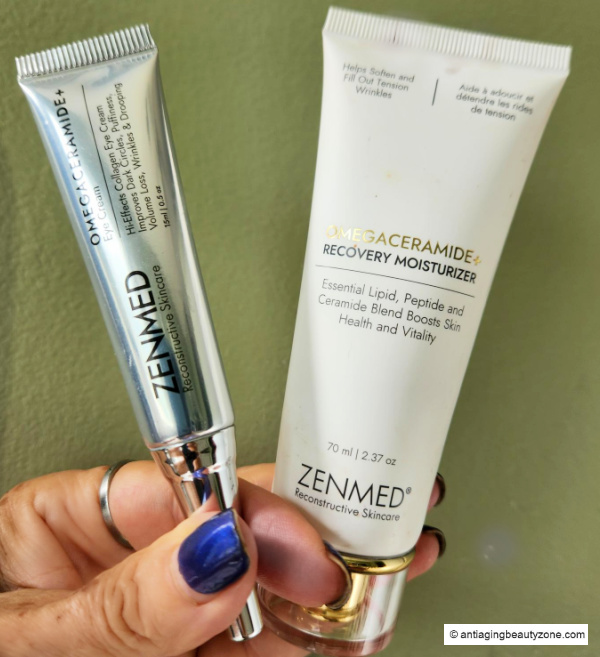 Two ZENMED Omega Ceramide+ products I've personally used: the Recovery Moisturizer and eye cream. Both are part of the same skincare line as the Elixir in Oil I'm discussing here.
My take: If I were choosing just one, I'd start with the type of moisturizer I know I'll enjoy using. And I wouldn't necessarily buy a heavier cream just because my skin gets extra dry occasionally. Sometimes adding a few drops of facial oil to my usual routine might make more sense.
There's no single best choice for everyone. What works for my skin may not be what yours needs, and that's okay.
Does moisturizer packaging matter?
The packaging might not be the first thing you look at when buying a moisturizer, but it's worth checking.
Some ingredients, especially certain antioxidants, can break down when repeatedly exposed to light or air. That's one reason I like opaque bottles and pump containers.
A pump also means you're not dipping your fingers into the cream every day.
That doesn't mean every moisturizer in a jar is bad. It depends on the formula. But if I'm paying extra for a cream with ingredients that can lose their effectiveness over time, I want packaging that helps protect them.
Best organic facial moisturizer: FAQ's
Feel free to ask away. We'll try to answer all your questions. Click here...
Is Carolyn's Hydrating Creme Masque certified organic?
Is Carolyn's Hydrating Creme Masque certified organic?
No, the finished product isn't listed as USDA Certified Organic. However, it does contain several organic ingredients, including aloe, olive oil, jojoba oil, and botanical extracts.
I've used this masque for years and love it, but I wouldn't call it a certified-organic moisturizer.
Are organic moisturizers 100% natural?
Are organic moisturizers 100% natural?
Not necessarily. Organic, natural, and chemical-free don't all mean the same thing.
Under USDA standards, a product labeled organic generally must contain at least 95% certified organic ingredients, excluding water and salt. That doesn't mean the product is chemical-free or that every ingredient is organic.
I think it's worth checking the ingredient list rather than relying only on what's written on the front of the package.
You might like these
Microdermabrasion Treatment: What I Loved & What to Expect
I loved the results of my professional microdermabrasion treatment. Here's what it felt like, how my skin looked afterward, and what to know before trying it.
LifeCell Ingredients: What’s Inside the Cream
See the main LifeCell ingredients, what they may do for your skin, and which well-known actives appear in surprisingly small amounts.
Do Peptide Wrinkle Creams Work for Mature Skin?
Do peptide wrinkle creams really work for mature skin? Learn what they can do for fine lines vs. deeper wrinkles, and whether they're worth adding to your routine.

Have a question or want to share your experience?

I'd love to hear from you! Visit my Questions & Comments page to ask a question, share a tip, or tell me what's worked for you.
Want to Stay in Touch?
Get my latest beauty tips, products I'm trying, little tricks I've discovered, and a few personal updates, too.
I'd love to keep you in the loop!

About the Author:
Linda Robison is a Certified Facial Fitness Specialist and founder of Anti-Aging Beauty Zone, where she shares practical tips, products, techniques, and at-home options for women over 40. She personally tests many of the methods she writes about.
Experience: Linda spent nearly 15 years as an Anti-Aging Health Advisor at the Life Extension Foundation and has over 30 years of experience testing facial anti-aging techniques, including training in Carolyn’s Facial Fitness. Her work has been featured in GB News and Beauty Box Magazine. You can view her background on LinkedIn and follow her on Pinterest.
Found this helpful? Tap the ♡ in the bottom right corner.
FOLLOW OR SAVE

Stay Connected with Me
Want to see what I’m up to? I’ll keep you posted on new products I’m trying, little tricks I’ve discovered, new finds, and a few personal updates too.
Affiliate disclosure: As an Amazon Associate and affiliate for other brands, I may earn a commission from qualifying purchases, at no extra cost to you. [Read Disclosure.] A quick note: I create the content on this site and sometimes use AI tools for writing and images. I review everything for accuracy, and my before-and-after photos are my own.
Anti-Aging Beauty Zone (ABZ): Small Changes, Big Results!
ALL CONTENT COPYRIGHT© 2013-
ALL RIGHTS RESERVED REGARDLESS OF LINKS OR ATTRIBUTIONS
ALL CONTENT COPYRIGHT© 2013-
ALL RIGHTS RESERVED
REGARDLESS OF LINKS OR ATTRIBUTIONS