- Home
- Eye Wrinkles
- Criss-Cross Under-Eyes
How to Smooth Criss-Cross Lines Under Eyes (That Grid of Wrinkles!)

✅ Quick answer
Criss-cross lines under the eyes are tiny intersecting wrinkles that can create a faint grid or crosshatch pattern. They often become more noticeable with dryness, squinting, and thinning skin. What helps depends on whether you want a quick cosmetic fix or longer-term smoothing.
Do you have tiny under-eye wrinkles that form a faint mesh or crosshatch pattern when you smile or squint? Me too.
Unlike crepey skin, which looks more loose and papery, criss-cross lines form a delicate grid of tiny intersecting wrinkles. They can spread from the lower lid toward the upper cheek and make concealer settle into the area.
I’ll show you what can make these lines more noticeable and the simple things that have helped me soften their look.
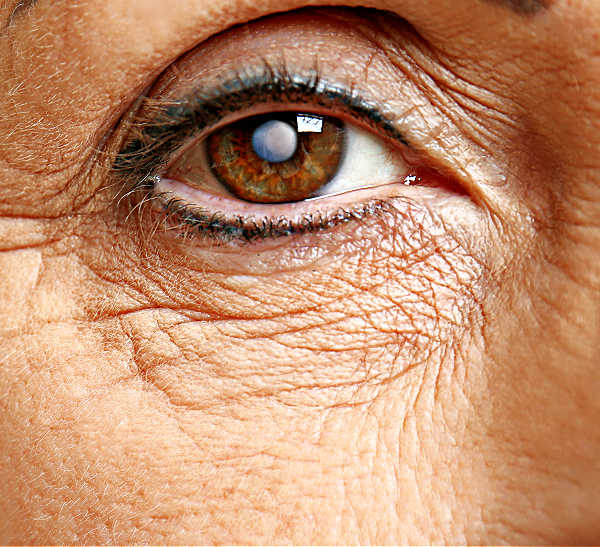 These lines form a subtle mesh pattern that becomes more noticeable as under-eye skin thins with age or dryness
If you want a broader look at under-eye wrinkles, my eye wrinkle treatments page covers the main options that have made the biggest difference for me.
What are criss-cross under-eye lines and how are they different?
Criss-cross under-eye lines are tiny fine lines that overlap and form a faint mesh or crosshatch pattern. They often show up more when you smile, squint, or when the skin under your eyes feels dry.
You may also see these described as crosshatch wrinkles, criss-cross wrinkles, or a web-like pattern of fine lines under the eyes.
They’re different from one deep crease or classic crow’s feet. Criss-cross lines look more like a delicate grid that can spread from the lower lid toward the upper cheek.
They’re also different from crepey under-eye skin, which tends to look looser, thinner, and more papery. Criss-cross lines are usually more surface-level at first, but they can become more noticeable as the skin gets drier, thinner, or less elastic.
And yes, they can mess with makeup. Concealer can settle into those tiny lines, and eyeliner that used to glide on smoothly may start to smudge or draw attention to the texture. If that sounds familiar, Tip #8 in my eyeliner guide may help.
What causes that tiny crosshatch pattern?
Criss-cross lines usually show up when the under-eye skin is dry, thin, or losing some of its bounce. Because this area is so delicate, even small changes in moisture, collagen, or facial movement can make the pattern look more obvious.
The most common reasons are:
- Dryness: Fine lines can be more noticeable when the under-eye area is dehydrated.
- Thinning skin: As collagen and elasticity change with age, the skin can look less smooth and more textured.
- Smiling and squinting: Repeated movement folds the same area over and over.
- Sun exposure: UV damage can make thin under-eye skin look drier and less elastic over time.
- Makeup buildup: Concealer or powder can settle into the tiny lines and make them stand out more.
What I’ve noticed: Sometimes the lines aren’t actually getting worse. Dryness, irritation, or too much makeup can simply make them look deeper that day.
How to reduce criss-cross lines under the eyes
These tips are for those tiny hatch-like lines that catch makeup or look more obvious when you smile — not deep under-eye folds or heavy bags.
Some fixes are temporary, like firming serums and smoothing primers. Others work more slowly, like hydration, retinol, sunscreen, and gentle massage.
I like combining both: something that makes the area look smoother today, plus a routine that keeps the skin calmer and less dry over time.
| What you want | What may help | What to expect |
|---|---|---|
| A quick smoother look | Firming serum or smoothing primer | Temporary cosmetic smoothing for a few hours |
| Less dry, crinkly texture | Hydration and gentle skincare | Can make the lines look softer and less etched |
| Longer-term fine-line support | Gentle retinol or bakuchiol | Gradual improvement; irritation can make lines look worse |
| Help for deeper lines | Professional treatments | May be worth considering when at-home care isn't enough |
1. Temporary smoothing: firming eye serums
For a fast fix, a firming eye serum can help blur those tiny criss-cross lines so they don’t catch the light as much. This is especially helpful before makeup, when concealer tends to settle into every little hatch mark.
These serums don’t rebuild the skin permanently. But a good one can make the area look tighter, smoother, and less crinkly for a few hours.
I’ve been testing under-eye serums since 2012, and some made a much bigger difference than others. My best under-eye serums page shows the ones that actually helped smooth my under-eye area in real photos.
What mine looked like: This before-and-after photo shows the faint criss-cross texture under my eyes, which softened after a few months of daily massage and hydrating serums.
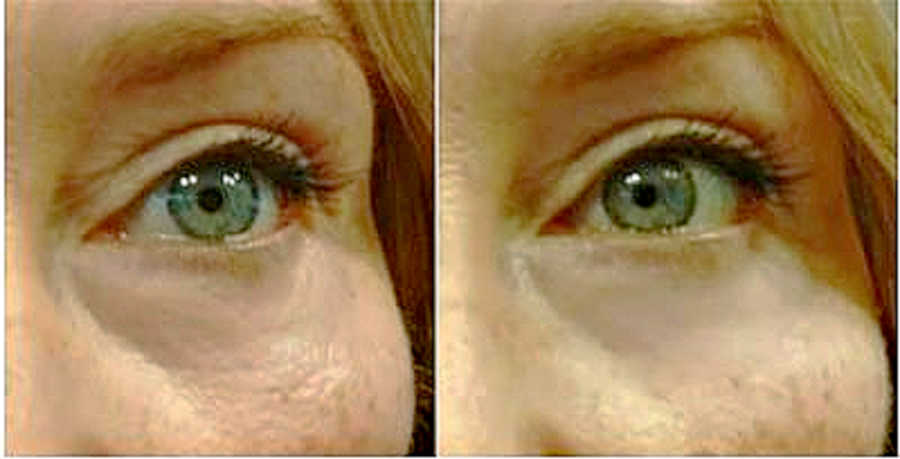 These are my own results after 3 months of gentle massage and skin-supporting serums. Notice how the criss-cross texture softens around the lower lid.
The difference is subtle in photos, but it was much more noticeable in person. I don’t want to pretend one product did everything, because I used a mix of gentle massage and hydrating serums. But when you want to soften the look of tiny criss-cross lines, a good serum can be a helpful shortcut.
2. Gentle retinol or bakuchiol for criss-cross wrinkles
A gentle retinol may help soften fine criss-cross wrinkles over time by supporting smoother-looking skin. But under the eyes, more is not better. If retinol leaves the area dry, red, or flaky, those little wrinkles can actually look more noticeable.
Start slowly, moisturize well, and consider bakuchiol if your skin doesn’t tolerate retinol.
3. Hydrate so the tiny grid looks softer
For me, dryness makes criss-cross wrinkles look much more noticeable. When the under-eye area is well hydrated, that tiny crosshatch pattern usually looks softer and less etched.
Look for lightweight moisture support, such as hyaluronic acid, ceramides, peptides, or a nourishing oil. The goal is to make the area look smoother and more comfortable, not greasy or puffy.
ABZ Tip: Avoid alcohol-heavy eye products if your under-eyes already feel dry. They can make the criss-cross texture look deeper.
4. Protect the area from sun and squinting
Sun exposure can make thin under-eye skin look drier and less elastic over time. Squinting can also make criss-cross wrinkles more noticeable because the same area folds again and again.
So yes, sunscreen matters — but sunglasses matter too.
Use a gentle broad-spectrum SPF around the eye area if your skin tolerates it and keep sunglasses handy when you’re outside or driving.
For a deeper look at why sunscreen helps protect smoother-looking skin over time, see my page on whether sunscreen really helps prevent wrinkles.
5. Gentle massage for criss-cross under-eye lines
Gentle massage is one of the things that helped my criss-cross under-eye lines look smoother, especially when the area looked dry, tired, or a little puffy.
The key is to use enough slip and very light pressure. You never want to drag or stretch the skin under your eyes.
I like massage here because it helps spread serums and oils more evenly, and it gives the area a softer, more refreshed look. In my before-and-after photos, I used a mix of daily massage and hydrating serums — not just one product.
How to Do It:
- Use clean hands or a skincare tool like a Gua Sha or jade roller.
- Apply a few drops of a nourishing oil to provide slip.
- Using light pressure, make gentle circular motions around the under-eye area.
- Use tapping motions with your fingertips to boost circulation and encourage lymphatic drainage.
- Repeat for 1-2 minutes per eye, morning and night.
ABZ Tip: Massage should make the area look calmer and smoother, not stretched or irritated.
6. Use very gentle exfoliation — only if your skin tolerates it
I’ve noticed that very gentle exfoliation with a soft washcloth can leave my under-eye area looking smoother, especially when dryness is making the criss-cross texture stand out more.
But this is not the place for scrubbing. Use very light pressure, and skip it if the area feels irritated, sensitive, or dry.
ABZ Tip: Don’t exfoliate on the same night you use retinol. Too much irritation can make those little wrinkles look deeper.
When at-home care may not be enough
If the criss-cross wrinkles are deeper, more etched in, or mixed with hollows, bags, or loose skin, at-home care may only soften the look. That’s when it may be worth talking with a dermatologist or qualified cosmetic provider about other options.
For finer criss-cross texture, I’d still start with the simple things first: hydration, gentle skincare, sunscreen, massage, lighter makeup, and a smoothing serum when you want a quicker fix.
Why criss-cross lines can look worse some days
One thing I’ve noticed is that these little lines don’t always look the same. Some days they’re barely noticeable. Other days they look deeper, especially if my skin is dry, irritated, or I’ve used too much makeup.
A few things can make that crosshatch pattern stand out more:
- Dry skin can make the lines look deeper.
- Concealer or powder can settle into the pattern.
- Squinting can make the wrinkles show more.
- Sun exposure can leave thin under-eye skin looking less smooth.
- Irritation from strong products can make the area look more crinkly.
- A salty meal can make the under-eye area look puffier the next day, which may make the criss-cross pattern more noticeable.
- Alcohol can be dehydrating, so the under-eye area may look drier and the lines can seem deeper.
For me, the best approach is to keep the area hydrated, protected, and calm rather than trying to treat it too aggressively.
My simple routine for criss-cross under-eye texture
For this specific little under-eye grid pattern, I keep the routine simple.
Morning: I hydrate the area, use sunscreen, and go light with concealer so it doesn’t settle into the tiny lines.
Before makeup: If I want a smoother look fast, I use an instant eye tightener or smoothing primer and let it dry fully before putting anything over it.
Night: I cleanse gently, moisturize well, and use retinol or bakuchiol only when my skin feels calm enough.
A few times a week: I add a short, gentle massage with enough slip so I’m not pulling the skin.
If the area looks dry or rough: I may very gently use a soft washcloth, but I don’t scrub.
The goal is to keep the under-eye area calm, hydrated, and smooth-looking so the criss-cross wrinkles don’t stand out as much.
Frequently asked questions about criss-cross under-eye wrinkles
What causes criss-cross wrinkles under the eyes?
What causes criss-cross wrinkles under the eyes?
Criss-cross wrinkles under the eyes are usually caused by a mix of dryness, thinning skin, collagen loss, sun exposure, and repeated movement from smiling or squinting.
They often look like a faint mesh or crosshatch pattern instead of one single crease.
What are crosshatch wrinkles under the eyes?
What are crosshatch wrinkles under the eyes?
Crosshatch wrinkles are fine lines that overlap and form a faint grid-like pattern under the eyes. They may look more noticeable when you smile, squint, or when the skin is dry.
Why do my under eyes crease when I smile?
Why do my under eyes crease when I smile?
When you smile, the skin under your eyes naturally folds. If the skin is dry, thin, or less elastic, those folds can look more like tiny criss-cross wrinkles or creases.
That’s why they may look much more noticeable when you smile than when your face is relaxed.
How can I reduce criss-cross lines under my eyes?
How can I reduce criss-cross lines under my eyes?
You can help soften the look of criss-cross lines with hydration, gentle retinol or bakuchiol, sun protection, light makeup, and careful massage.
If the lines are deeper or more etched in, at-home care may only soften their appearance rather than remove them completely.
What’s the fastest way to hide criss-cross lines under my eyes?
What’s the fastest way to hide criss-cross lines under my eyes?
The fastest fix is usually an instant eye tightening serum. Let it dry fully, then use a very light hand with concealer. You can see the instant eye tightening serums I’ve reviewed for under-eye puffiness and criss-cross lines.
Also too much makeup can settle into the crosshatch pattern and make the lines look more noticeable.
Can under-eye massage help criss-cross lines?
Can under-eye massage help criss-cross lines?
Gentle massage may help the area look smoother by improving circulation, reducing puffiness, and helping skincare spread more evenly.
Just don’t pull or drag the skin. The under-eye area is delicate.
Is retinol safe for criss-cross lines under the eyes?
Is retinol safe for criss-cross lines under the eyes?
A gentle retinol may help soften the look of fine lines over time, but the under-eye area can get irritated easily.
Start slowly, use a small amount, and moisturize well. If your skin is very sensitive, bakuchiol may be a gentler option.
Can sunscreen help prevent these lines from getting worse?
Can sunscreen help prevent these lines from getting worse?
Yes. Sun exposure can weaken collagen and make fine under-eye lines more noticeable over time. I like using daily SPF and sunglasses because they help protect the skin and reduce squinting.
Note: choose a mineral-based SPF with PA+++ protection and no alcohol or harsh chemicals. Always wear sunglasses to reduce squinting.
Takeaway: Criss-cross under-eye lines
Criss-cross under-eye lines are those tiny hatch-like wrinkles that can make the area look dry, thin, or textured. They’re not always deep wrinkles, which is good news.
For me, they look better when I focus on hydration, gentle massage, light makeup, sunscreen, and a temporary smoothing serum when I want a faster fix.
You may not erase every little line, but you can often make the area look softer, smoother, and less crinkly with the right routine.
Want the bigger eye-wrinkle overview? My complete eye wrinkle treatment guide covers oils, exercises, creams, vitamin C, massage, and other at-home options.
You might like these
Eye Makeup Tips for a Youthful, Awake Look! Tips for Older Eyes
Try these eye makeup tips for older eyes to look refreshed and vibrant. Soft eyeliner, brightening techniques, and lash tips for a flawless finish
Eyeliner Makeup for Women Over 40: Colors & Tricks to Make Eyes Pop
Eyeliner makeup for older women: learn which colors flatter mature eyes, how to avoid harsh lines, and the best ways to define without aging your look.
How to Reduce Puffy Eyes: Causes, Remedies & Treatments
Discover causes of puffy eyes and the best fixes—natural remedies, quick tricks, serums, and medical treatments—in one guide.

Stay Connected with Me
Want to see what I’m up to? I’ll keep you posted on new products I’m trying, little tricks I’ve discovered, new finds, and a few personal updates too.

About the Author:
Linda Robison is a Certified Facial Fitness Specialist and founder of Anti-Aging Beauty Zone, where she shares practical tips, products, techniques, and at-home options for women over 40. She personally tests many of the methods she writes about.
Experience: Linda spent nearly 15 years as an Anti-Aging Health Advisor at the Life Extension Foundation and has over 30 years of experience testing facial anti-aging techniques, including training in Carolyn’s Facial Fitness. Her work has been featured in GB News and Beauty Box Magazine. You can view her background on LinkedIn and follow her on Pinterest.
Found this helpful? Tap the ♡ in the bottom right corner.
FOLLOW OR SAVE

Stay Connected with Me
Want to see what I’m up to? I’ll keep you posted on new products I’m trying, little tricks I’ve discovered, new finds, and a few personal updates too.
Affiliate disclosure: As an Amazon Associate and affiliate for other brands, I may earn a commission from qualifying purchases, at no extra cost to you. [Read Disclosure.] A quick note: I create the content on this site and sometimes use AI tools for writing and images. I review everything for accuracy, and my before-and-after photos are my own.
Anti-Aging Beauty Zone (ABZ): Small Changes, Big Results!
ALL CONTENT COPYRIGHT© 2013-
ALL RIGHTS RESERVED REGARDLESS OF LINKS OR ATTRIBUTIONS
ALL CONTENT COPYRIGHT© 2013-
ALL RIGHTS RESERVED
REGARDLESS OF LINKS OR ATTRIBUTIONS