- Home
- Eye Wrinkles
- Crow's Feet
Crow’s Feet: 6 Natural Ways to Reduce Them Without Botox or Fillers

Do you smile and notice fine lines fanning out from the corners of your eyes? Those are crow’s feet.
I started noticing mine years ago, and like many women, I wanted to know how to get rid of crow’s feet naturally—without Botox or fillers.
While these lines are a normal part of aging, there are several at-home remedies that may help soften them and make them less noticeable over time.
On this page, I’ll share the natural treatments that have helped me the most, including retinol, gentle acids, hydration, facial massage, and daily sun protection.
If you’re noticing more than just crow’s feet — like under-eye lines, crepey skin, or that dry crinkly look — I also have a full page on eye wrinkle treatments that pulls everything together in one place.
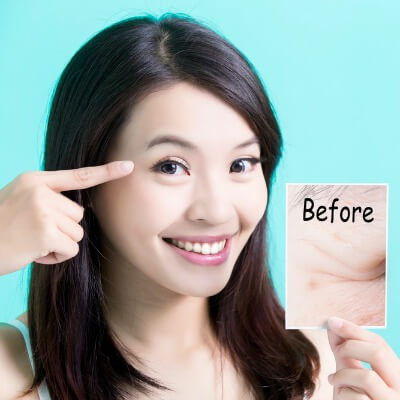
6 ways to reduce crow’s feet naturally
Crow’s feet are caused largely by repeated smiling and squinting, combined with collagen loss and sun exposure over time.
You may not be able to erase them completely, but there are several at-home remedies that can help soften these lines and keep them from becoming more noticeable.
These are the natural approaches that have helped me the most.
1. Crow's Feet Massage
A face massage for crow's feet also exercises the muscles. This helps build collagen, smooth the skin, and increases circulation. See my eye wrinkles before and after picture below.
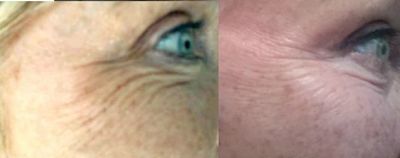 Before and after face exercise and crow's feet eye massage.
Crow's feet massages can help reduce wrinkles around your eyes, over time. Try the simple exercise in the video below to minimize crow's wrinkles.
If you want to see other eye massage and exercise routines for I use for the whole eye area, check out my eye massage and exercises for under-eye wrinkles page.
You can visit CFF to learn more about how and why it works.
2. Retinols
A gentle retinol is one of the best at-home treatments I’ve found for softening crow’s feet and other fine lines around the eyes.
Over time, retinol may help support collagen and make those fan-shaped smile lines look less noticeable.
But, here's a wrinkle in this plan...
Using too much retinol too often can cause inflammation and age your eye area.
How Much Retinol, How Often:
To be safe, begin with a strength less than 1% or apply it once a week for 4 weeks. Then increase to twice a week the next month, then three times a week for the following month, followed by every other night thereafter.
Pay close attention to how your skin feels.
Tip: If you know your complexion is extra sensitive, have mature skin, or in menopause, consider Bakuchiol. This natural alternative to retinol, derived from a plant called Psoralea corylifolia offers similar skin benefits as retinol without the potential irritation.1
My Experience: Wanting to look GREAT before attending a school reunion, I started using a mild retinol product every night for 3 months. Although I didn't notice visible irritation, my skin felt itchy during application.
On the day of the reunion, my face looked horrible! The area around my eyes, looked dry, wrinkled, and dull.
Lesson learned: Start slowly with retinol, even if you don't see irritation. Follow product directions, and if you have sensitive skin, apply a thin layer of moisturizer before using retinol.
Another choice is to consider a Retinol Booster serum that can be used alone or mixed with your favorite nighttime cream. You can find information on different types of retinols here.
3. Glycolic and Lactic Acid
Glycolic and lactic acids are gentle exfoliants that may help smooth the skin around the eyes and soften the look of crow’s feet over time.
I’ve found they work especially well when used on nights when I’m not using retinol.
Apha hydroxy acids (AHAs), like glycolic and lactic acids, are natural exfoliators. Meaning, they break down the "glue" that holds dead skin cells on the skin's surface.
This means dull, damaged skin will be removed, revealing smoother skin beneath. It also encourages collagen production, which can help reduce the appearance of wrinkles, including crow's feet.
Tip: Trust, me, AHA's do make a difference in the appearance of crow's feet. Especially when combined with retinol treatment. But, do not use them the same time. Always use AHA's on different days then your retinol treatment.
4. Hyaluronic Acid (HA)
Hyaluronic acid works mainly on the surface of the skin, where it helps attract moisture and temporarily plump fine lines.
While it won’t rebuild collagen like retinol, it can make crow’s feet look softer and less noticeable—especially when the skin around your eyes is feeling dry.
Don't let the word "acid" scare you. HA is a natural substance that helps your skin stay hydrated and plump.
How Does It Work?
Once applied, it draws in moisture and fills in the spaces between your skin cells, making it look smoother and less wrinkled. So, hyaluronic acid helps reduce wrinkles by keeping your complexion well-hydrated and giving it a more youthful appearance.
Note: I found that the way you apply HA makes a huge difference in how well it works. Apply it on clean, bare skin first, then seal it in with your favorite moisturizer.
Let that all soak in for a minute before applying makeup. There is more detail about apply hyaluronic acid here.
5. Korean Sheet Masks
Korean sheet masks are one of my favorite ways to give dry, tired skin a quick boost of hydration.
While they won’t erase crow’s feet, they can temporarily plump the skin and make those smile lines look softer and less noticeable.
These masks work in two ways:
- First, hydration. These masks are infused with moisture-retaining serums like hyaluronic acid and glycerin. Once applied, it forms a barrier that seals in moisture, resulting in plumper, smoother skin. And reduces the look of fine lines and wrinkles around the eyes.
- Second, nutrient delivery. The serums usually contain essential vitamins and antioxidants. This offers your complexion long-term health and resilience.
6. Sunscreen to help prevent deeper crow’s feet
Daily sunscreen is one of the most important things you can do to keep crow’s feet from getting worse.
It won’t erase existing lines overnight, but it helps protect the collagen and elastin that keep the skin around your eyes looking smoother and firmer.
It's important to understand that the sun is a major culprit behind those pesky crow's feet. It harms your skin, leading to more wrinkles and other damage.
Enhancing Retinol's Effects:
While retinol is a superhero for your skin, fighting crow's feet and wrinkles. The sun is a villain, breaking down the good work retinol does. Sunscreen steps in as a protective shield, making sure damaging it won't undo what retinol is fixing.
So, while you're busy fixing your crow's feet, don't let UV rays undo your progress. Keep up the good work by wearing sunscreen EVERY DAY.
Find out if your sunscreen is protecting you as well as it should.
Fillers for eye wrinkles: How to avoid eye hollows?
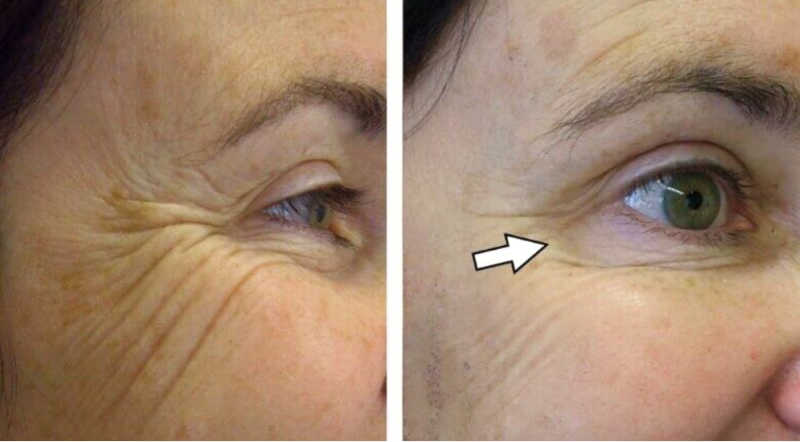
Botox and fillers can be helpful for softening crow’s feet, but the eye area is one place where technique really matters.
Too much treatment around the lower crow’s feet can sometimes leave the area looking hollow or shelf-like. Dr. Hart explains how to avoid that, and I also talk more about the bigger pros and cons in my Botox benefits article.
Why do I see crow's feet when I smile: Different types of wrinkles
When you smile, the muscles around your eyes naturally contract and create those familiar fan-shaped lines at the outer corners.
At first, these lines appear only when your face moves. These are called dynamic wrinkles.
Over time, repeated smiling and squinting—combined with collagen loss and sun exposure—can cause the lines to remain visible even when your face is relaxed.
Dynamic Wrinkles:
These are the temporary lines you see when you smile, laugh, or squint. They are a normal part of facial expression and often become the earliest stage of crow’s feet.
Static Wrinkles:
However, as time passes, these fine lines become etched in your skin and are visible even when you're not smiling.
These are static wrinkles caused by reduced skin elasticity due to collagen and elastin breakdown. Aging, sun exposure and poor diet are also responsible.
Final thought…
Crow’s feet are normal, especially if you smile, squint, and spend time in the sun. But that doesn’t mean you can’t soften the way they look.
For me, the best results come from a mix of gentle retinol, careful exfoliation, hydration, massage, and daily sunscreen.
The key is consistency. You don’t have to do everything at once, but small steady habits can help those fan-shaped smile lines look softer over time.
How can I reduce crow’s feet naturally?
How can I reduce crow’s feet naturally?
You can help soften crow’s feet naturally with a combination of gentle retinol, hydration, facial massage, exfoliation, and daily sunscreen.
The best results usually come from doing a few simple things consistently rather than relying on one miracle product.
How do I get rid of crow’s feet without Botox?
How do I get rid of crow’s feet without Botox?
If you prefer to avoid Botox, focus on collagen-supporting ingredients like retinol and vitamin C, along with good sun protection and facial massage.
These approaches won’t freeze muscle movement, but they may help make crow’s feet look less noticeable over time.
What causes crow’s feet around the eyes?
What causes crow’s feet around the eyes?
Crow’s feet are caused by repeated smiling and squinting, combined with collagen loss, sun exposure, and natural aging.
At first they appear only when you smile, but over time they may remain visible even when your face is relaxed.
What is the best crow’s feet remedy?
What is the best crow’s feet remedy?
In my experience, there is no single best remedy.
A gentle retinol, consistent sunscreen use, hydration, and regular facial massage tend to work better together than any one product alone.
Can facial massage help crow’s feet?
Can facial massage help crow’s feet?
Yes. Gentle massage may improve circulation, relax tight muscles, and help skincare products spread more evenly.
I’ve personally noticed that massage can make the skin around my eyes look smoother and less tired over time.
Can sunscreen really help crow’s feet?
Can sunscreen really help crow’s feet?
Absolutely. Sun exposure is one of the biggest reasons crow’s feet become deeper and more noticeable.
Daily sunscreen helps protect the collagen and elastin that keep the skin around your eyes looking firmer and smoother.
Stay Connected with Me
Want to see what I’m up to? I’ll keep you posted on new products I’m trying, little tricks I’ve discovered, new finds, and a few personal updates too.

About the Author:
Linda Robison is a Certified Facial Fitness Specialist and founder of Anti-Aging Beauty Zone, where she shares practical tips, products, techniques, and at-home options for women over 40. She personally tests many of the methods she writes about.
Experience: Linda spent nearly 15 years as an Anti-Aging Health Advisor at the Life Extension Foundation and has over 30 years of experience testing facial anti-aging techniques, including training in Carolyn’s Facial Fitness. Her work has been featured in GB News and Beauty Box Magazine. You can view her background on LinkedIn and follow her on Pinterest.
Found this helpful? Tap the ♡ in the bottom right corner.
FOLLOW OR SAVE

Stay Connected with Me
Want to see what I’m up to? I’ll keep you posted on new products I’m trying, little tricks I’ve discovered, new finds, and a few personal updates too.
Affiliate disclosure: As an Amazon Associate and affiliate for other brands, I may earn a commission from qualifying purchases, at no extra cost to you. [Read Disclosure.] A quick note: I create the content on this site and sometimes use AI tools for writing and images. I review everything for accuracy, and my before-and-after photos are my own.
Anti-Aging Beauty Zone (ABZ): Small Changes, Big Results!
ALL CONTENT COPYRIGHT© 2013-
ALL RIGHTS RESERVED REGARDLESS OF LINKS OR ATTRIBUTIONS
ALL CONTENT COPYRIGHT© 2013-
ALL RIGHTS RESERVED
REGARDLESS OF LINKS OR ATTRIBUTIONS