- Home
- Skincare Guide
- Vitamin C for Skin
Vitamin C for Skin Aging: What Works and What to Expect

If vitamin C is supposed to be such a skincare hero, why do some products seem to do absolutely nothing?
I’ve tried different forms over the years, but the only one that gave me noticeable results was L-ascorbic acid crystal powder.
I use the type that you mix up fresh at home before each application, which is one of the reasons I like it.

✅ Quick answer
Topical vitamin C can help brighten dull or uneven-looking skin, support collagen, and improve the overall look of sun-damaged skin over time.
But the type you use, how fresh it is, and how well your skin tolerates it can make a difference. For me, freshly mixed L-ascorbic acid crystals are what finally made vitamin C worth using.
Key benefits of topical vitamin C for skin
Vitamin C can:
- Brighten dull or uneven skin tone
- Gradually improve the look of some sun-related spots
- Support collagen production and firmness
- Improve overall skin texture and glow
But to get those results, you need the right type, concentration, and application method.
If your under-eyes need quicker help while vitamin C works slowly, I tested a few instant tightening serums and compared which ones actually last.
4 Reasons your vitamin C serum might not be working
I did some digging into why one vitamin C product can seem to do nothing while another works much better. Here are a few things that can make a difference:
- It may not be fresh anymore: L-ascorbic acid can break down pretty quickly once it’s mixed into a liquid. If your serum has turned noticeably darker, especially orange or brown, I wouldn’t expect it to work the way it did when it was fresh.
- Stronger doesn’t always mean better: It’s easy to assume a higher percentage will give you better results, but that’s not always true. The formula, pH, packaging and how well your skin tolerates it all matter too.
- You may be using a different form of vitamin C: L-ascorbic acid is the form with the most research behind it. Other forms can still be useful, especially if your skin is sensitive, but they’re not all the same.
- Your skin may simply not like the formula: If it stings every time you use it, dries you out or leaves your skin irritated, chances are you won’t stick with it. I’d rather use something my skin likes so I'll use it regularly.
Once I started using L-ascorbic acid crystals that I could mix fresh, that’s when I finally started noticing a difference on my face and neck.
My results using vitamin C on a brown spot
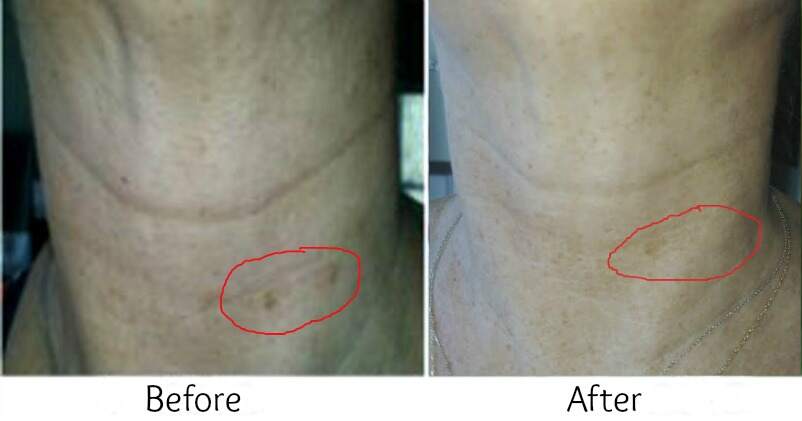 My neck before and after. This brown spot did lighten over time.
This brown spot on my neck did lighten over time, but I wasn’t using vitamin C by itself. I was also exfoliating gently and using a botanical mask, so I can’t say vitamin C alone caused the change.
What I can say is that fresh L-ascorbic acid was a regular part of the routine I used.
If brown spots are your main concern, I go into the full routine, exfoliation, sunscreen and what I learned here: How to Fade Sun Spots
Does vitamin C serum bleach your skin?
I've been using vitamin C on my face, off and on, for over 15 years. And I can tell you, it has never bleached my skin or changed my natural skin color.
But here's what I have noticed:
When I'm consistent with my freshly mixed L-ascorbic acid serum (currently around 5%), not only does some of the uneven pigmentation start to fade, but my whole complexion takes on this beautiful, bright glow.
It's hard to describe. My skin doesn't look lighter or bleached. It just looks clearer, brighter, and almost translucent. Like there's a little more light coming through my skin.
And for me, that's one of the biggest reasons I keep coming back to vitamin C.
Of course, results vary. Vitamin C won't bleach your natural skin color, but it may gradually help fade areas of excess pigmentation, making your skin tone look more even.
Mixing update:
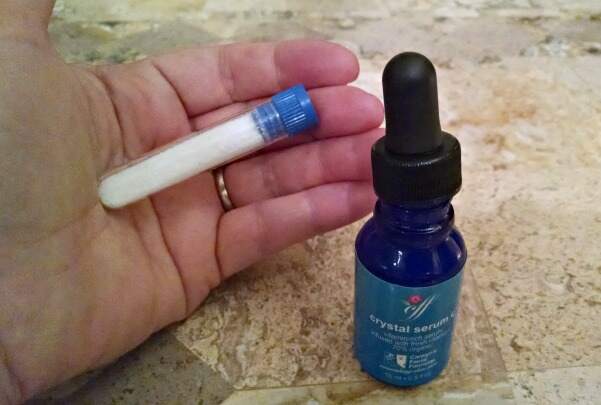 This is the L-ascorbic acid crystal and serum combo I mix fresh before using.
I like mixing mine fresh because L-ascorbic acid is less stable once it’s mixed with liquid. If your skin is sensitive, start slowly and pay attention to how it reacts.
Watch how Carolyn does it in the video below:
How I apply vitamin C
I apply my vitamin C to clean, dry skin and then follow with moisturizer. And, as Carolyn suggests, I sometimes do a quick face massage while applying my vitamin C.
I’m already putting skincare on my face, so I figure, why not get a little massage in at the same time?
Carolyn demonstrates the Circle-Up Rub here:
 Carolyn demonstrates the Circle-Up Rub, one of the facial movements she recommends using with her skincare products.
Why “fresh” vitamin C makes a difference
L-ascorbic acid is not very stable once it’s mixed with liquid, which is one reason I like mixing mine fresh.
A fresh formula gives me more confidence that I’m actually getting active vitamin C instead of using something that has already started to break down.
If your serum has turned noticeably darker — especially orange or brown — I’d replace it.
What to look for in a vitamin C product
If you’re using L-ascorbic acid, here are the things I’d pay attention to:
- L-ascorbic acid: This is the form with the most research behind it.
- Around 10–15% to start: You don’t automatically need 20%. I’d rather use a strength my skin can handle consistently.
- A formula that keeps the vitamin C stable: L-ascorbic acid can be tricky because it breaks down easily. I pay more attention to freshness, packaging and whether the formula is made to keep the vitamin C stable.
- Dark, protective packaging: Light and air can speed up oxidation, so packaging matters.
- Freshness: If you use crystals like I do, mixing a small amount fresh each time can help avoid storing it already mixed in liquid.
Why crushing vitamin C tablets don't work
You’d be surprised how many people try making a vitamin C serum by crushing regular vitamin C tablets. I’ve tried it too.
The problem is that tablets made for swallowing usually contain other ingredients besides vitamin C, and they aren’t designed to dissolve or work like a skincare formula.
You also don’t really know what concentration or pH you’re ending up with once you mix it yourself.
For me, it just wasn’t worth the guesswork. If I’m going to use L-ascorbic acid on my face, I’d rather use a form that was actually made for skincare.
Other forms of vitamin C (if you're exploring)
If you're curious about alternatives, here are a few that may work better for certain skin types:
- Liquid L-ascorbic boosters: Add to your favorite cream or moisturizer; some include niacinamide for added brightening
- THD Ascorbate (for sensitive skin): Oil-soluble and often gentler than L-ascorbic acid, which is why I like it as an option after dermaplaning. Here’s more about using vitamin C after dermaplaning.
If uneven tone is one of your concerns, niacinamide can also pair well with vitamin C. I talk more about niacinamide here. I’ve tested several over the years, but I always come back to the fresh crystal vitamin C + serum combo.
Side effects
Most people tolerate topical vitamin C pretty well, but stronger L-ascorbic acid formulas can sting or irritate some skin.
- Tingling or redness: This can happen, especially with stronger formulas or sensitive skin.
- Dryness or irritation: If your skin starts feeling tight, flaky, or uncomfortable, back off and use it less often.
- Reaction to the formula: Sometimes it may be another ingredient in the product that your skin doesn’t like.
If you’re new to vitamin C, I’d start slowly and see how your skin reacts. I still use sunscreen every day because vitamin C doesn’t replace sun protection.
FAQs
Question: Can you use vitamin C and niacinamide together?
Question: Can you use vitamin C and niacinamide together?
Answer: Yes. Vitamin C and niacinamide can be used in the same routine, and many products even combine them.
I like niacinamide especially for uneven-looking skin tone. If you want to know more about how I use it, I talk about that here: Niacinamide Skin Brightening.
Question: Can you boost vitamin C’s brightening power with other ingredients?
Question: Can you boost vitamin C’s brightening power with other ingredients?
Yes. Vitamin C can be used alongside other brightening ingredients such as niacinamide or kojic acid. But I wouldn’t pile everything on at once, especially if your skin is sensitive. If discoloration is your main concern, you can read more about kojic acid here and niacinamide here.
Question: What shouldn’t you mix with vitamin C?
Question: What shouldn’t you mix with vitamin C?
Answer: This depends a lot on the type of vitamin C you’re using and how sensitive your skin is.
I’m more cautious about using strong exfoliating acids or retinoids at the same time as L-ascorbic acid, especially if my skin is already feeling sensitive. You don’t necessarily have to avoid them completely — sometimes it’s just easier on your skin to use them at different times.
Takeaway
Vitamin C can be worth using, but I think the type of vitamin C — and how fresh it is — makes a big difference.
For me, freshly mixed L-ascorbic acid crystals are the form that finally gave me noticeable results. I’m looking for those smaller changes in brightness, uneven tone, and overall skin appearance that add up over time.
If vitamin C hasn’t impressed you before, I wouldn’t automatically give up on it. Sometimes changing the formula, strength, or how you use it can make all the difference.
Small changes can make a big difference.
You might like these:
Exactly What Is Skin Brightening? And How Can You Get It?
What is skin brightening? Learn how to boost your natural glow with simple, at-home simple, everyday tips.
Neck Wrinkles: 4 At-Home Proven Ways How To Get Rid of Lines
Neck Wrinkles. How I got rid of wrinkles at home. See my before and after neck pictures
Does Vitamin C Help Wrinkles? Fine Lines vs Deep Wrinkles
Does vitamin C help wrinkles? See what it may do for fine lines, deeper wrinkles, and aging skin, plus what women over 40 can realistically expect.



References:
Clin Cosmet Investig Dermatol. 2018 May 29;11:253-263. doi: 10.2147/CCID.S161352. eCollection 201
Have a question or want to share your experience?

I'd love to hear from you! Visit my Questions & Comments page to ask a question, share a tip, or tell me what's worked for you.
Stay Connected with Me
Want to see what I’m up to? I’ll keep you posted on new products I’m trying, little tricks I’ve discovered, new finds, and a few personal updates too.

About the Author:
Linda Robison is a Certified Facial Fitness Specialist and founder of Anti-Aging Beauty Zone, where she shares practical tips, products, techniques, and at-home options for women over 40. She personally tests many of the methods she writes about.
Experience: Linda spent nearly 15 years as an Anti-Aging Health Advisor at the Life Extension Foundation and has over 30 years of experience testing facial anti-aging techniques, including training in Carolyn’s Facial Fitness. Her work has been featured in GB News and Beauty Box Magazine. You can view her background on LinkedIn and follow her on Pinterest.
Found this helpful? Tap the ♡ in the bottom right corner.
FOLLOW OR SAVE

Stay Connected with Me
Want to see what I’m up to? I’ll keep you posted on new products I’m trying, little tricks I’ve discovered, new finds, and a few personal updates too.
Affiliate disclosure: As an Amazon Associate and affiliate for other brands, I may earn a commission from qualifying purchases, at no extra cost to you. [Read Disclosure.] A quick note: I create the content on this site and sometimes use AI tools for writing and images. I review everything for accuracy, and my before-and-after photos are my own.

Anti-Aging Beauty Zone (ABZ): Small Changes, Big Results!
ALL CONTENT COPYRIGHT© 2013-
ALL RIGHTS RESERVED REGARDLESS OF LINKS OR ATTRIBUTIONS
ALL CONTENT COPYRIGHT© 2013-
ALL RIGHTS RESERVED
REGARDLESS OF LINKS OR ATTRIBUTIONS