- Home
- Skincare Guide
- Skin Foods
Skin-Nourishing Foods: Smart, Everyday Choices for Healthy, Glowing Skin

I’ve worked in health and wellness for years—including my time as a health advisor at the Life Extension Foundation—and one thing I’ve learned is this: your daily food choices can influence how your skin looks and feels as you get older.
The good news? You don’t need pricey products or complicated routines. Just real, skin-nourishing foods you can grab at any grocery store.
In this guide, I’ll break down the best skin-nourishing foods, the key nutrients that support collagen, hydration, and your skin barrier, and a few easy swaps that add up over time.
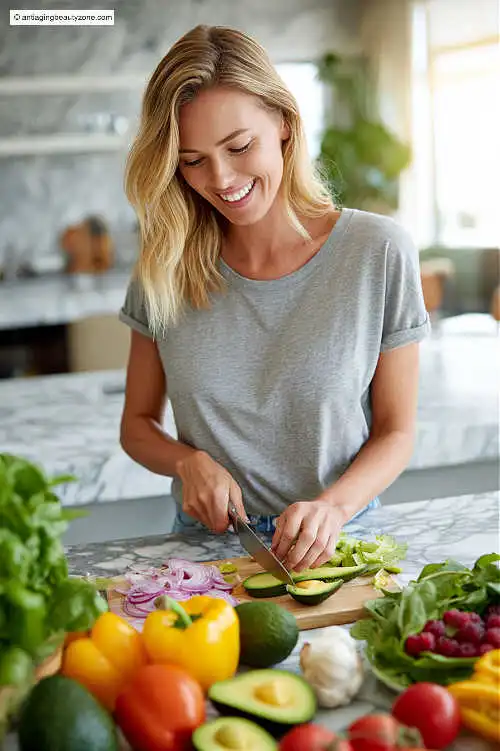 You don’t need pricey products—just real food like this that you can grab at any grocery store.
This page focuses on nourishing skin from the inside out. But if you're looking for the topical side — cleansing, exfoliation, moisture, retinol, vitamin C, and sunscreen — start with my Skincare Over 40 Guide.
There’s a lot of hype out there, but a few nutrients really do support stronger, healthier-looking skin as we age. In this guide, I’ll share the ones I rely on—and easy ways to work them into everyday meals.
One thing I noticed pretty quickly?
Some of the foods I was eating were actually making my skin look more puffy—especially around my eyes and lower face.
Once I cut back on a few of the biggest food culprits (I’ll show you below), my face started to look less puffy—especially around my eyes.
How food affects your skin as you age
As we get older, collagen production slows down and skin can get drier and less resilient. Food won’t “fix” everything, but it can support your skin from the inside by helping with hydration, skin barrier comfort, and overall resilience.
The right nutrients can support collagen, protect your skin, help it hold onto moisture, and support overall firmness.
Quick note: A sagging jowl line is one of those changes many of us start to notice over time. Now food alone won’t lift or reshape it. But what you eat can support skin hydration, collagen structure, and overall tone. I’ll cover the food side on this page and link you to my simple jawline lift routine.
Color-rich foods that support aging skin
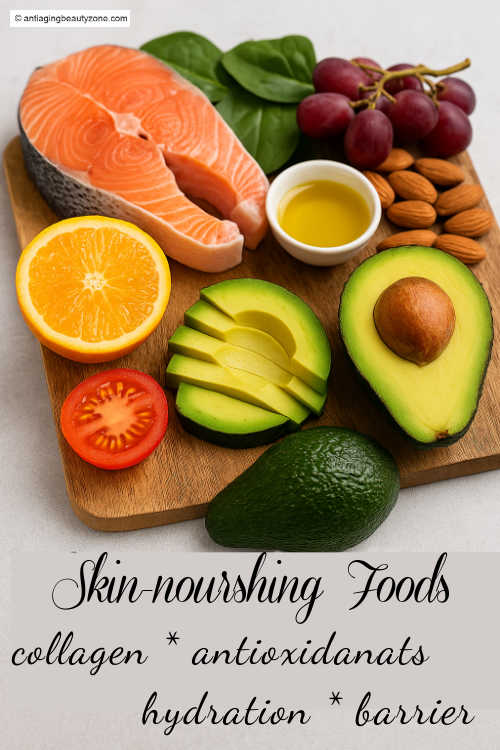
A simple way to support your skin from the inside is to eat a mix of naturally colorful foods. Different colors tend to deliver different plant compounds that support skin resilience and overall skin health over time.
- Red & pink: tomatoes, red peppers, watermelon, strawberries (great everyday antioxidant support)
- Orange & yellow: carrots, sweet potatoes, squash, bell peppers (supports normal skin renewal)
- Green: spinach, kale, broccoli, mustard greens, avocados (collagen support + comfort for dry skin)
- Blue & purple: blueberries, blackberries, purple grapes (skin-cell protection support)
- Pink-ish seafoods: salmon, shrimp, egg yolks (supports elasticity and smoothness)
- Sulfur-rich: garlic, onions, leeks (collagen + keratin support — my grandmother swore by these)
You don’t have to eat all of these every day. Just pick a few favorites, mix and match, and add them where they fit. Smoothies are one of the easiest ways to sneak in berries, greens, chia seeds, yogurt, or avocado without making a whole meal out of it. See my glow smoothies for skincare after 40 for a few easy blend ideas.
Curious why these foods help your skin—and easy, real-life ways I actually use them—keep reading.
Sulfur-rich foods (like garlic, onions, and leeks)
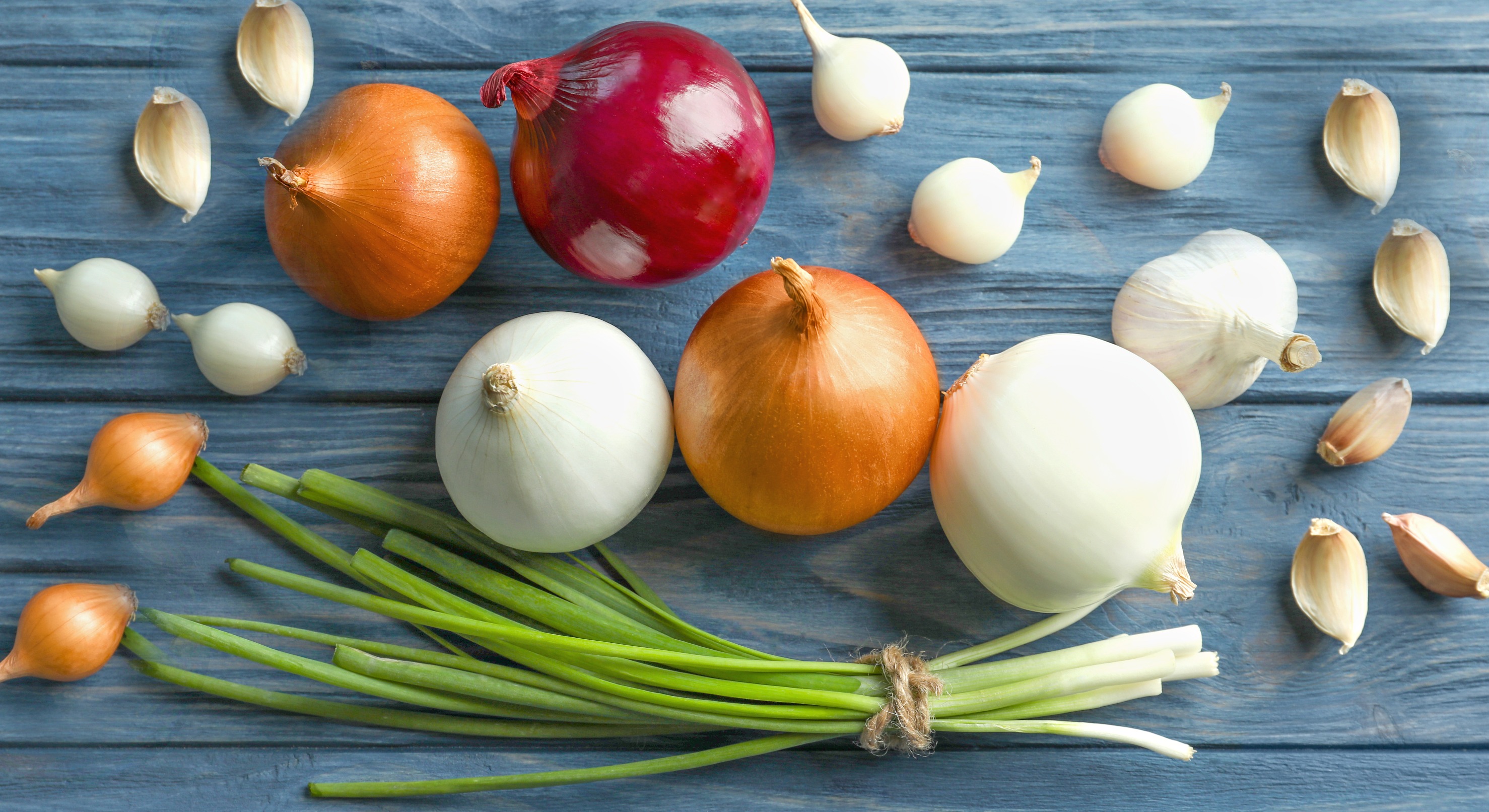
Sulfur helps your body make collagen and keratin—two proteins that support skin strength and structure as we age. It also plays a role in detox pathways that can help calm skin flare-ups.
I grew up eating garlic and onions in just about everything, thanks to my Polish grandmother. Back then, I didn’t know why she used them—I just liked the flavor.
Looking back, I like that these were simple, nutrient-rich foods she ate regularly — although of course no single food explains how someone’s skin age.
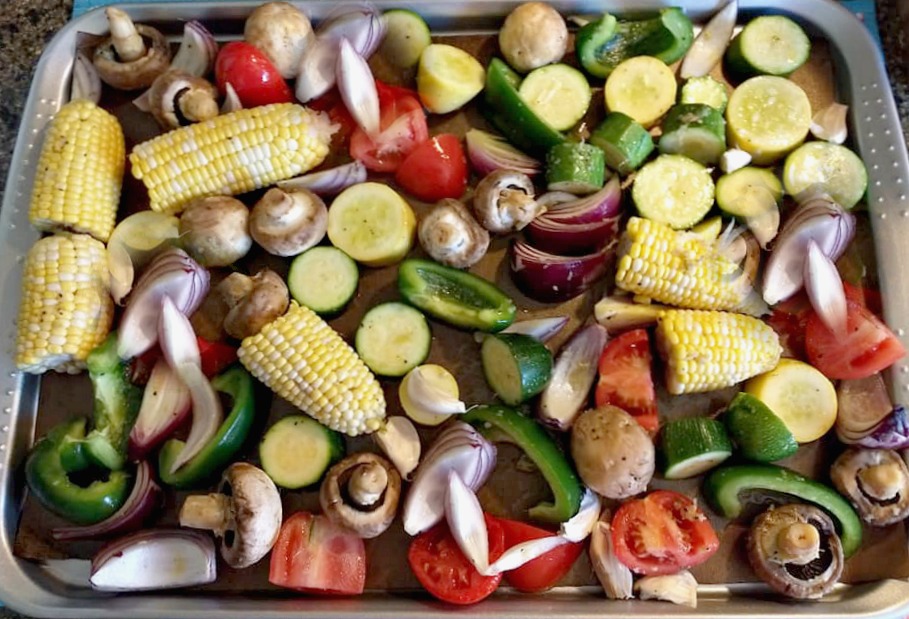 My real-life go-to: I roast a big batch of veggies like these once a week. It’s one of the easiest ways to eat more skin-nourishing foods—without having to think about it every day.
ABZ Tip: I roast a big tray of vegetables once a week and always include onions or garlic. It’s one of the easiest ways I know to eat more skin-nourishing foods without thinking about it every day.
Vitamin C (citrus, berries, and peppers)
Vitamin C supports collagen, skin repair, and helps protect against everyday environmental stress like sun exposure and pollution.
You don’t need mega doses or fancy routines. Just getting enough through food—and using it topically—can make a noticeable difference over time.
ABZ Tip: I toss berries into yogurt or oatmeal and add red or yellow bell peppers to salads and quick stir-fries. I usually try to work one or two vitamin-C-rich foods into my day.
Plant pigments (carotenoids & lycopene): why color matters
The natural pigments that give fruits and vegetables their bright colors also help protect skin from oxidative stress and collagen breakdown.
Lycopene, found in tomatoes, is especially interesting because cooking makes it easier for your body to absorb. That’s why tomato paste is one of my favorite underrated skin foods.
ABZ Tip: I also lean on leafy greens like spinach here—I keep frozen spinach on hand and toss it into soups, pasta, or blend it into my skin-clearing smoothies when I want something easy.
Astaxanthin & omega-3s (salmon, shrimp, and eggs)
Astaxanthin and omega-3s help support skin elasticity, hydration, and barrier strength—especially helpful if your skin tends to feel dry or easily irritated.
I don’t eat seafood every day, so I focus on a few meals a week and supplement when needed.
ABZ Tip: Salmon patties, shrimp stir-fries, or eggs are easy ways to work these in without overthinking it.
Vitamin E & healthy fats (avocado, olive oil, and nuts)
Vitamin E and healthy fats help protect skin cells and support moisture—something many of us notice more as skin gets drier with age.
ABZ Tip: I drizzle olive oil over veggies, add avocado to toast or salads, or grab a handful of nuts. Easy upgrades that actually taste good.
Polyphenols & EGCG (green tea, black tea, and grapes)
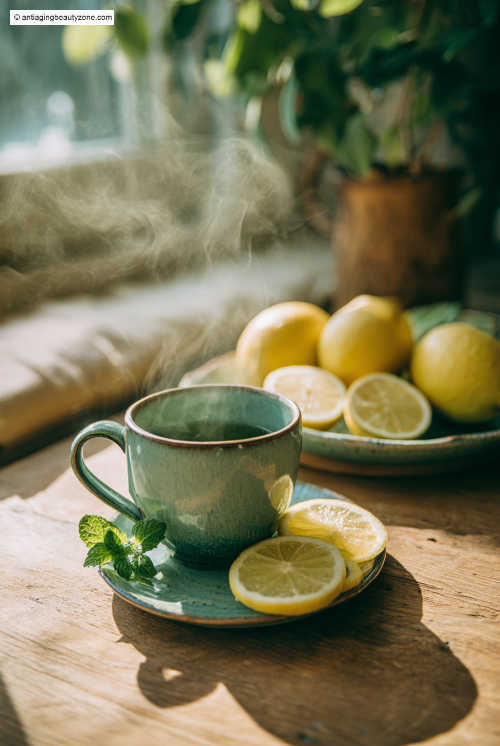
Polyphenols help protect skin from inflammation, stress, and environmental aging. Green and black tea are simple, affordable sources.
Green tea contains EGCG which has been studied for its antioxidant and skin-supporting properties. And if you like the idea of green tea on your skin too, here’s my green tea facial cleanser recipe.
ABZ Tip: I drink green or black tea often and sometimes reuse the tea bags as quick, chilled eye compresses. Simple, old-school, and it works.
Foods that may work against skin health when eaten often
These are everyday foods that can quietly work against skin comfort and elasticity over time—especially when they drive inflammation, blood sugar spikes, or a sneaky little process called glycation (aka the collagen crinkler).
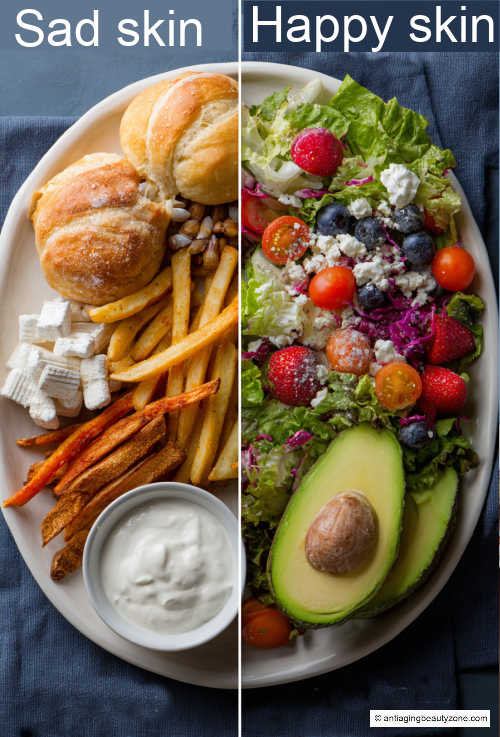
I used to hear about glycation all the time back at Life Extension Foundation, and once you understand it, the skin connection makes sense: when there’s too much sugar in your bloodstream, it can bind to proteins like collagen and elastin, making them stiffer over time.
The result? Less bounce, more dullness, and skin that starts to look a little more “crinkly”—especially as we get older.
Common culprits that can contribute to glycation + inflammation:
- Added sugars (including hidden sugars in sauces, cereal, and “low-fat” snacks)
- Refined carbs like white bread, crackers, baked goods, and pasta
- Fried and processed foods that contain trans fats or overprocessed oils
- High-sodium meals (think frozen dinners or takeout) that can contribute to puffiness
- Sugary drinks and alcohol, which can dehydrate and inflame skin over time
This doesn’t mean you have to be perfect or cut everything out. But over time, a diet heavy in these foods may work against overall skin health.
Easy food swaps to support better skin
Don’t worry—eating better for your skin doesn’t have to be hard or complicated. It’s really just about making small, doable swaps that support your skin from the inside out.
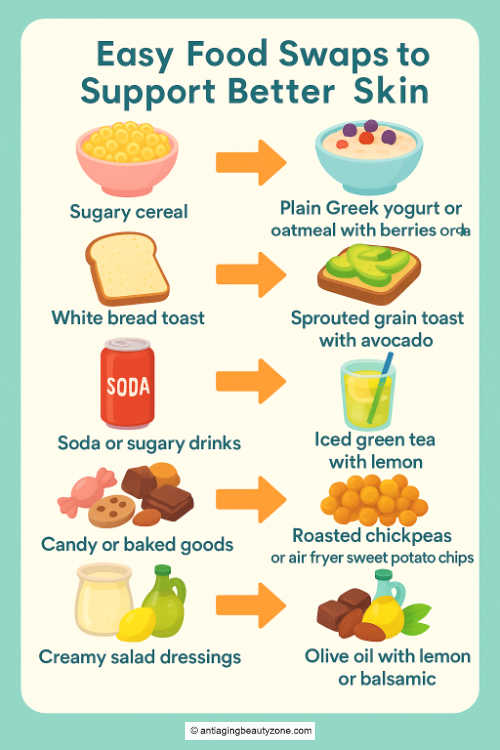
No rules, no pressure—just a few simple ideas you can try when it works for you.
Here are some of my go-to swaps:
- Sugary cereal → Plain Greek yogurt or oatmeal with berries or chia
- White bread toast → Sprouted grain toast with avocado
- Soda or sugary drinks → Iced green tea with lemon
- Potato chips → Roasted chickpeas or air fryer sweet potato chips.
- Candy or baked goods → A few squares of dark chocolate + almonds
- Creamy salad dressings → Olive oil with lemon or balsamic
- Full pasta bowl → Half pasta, half spaghetti squash (My favorite dinner swap—plus a great time to add that garlic!)
These aren’t rules—just easy ways to work in more nutrients without giving up flavor.
ABZ Tip: If I know I’ll be having pizza or something fun later, I try to stick to skin-friendly foods earlier—like veggies, protein, or healthy fats. Just giving my skin a little support where I can.

ABZ Tip: If I need a quick “skin snack,” I grab a small bowl of olives. They’re salty, satisfying, and a simple way to get healthy fats. And when I want something sweet, I’ll do a couple squares of dark chocolate with a few almonds.
Not perfect—just smarter food swaps for skin health
Feeling overwhelmed? Don’t stress—eating for better skin isn’t about being perfect. Just start adding skin-friendly foods where you can and choosing options that nourish your skin instead of working against it.
A good tip to remember? If a food is highly processed and low in nutrients, it may be better as an occasional choice rather than an everyday staple.
But that doesn’t mean all packaged foods are off the table.
I still use frozen & canned veggies, canned beans, and jarred tomato paste all the time. They’re budget-friendly, nutrient-dense, and often better than skipping the veggies altogether.
Takeaway: Small food choices, big skin difference
You don’t need a perfect diet for better skin. Just a few smart choices, repeated over time, can go a long way.
Whether it’s tossing spinach into your eggs, adding veggies to your pasta, swapping soda for iced green tea, or adding healthy fats to your plate—it all adds up.
Your skin reflects what’s going on inside. So be kind to it. Nourish it. And don’t stress if you’re not perfect—I don’t aim for perfect either. Just progress.
You might like these
Benefits of Kale: Does kale make your skin glow? You Bet!
Kale benefits for skin? From kale juice to chips - try these recipes. Kale is cheap and healthy.
How to Look Less Tired: At-Home Tips for a Brighter, Youthful Look
How to look less tired with these at-home tips. From skincare routines to makeup tricks, try ways to brighten your skin, reduce puffiness, and look refreshed.
Reviews for Anti-Aging Skincare and Beauty Products
Reviews for Anti-Aging Skincare and Beauty Products


FAQs
Question: What are the best vitamins for skin?
Question: What are the best vitamins for skin?
Answer: Vitamin C, E, and A (including beta-carotene) are key for skin health. Omega-3s and antioxidants like polyphenols and lycopene also help support collagen and reduce inflammation.
Question: Can food really help reduce wrinkles?
Question: Can food really help reduce wrinkles?
Answer: It can support your skin from within—especially when combined with good skincare habits. Eating nutrient-rich foods won’t erase wrinkles, but it can help skin look firmer, brighter, and more resilient.
Question: Are there any foods that make skin worse?
Question: Are there any foods that make skin worse?
Answer: Ultra-processed foods high in sugar, refined carbs, and unhealthy fats can contribute to inflammation and glycation—both of which can affect skin texture and tone over time.
Question: What’s one easy change to start with?
Question: What’s one easy change to start with?
Answer: Add one “skin meal” a day—just a dish packed with skin-friendly ingredients. Think leafy greens, healthy fats, berries, or colorful veggies.
Question: Is it okay to have sweets or processed foods sometimes?
Question: Is it okay to have sweets or processed foods sometimes?
Answer: Of course. I see it like a bank account—if I know I’ll be splurging later, I try to sneak in a few skin-nourishing foods earlier in the day.
Stay Connected with Me
Want to see what I’m up to? I’ll keep you posted on new products I’m trying, little tricks I’ve discovered, new finds, and a few personal updates too.

About the Author:
Linda Robison is a Certified Facial Fitness Specialist and founder of Anti-Aging Beauty Zone, where she shares practical tips, products, techniques, and at-home options for women over 40. She personally tests many of the methods she writes about.
Experience: Linda spent nearly 15 years as an Anti-Aging Health Advisor at the Life Extension Foundation and has over 30 years of experience testing facial anti-aging techniques, including training in Carolyn’s Facial Fitness. Her work has been featured in GB News and Beauty Box Magazine. You can view her background on LinkedIn and follow her on Pinterest.
Found this helpful? Tap the ♡ in the bottom right corner.
FOLLOW OR SAVE

Stay Connected with Me
Want to see what I’m up to? I’ll keep you posted on new products I’m trying, little tricks I’ve discovered, new finds, and a few personal updates too.
Affiliate disclosure: As an Amazon Associate and affiliate for other brands, I may earn a commission from qualifying purchases, at no extra cost to you. [Read Disclosure.] A quick note: I create the content on this site and sometimes use AI tools for writing and images. I review everything for accuracy, and my before-and-after photos are my own.

Anti-Aging Beauty Zone (ABZ): Small Changes, Big Results!
ALL CONTENT COPYRIGHT© 2013-
ALL RIGHTS RESERVED REGARDLESS OF LINKS OR ATTRIBUTIONS
ALL CONTENT COPYRIGHT© 2013-
ALL RIGHTS RESERVED
REGARDLESS OF LINKS OR ATTRIBUTIONS