- Home
- Reduce Puffy Eyes
- Quick Fixes for Puffy Eyes
Quick Fixes for Puffy Eyes: 6 Ways to De-Puff Eyes Fast

✅ Quick answer
If you wake up with puffy eyes, try gently tapping under your eyes for 20–30 seconds, blinking quickly 10–15 times, and then placing a cool washcloth over your eyes for a few minutes. These simple tricks may help reduce temporary morning puffiness, but they won't get rid of permanent under-eye bags.

Before you start, check this:
These quick fixes work best when puffiness is soft, temporary, and changes during the day.
If your eyes look puffiest in the morning, or after salty food, poor sleep, allergies, or crying, start with the tips below.
But if the puffiness feels firm, sits lower under the eye or on the upper cheek, or looks the same all day, it may be something more structural, like fat pads, malar bags, or festoons.
Note: Not sure what malar bags are? See how they’re different from regular under-eye puffiness.
Don’t blame yourself if quick fixes only help a little.
If you woke up puffy or need a quick refresh, the tips below are simple fixes you can do in a minute or two.
These are small tricks I use when my eyes suddenly look swollen and I need them to settle down quickly — no complicated routines.
Some help with circulation, some move fluid, and a couple make puffiness look better right away. If you want deeper causes and long-term fixes, see: How to Reduce Puffy Eyes.
When to get it checked: If swelling is sudden, painful, very red, affects your vision, or is mostly in one eye, don't rely on quick fixes. It's best to get medical advice, especially if the swelling doesn't go away. Sudden vision changes or severe eye pain need urgent medical attention.
1. Two-finger tapping (quick de-puff)
How to do it:
- Hold two fingers in a relaxed “peace sign”
- Lightly tap along the orbital bone
- Move from the inner corner outward
- Repeat for 20–30 seconds per eye
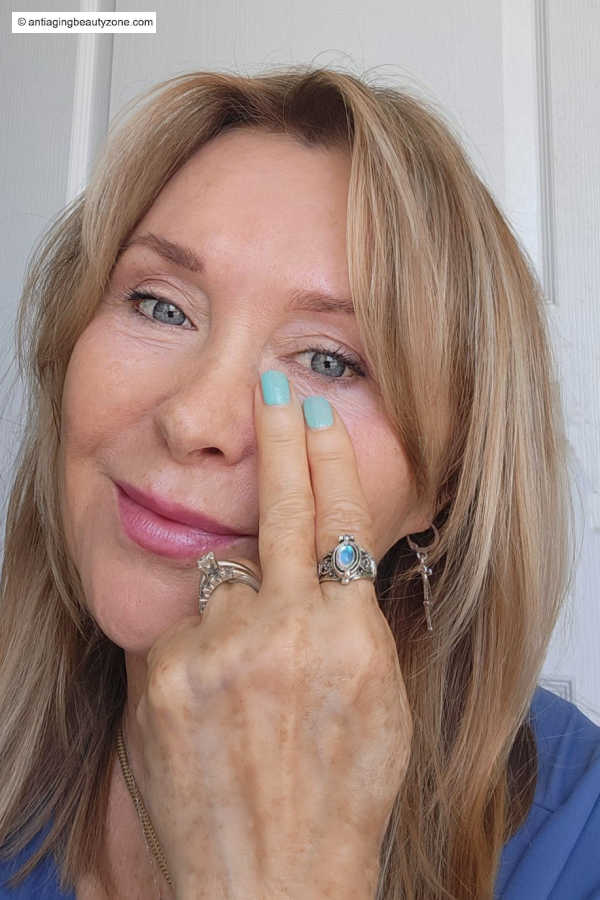 Two-finger tapping to wake up the eye area.
Start at the inner corner of the eye and lightly tap and lift along the orbital bone, moving outward a little at a time toward the temple. Tap → lift → move over → repeat.
Why it helps:
Puffiness often sits right in the center under the eye. I usually start near the inner corner and tap outward to help move things along.
The key is to keep it light. You’re not trying to push, pull, or stretch the skin.
Best for: soft morning puffiness from fluid
How fast: about 30 seconds to a few minutes
Reality check: tapping can help move fluid-type puffiness, but it won’t change firm under-eye bags, malar bags, or festoons.
2. The 30-second bounce reset
How to do it:
- Stand up.Lightly bounce or jog in place for 20–30 seconds.
- Keep the movement gentle.
- Repeat once or twice if you like.
- You don't need a workout. Just a little movement to get started.
How fast: About 30 seconds to 2 minutes.
Why it helps:
Sometimes the fastest way to reduce puffiness is to get fluid moving again. When we first wake up, fluid can sit longer than it should, especially if your puffiness is worse in the morning. A quick burst of gentle movement can help wake up circulation and move things along faster.
This works especially well for morning puffiness caused by fluid retention. I’ve found that even a short bounce session can make my eyes look a little smoother.
Best for: morning puffiness from fluid retention
How fast: about 5 minutes
Reality check: this can help fluid-type puffiness, but it won’t change firm under-eye bags, malar bags, or festoons.
3. The blink pump
How to do it:
- Blink gently but quickly 10–15 times.
- Open your eyes wide, then slowly look from side to side.
- Relax your eyes.
- Repeat once or twice if you like.
How fast: About 30 seconds to 1 minute.
Why it helps:
Blinking activates the small muscles around the eye that help move fluid through the area. When that movement slows down, like after sleep or screen time, fluid can sit under the eyes and make them look puffier. This quick blink-and-open sequence helps wake that area back up and get things moving again.
It’s simple, but it can make your eyes look less puffy and more awake.
Best for: morning puffiness from fluid or screen-time stiffness
How fast: about 1 minute
Reality check: this may help the area look more awake, but it won’t change firm under-eye bags, malar bags, or festoons.
4. The warm shower circulation reset
How to do it:
- Take a short, comfortably warm shower.
- Keep the water warm, not hot.
- Avoid directing a strong stream of water at your eyes.
Why it may help:
I've noticed that sometimes my eyes look less puffy after a warm (not hot) shower. I'm not sure whether it's the warm water, being upright and moving around, or just having water lightly splash against my face. It doesn't work every time, but it's something I've noticed during my morning routine.
One thing to keep in mind: If warmth makes your eyes look puffier or redder, skip this one and try a cool compress instead.”
Best for: A gentle morning refresh, if warmth agrees with your skin.
How fast: A few minutes.
Reality check: Warm showers aren't a proven way to reduce under-eye swelling, and warmth can make some puffiness worse.
5. Use cooling as the final reset — but don’t overdo it
How to do it:
- Do your tapping, blink pump, or warm shower reset first
- Then place a cool, damp washcloth over your closed eyes for 3 to 5 minutes
- Keep the pressure light
- Skip anything frozen directly on your skin
First, you help wake up the area. Then you cool it down.
Why it helps:
Cold compresses may help calm the look of temporary puffiness, especially if your eyes look puffy from fluid, lack of sleep, or a salty meal.
But here’s what I learned the hard way: if I press too hard with cold pads or hold a cold spoon there too long, my eyes can actually look worse.
That’s why I don’t treat this like an ice treatment. I treat it like a gentle cool-down.
Best for: soft, temporary morning puffiness
How fast: a few minutes
Reality check: cooling may make eyes look less swollen, but it won’t remove fat pads, malar bags, or festoons.
My rule: cool, light, and brief. If your skin looks more irritated afterward, back off and try less pressure next time.
6. The concealer placement trick
How to do it:
- Apply a little concealer to the inner corners of your eyes.
- Place a little in the hollow under the puff, not directly on the bulge.
- Then softly blend.
Why it helps:
I've found that a little concealer in the inner corners of my eyes and in the hollow below the puffiness helps brighten the shadows. My eyes look less tired, even when they're still puffy. You can see exactly how I brighten the inner corners of my eyes in my eyeliner tips page.
Best for: shadows that make puffiness look worse
How fast: instantly, once makeup is applied
Reality check: this doesn’t reduce puffiness, but it can make the eye area look smoother and less tired.
A quick note about instant tightening serums
I also have to mention that I personally love instant under-eye tightening serums when I need fast results within minutes.
These products temporarily tighten the skin and can make puffiness look noticeably smoother. They work best for temporary surface smoothing, not true fluid drainage or structural puffiness like fat pads, malar bags, or festoons.
When I have an event or need my eyes to look more awake quickly, I often reach for one of these.
But I know a lot of people still wonder about old-school tricks like Preparation H for temporary under-eye puffiness. I wrote a separate page about whether it’s actually safe to use near the eyes and what to know before trying it: Can You Put Preparation H on Eye Bags?
I’ve also tested several under-eye tightening products over the years and compared how well they work.
If you’re curious which ones actually perform well, see my guides:
Those pages show how they look after application and how long the tightening effect lasts.
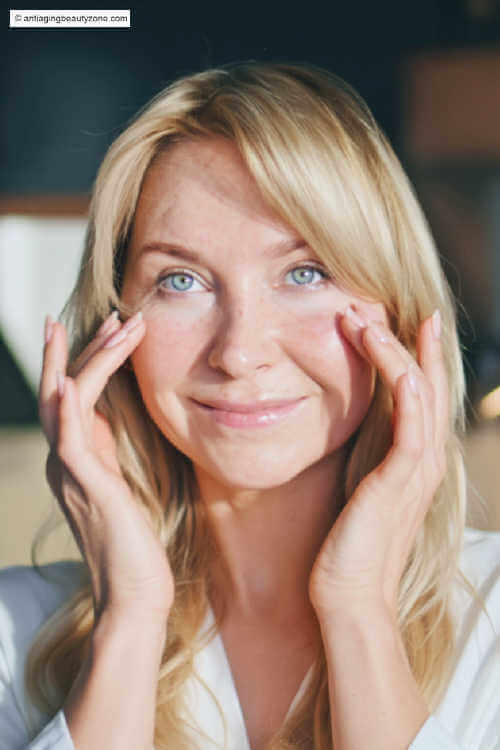
When quick fixes help most
These tricks work best when puffiness is caused by temporary fluid retention, such as:
- sleeping flat
- salty meals
- alcohol
- allergies
- crying
- poor sleep
If puffiness improves during the day, it’s usually more fluid-related.
If it stays the same all day, feels firm, or sits lower under the eye or on the upper cheek, it may be related to fat pads, malar bags, or festoons. Those usually respond less to quick fixes.
Or it could be hormone-related puffiness, which may need a different approach.
The main thing to remember: quick fixes are best for puffiness that comes and goes. If the swelling looks more structural or stays the same, don’t blame yourself if these tricks only help a little.
Takeaway
When your eyes suddenly look puffy, a few quick adjustments can help calm the area down. Light movement, improved circulation, and small visual tricks often make the biggest difference.
Sometimes all the eye area needs is a quick reset. If puffiness is something you deal with often, I recommend reading my full guide on how to reduce puffy eyes, where I explain the causes and long-term solutions.
You might like these
Eyeliner Makeup for Women Over 40: Colors & Tricks to Make Eyes Pop
Eyeliner makeup for older women: learn which colors flatter mature eyes, how to avoid harsh lines, and the best ways to define without aging your look.
How to Reduce Puffy Eyes: Causes, Remedies & Treatments
Discover causes of puffy eyes and the best fixes—natural remedies, quick tricks, serums, and medical treatments—in one guide.
Easy Eye Solutions - No Puffy Eyes - Free Shipping - SALE!
Easy Eye Serum for wrinkles, puffiness & crepey - FREE SHIPPING. See my before and after pictures.


Have a question or want to share your experience?

I'd love to hear from you! Visit my Questions & Comments page to ask a question, share a tip, or tell me what's worked for you.
Stay Connected with Me
Want to see what I’m up to? I’ll keep you posted on new products I’m trying, little tricks I’ve discovered, new finds, and a few personal updates too.

About the Author:
Linda Robison is a Certified Facial Fitness Specialist and founder of Anti-Aging Beauty Zone, where she shares practical tips, products, techniques, and at-home options for women over 40. She personally tests many of the methods she writes about.
Experience: Linda spent nearly 15 years as an Anti-Aging Health Advisor at the Life Extension Foundation and has over 30 years of experience testing facial anti-aging techniques, including training in Carolyn’s Facial Fitness. Her work has been featured in GB News and Beauty Box Magazine. You can view her background on LinkedIn and follow her on Pinterest.
Found this helpful? Tap the ♡ in the bottom right corner.
FOLLOW OR SAVE

Stay Connected with Me
Want to see what I’m up to? I’ll keep you posted on new products I’m trying, little tricks I’ve discovered, new finds, and a few personal updates too.
Affiliate disclosure: As an Amazon Associate and affiliate for other brands, I may earn a commission from qualifying purchases, at no extra cost to you. [Read Disclosure.] A quick note: I create the content on this site and sometimes use AI tools for writing and images. I review everything for accuracy, and my before-and-after photos are my own.
Anti-Aging Beauty Zone (ABZ): Small Changes, Big Results!
ALL CONTENT COPYRIGHT© 2013-
ALL RIGHTS RESERVED REGARDLESS OF LINKS OR ATTRIBUTIONS
ALL CONTENT COPYRIGHT© 2013-
ALL RIGHTS RESERVED
REGARDLESS OF LINKS OR ATTRIBUTIONS