Foundation vs Tinted Moisturizer: Which Should You Choose for Your Skin Type?

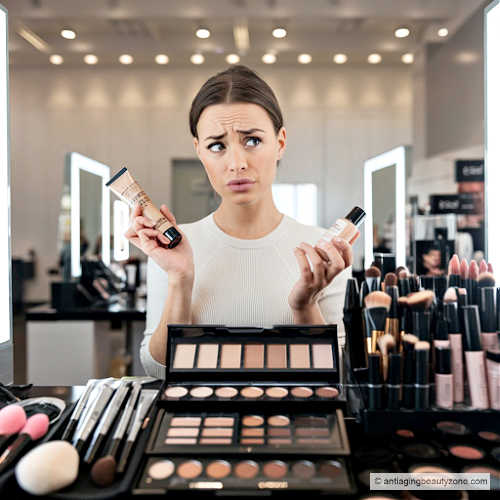
Foundation and tinted moisturizer aren’t the same, even though they’re often lumped together.
The difference comes down to how each one wears on mature skin, how much coverage you want, and how your skin feels day to day.
I’ve worn both for years, and I don’t use them the same way I used to — lighter formulas and easier application tend to matter more to me now.
This page breaks down the real difference between foundation and tinted moisturizer, how each one behaves on changing skin, and how to choose the option that looks smoother and feels easier to wear.
The basics: How foundation and tinted moisturizer behave differently on mature skin
Foundation and tinted moisturizer may look similar at first, but they serve different purposes. Foundation provides fuller coverage to create an even skin tone and hide imperfections, while tinted moisturizer offers lighter coverage and hydration, allowing your natural skin to show through.
Foundation: Full coverage option
Most people know that foundation is typically thicker and provides more coverage. It's great for:
- Covering blemishes and uneven skin tone
- Creating a uniform base for other makeup
- Lasting all day (especially if you choose a long-wear formula)
But here's the thing: Foundation can feel heavy if your skin is dry or textured that day. When it’s applied too thickly — or without enough moisture underneath — it can turn cakey and emphasize lines instead of smoothing them.
Tinted Moisturizer: The lightweight alternative
Think of tinted moisturizer as the lighter, more hydrated version of regular foundation. It offers:
- Sheer coverage that evens out skin tone
- Hydration (it's a moisturizer, after all!)
- A natural, "no-makeup" look
It offers a natural, 'no-makeup' look thanks to its light coverage makeup formula. If you're looking for something even lighter than a foundation, a sheer foundation or skin tint might be the perfect in-between option.
The downside? Tinted moisturizer won't cover major blemishes or discoloration. However, many women over 40 appreciate the lighter coverage, as it looks and feels more natural, lets their skin breathe, and minimizes the appearance of fine lines.
Foundation vs Tinted Moisturizer: Which one works best in different situations?

Choosing between foundation and tinted moisturizer really comes down to your skin type, coverage needs, and personal preference. Let's break it down:
How your skin feels that day matters more than labels
Oily skin:
If your skin gets shiny fast (especially through the T-zone), the goal isn’t “more coverage.” It’s a base that stays put without looking thick.
When foundation makes sense:
- You want your skin tone to look more even, and you need it to last.
- Look for words like oil-free, long-wear, soft matte, or natural matte (soft is the key — super-matte can look flat on mature skin).
- If foundation tends to settle into lines, I find that applying a thinner layer only where I need coverage works better.
When tinted moisturizer makes sense:
- You’re oily, but you still want your skin to look like skin.
- Choose one that’s oil-free or says shine control, and don’t be afraid to apply it lightly (again—just where you get shiny).
- This is my go-to on most days — I show exactly how I apply it on my anti-aging makeup page.
Quick reality check (this matters over 40):
If you’re “oily” but your cheeks feel tight or your makeup separates by lunch, you might be oily + dehydrated. On those days, a lighter base (tinted moisturizer or a thin foundation layer) usually looks smoother than piling on more product.
Dry skin:
If your skin feels tight, looks dull, or makeup seems to settle into or exagerate fine lines, hydration matters more than coverage.
When tinted moisturizer makes sense
- Your skin feels dry or a little rough, especially around the cheeks.
- A tinted moisturizer evens things out without clinging to dry patches.
- Ingredients like glycerin, hyaluronic acid, or lightweight face oils usually help the skin look smoother and more comfortable.
When foundation can still work
- You want more coverage, but your skin doesn’t tolerate heavy formulas.
- Look for hydrating, serum-style, or radiant foundations, and apply less than you think you need.
- Skipping powder (or using it only where needed) often keeps foundation from emphasizing texture.
Real-life note:
On dry days, piling on coverage rarely helps. I usually get a better result by hydrating first and keeping the base lighter, even if that means less coverage overall.
Coverage conundrum
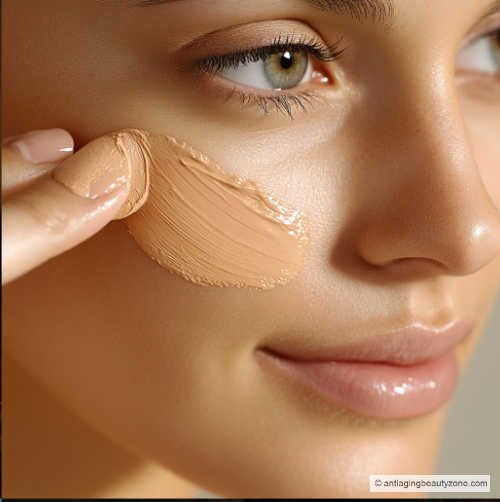
Here's where things get interesting. You might think more coverage is always better, but that's not necessarily true. As we age, heavy foundation can actually accentuate fine lines and wrinkles.
That's why many women in their 40s and 50s are switching to tinted moisturizers or sheer foundations. I stopped using heavy makeup foundation years ago!
This is why so many women over 40 end up liking skin tints and tinted moisturizers: they’re quicker, they’re lighter, and usually look smoother than thick coverage. I’ve seen this come up over and over in makeup forums — sheer products just tend to be more forgiving.
And you know what? I totally get it.
There's something to be said for embracing your natural skin texture. That doesn’t mean giving up coverage — it just means being more strategic about where and how you apply it.
Ease of application (and how much effort you want that day)
Let’s be honest—not everyone has time (or patience) for a full face of foundation every day.
But a tinted moisturizer?
You can apply it with your fingers, blend quickly, and go on with your day. It’s quick, easy, and perfect for a low-maintenance routine.
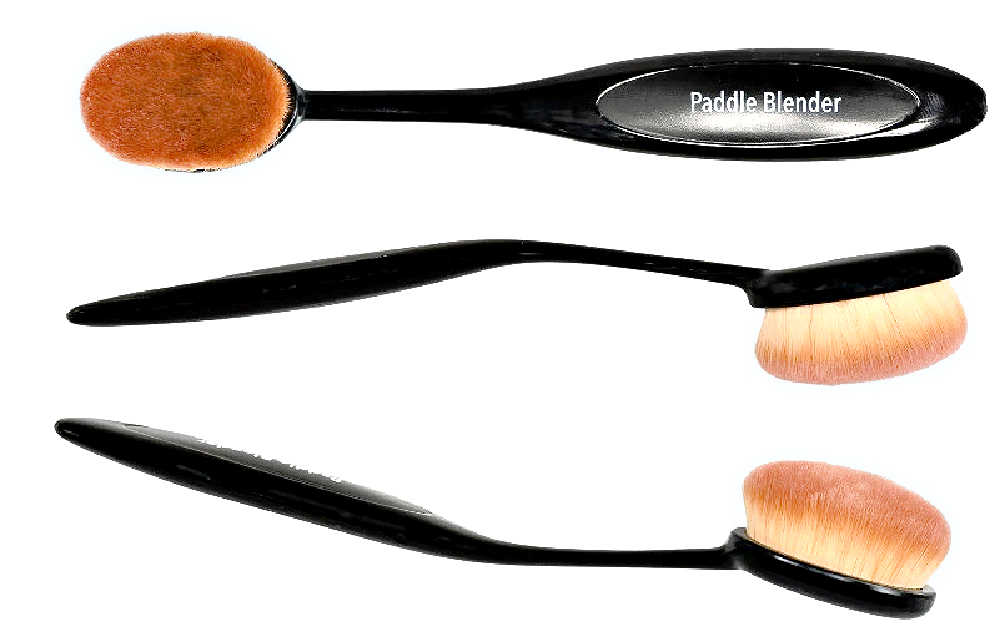
Foundation, though, takes a little more effort. You’ll probably need a beauty blender (I use a paddle brush) to get that smooth, even coverage, especially if you’re dealing with oily skin or fine lines. But if you’re after a more polished look, it’s worth the extra steps.
So, whether you want something fast or you're willing to spend a little more time, it's all about how much effort you're up for that day.
Makeup with skincare benefits
A lot of foundations and tinted moisturizers now include ingredients that are meant to help the skin while you’re wearing them — things that add moisture, smooth the look of the skin, or make makeup feel more comfortable.
That can be a nice bonus, especially as skin changes over time. I just don’t expect makeup to do the same job as skincare. These ingredients help, but they work alongside what you’re already doing for your skin, not instead of it.
(If you’re curious, I walk through my full anti-aging skincare routine on my skincare guide.)
You’ll often see ingredients like:
- Hyaluronic Acid: Adds hydration and plumps the skin.
- Peptides: Promote collagen production.
- Antioxidants: Ingredients like vitamins C and E offer protective benefits.
- Niacinamide: Known for its skin-soothing and anti-aging effects.
- Glycerin: A humectant that helps maintain moisture.
But tinted moisturizers still have the edge when it comes to hydration. And for those with sensitive skin or conditions like rosacea, a tinted moisturizer might be less likely to cause irritation.
Sun protection: A common myth?
This surprised me! I thought that a foundation or tinted moisturizer with SPF was enough to protect my skin from the sun. But here's the truth: it's usually not.
The bigger issue is that most people don’t apply enough foundation or tinted moisturizer to reach the SPF level listed on the label.
My advice? Use a separate sunscreen and allow it to absorb before applying your makeup.
Final takeaway: Foundation vs Tinted Moisturizer
I guess there's no one-size-fits-all answer. Some days you might want the full coverage of a foundation, while other days a tinted moisturizer might be all you need.
Personally, I've found that as I've gotten older, I prefer the natural look of a tinted moisturizer for everyday wear. But I still use a good foundation for special occasions or when I need more coverage for a polished look.
When I look good, I feel good. Makeup should be fun and boost your confidence. So, whether you're Team Foundation, Team Tinted Moisturizer, or a bit of both (my option), the most important thing is that you feel comfortable in your skin.
Can I use tinted moisturizer instead of foundation?
Can I use tinted moisturizer instead of foundation?
Yes — many women do, especially if they prefer lighter coverage and a more natural finish. A tinted moisturizer evens out skin tone without feeling heavy, which can be more forgiving on mature skin. On days when your skin looks decent and feels comfortable, it’s often enough on its own.
Is tinted moisturizer better than foundation for aging skin?
Is tinted moisturizer better than foundation for aging skin?
It can be, depending on how your skin behaves that day. Tinted moisturizers tend to sit more smoothly on dry or textured skin and are less likely to settle into fine lines. Foundation still has its place, especially when you want more coverage — but lighter formulas usually look more natural over time.
When does foundation make more sense than tinted moisturizer?
When does foundation make more sense than tinted moisturizer?
Foundation makes more sense when you want longer wear or more even coverage, such as for events, photos, or days when redness or discoloration is more noticeable. Applying it in thinner layers and only where needed helps it look smoother on mature skin.
You might like these
Face Makeup Over 40: How to Get a Softer, Smoother Finish
Struggling with foundation settling into lines? Learn how to apply face makeup over 40 for a softer, smoother look with lighter layers and better placement.
Organic Makeup for Mature Sensitive Skin
Try Organic makeup foundation tester kit before you buy. Pure, good mineral makeup can make skin look younger.
How to Look Less Tired: At-Home Tips for a Brighter, Youthful Look
How to look less tired with these at-home tips. From skincare routines to makeup tricks, try ways to brighten your skin, reduce puffiness, and look refreshed.


Stay Connected with Me
Want to see what I’m up to? I’ll keep you posted on new products I’m trying, little tricks I’ve discovered, new finds, and a few personal updates too.

About the Author:
Linda Robison is a Certified Facial Fitness Specialist and founder of Anti-Aging Beauty Zone, where she shares practical tips, products, techniques, and at-home options for women over 40. She personally tests many of the methods she writes about.
Experience: Linda spent nearly 15 years as an Anti-Aging Health Advisor at the Life Extension Foundation and has over 30 years of experience testing facial anti-aging techniques, including training in Carolyn’s Facial Fitness. Her work has been featured in GB News and Beauty Box Magazine. You can view her background on LinkedIn and follow her on Pinterest.
Found this helpful? Tap the ♡ in the bottom right corner.
FOLLOW OR SAVE

Stay Connected with Me
Want to see what I’m up to? I’ll keep you posted on new products I’m trying, little tricks I’ve discovered, new finds, and a few personal updates too.
Affiliate disclosure: As an Amazon Associate and affiliate for other brands, I may earn a commission from qualifying purchases, at no extra cost to you. [Read Disclosure.] A quick note: I create the content on this site and sometimes use AI tools for writing and images. I review everything for accuracy, and my before-and-after photos are my own.
Anti-Aging Beauty Zone (ABZ): Small Changes, Big Results!
ALL CONTENT COPYRIGHT© 2013-
ALL RIGHTS RESERVED REGARDLESS OF LINKS OR ATTRIBUTIONS
ALL CONTENT COPYRIGHT© 2013-
ALL RIGHTS RESERVED
REGARDLESS OF LINKS OR ATTRIBUTIONS