- Home
- Reduce Puffy Eyes
How to Reduce Puffy Eyes (Fast Fixes+ Long-Term Solutions)

Puffy eyes can be frustrating—some days they look worse than others, and it’s not always clear why.
I’ve dealt with this myself since my 20s, and I’ve tried just about everything: cold spoons, tea bags, tightening serums, facial massage, and even in-office treatments.
Some things helped. Some made it worse.
What finally made a difference for me was realizing this:
Not all puffiness is the same.
On this page, you’ll find the main causes of puffy eyes, what helps in the moment, and the longer-term approaches that made the biggest difference for me. I’ve also linked to deeper guides so you can go further based on what you’re dealing with.
Not sure where to start? Begin with the quick de-puff massage below, then use the cause section to figure out whether your puffiness is from fluid, allergies, aging changes, or something else.
What causes puffy eyes
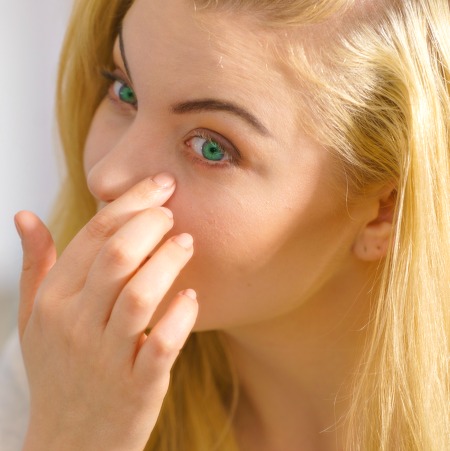
Puffy eyes are usually caused by fluid buildup, inflammation, allergies, or age-related changes that affect drainage and tissue support.
The under-eye skin has tiny blood vessels that can leak small amounts of fluid when you’re tired, inflamed, or dealing with allergies. Normally, your lymphatic system drains it away.
Dermatologists explain puffiness the same way: it’s usually fluid retention, inflammation, or natural age-related fat pad changes. In other words, most puffiness isn’t mysterious. It’s mechanical.
If drainage slows because of your sleep position, hormones, salt, or aging — fluid hangs around longer and creates that soft, swollen look.
Over time, the small fat pads under the eyes can also shift forward as supporting tissue weakens. That’s when puffiness looks more constant instead of just morning swelling. If it improves during the day, it’s likely fluid. If it stays put, it’s more structural.
Dermatologists separate the two before recommending treatment.
The most common causes include:
- Hormonal shifts (cycle, peri, menopause): If your puffiness comes in waves, see hormonal puffy eyes
- Aging & thinning skin (less elasticity + collagen)
- Muscle atrophy (fat pads push forward and look swollen — gentle under-eye exercises may help)
- Sleep deprivation (fluid retention builds overnight)
- Allergies (triggers inflammation + swelling)
- High-salt diet (sodium makes your body hold onto water)
- Genetics (hereditary puffiness or fat pad placement)
- Dehydration (body holds onto water if you’re not drinking enough)
- Lifestyle habits (smoking, alcohol, too much screen time)
Other common triggers: crying, sleeping face-down, poor circulation, or even eye strain.
Once you understand what’s behind your puffiness, it gets much easier to know where to start — because fluid puffiness, allergy puffiness, and age-related puffiness don’t always respond to the same fixes.
Is it allergies, fluid retention, or aging? A quick self-check
You can tell the cause of puffy eyes by how they behave—fluid changes throughout the day, allergies come with irritation, and aging-related puffiness stays more constant.
Not all puffiness is the same. Here’s how to tell what you’re likely dealing with:
It’s probably fluid retention if:
- Puffiness is worse in the morning and improves during the day
- It changes based on sleep, salt, alcohol, or stress
- It looks soft or squishy
- Cool compress or gentle massage helps
It’s often allergy-related if:
- You notice itching, redness, or sneezing
- Both eyes swell during allergy season
- Antihistamines reduce swelling
It may be age-related or structural, including fat pad changes, if:
- Puffiness is constant and doesn’t change
- It feels firmer and more defined
- It sits lower on the upper cheek instead of directly under the eye
- It hasn’t changed much for months or years
Not sure if you have puffy eyes or malar bags? Start with my Cheekbone Puffiness: Fluid or Malar Bags guide. It can help you tell whether the fullness is temporary fluid or something more structural.
If it looks more structural, my Malar Bags vs. Festoons guide explains the difference between those two.
Instant tightening options
Instant tightening serums can tighten under-eye puffiness, bags, and crepey skin in minutes. They're best used as a quick temporary fix when you want the area to look smoother fast.
I'm a big fan of under-eye tightening serums, especially when they're used the right way.
For me, they make difference on mornings when my under-eye area looks estra puffy, crepey or tired.
The biggest issue with these products is cracking, flaking, or that white film. But many times, it’s not the serum itself. It’s using too much product, not prepping the skin first, or using a formula that doesn’t play well with your skin.
I've tested quite a few over the years, including Plexaderm, Peter Thomas Roth FirmX, Easy Eye Solutions, and others. If you're trying to decide which one might work best for your skin, start with my Best Under-Eye Tightening Serums guide where I personally review the top under-eye bag products.
And if you've already tried one and ended up with cracking, peeling, or white residue, my Instant Eye Tightener Troubleshooting Guide can help.
But if instant tighteners aren’t your thing, or your puffiness feels more swollen than crepey, the next options may be a better fit.
Natural remedies for swollen eyes
Natural remedies can help reduce puffiness by gently encouraging drainage, calming inflammation, and improving circulation—especially when puffiness is fluid-related.
If you prefer simple, at-home options, these can help nudge swelling down.
- Coffee grounds I tested whether this actually works (and what works better)
- Light massage tools to encourage drainage out of the face and under-eye area
- Cool tea bags (green or black) to calm and de-puff
- Chilled spoons or a cold compress for a quick calm-down
- Mini cupping, if you’re already comfortable with facial cupping
And here’s a demo for reducing puffiness: Facial & Eye Cupping (video)
An easy massage I use to move under-eye fluid
Some mornings I wake up with puffier eyes than usual. When that happens, I find a vibrating gua sha massage helps de-puff the area a little faster.
I apply a little serum or oil first, then glide gently from the inner under-eye area outward toward the temple, and down toward the ear.
I usually do 5–8 light passes under each eye. The goal is not to press hard. It’s just a gentle sweep to help move fluid.
Here's the kind of light pressure I use. I'm not dragging the skin or pressing hard—just making a gentle outward sweep.
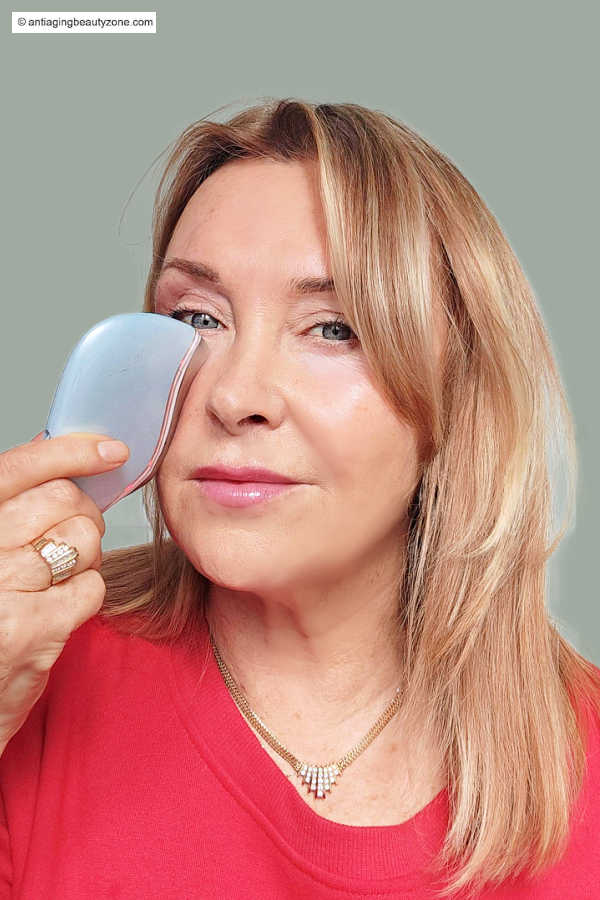 Position the curved edge of the gua sha so it gently cups the under-eye area. This shape helps the tool glide along the orbital bone without pulling delicate skin.
The one thing you don't want to do is press to hard or irritate the eye area. Trust me, that will only make everything worse.
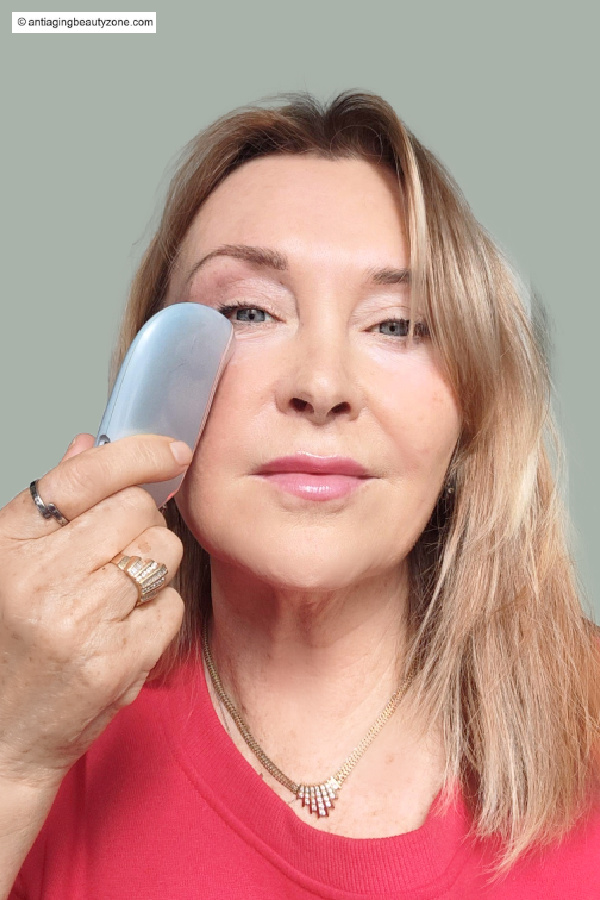 Glide the gua sha from the inner under-eye area outward to the temple. This sweeping motion helps encourage lymphatic drainage and move fluid away from the under-eye area.
Can makeup help puffiness?
Makeup won’t reduce swelling, but smart placement tweaks can make puffiness less noticeable. For lifting techniques and detailed under-eye placement tips, see my Eye Makeup Tips guide.
And if puffiness is only part of the issue, check out these easy ways to look less tired after 40 using simple makeup, skincare, and brightening tricks that help the whole face look more refreshed.
If fine lines are part of the tired-eye look too, my eye wrinkle treatment guide shares the longer-term steps I use around that area.
When to see a professional
Most puffy eyes are harmless, but certain signs can point to something that needs medical attention—especially if the swelling is persistent or unusual.
Consider getting evaluated if:
- Puffiness is constant and doesn’t go down throughout the day
- Only one eye is puffy
- There is pain, redness, or swelling in the eyeball
- You suspect festoons (malar bags), which sit on the upper cheek—not true eye bags
In-office treatment options
Options a doctor may suggest:
- Fillers to soften the hollow under eye (reduces contrast)
- Botox for “jelly roll” muscle bulge or under-eye creasing
- Lower eyelid blepharoplasty for true fat pad eye bags
- Laser or radiofrequency tightening for crepey skin
Prevention and lifestyle tips
Try these simple lifestyle tips to reduce eye swelling and help puffiness show up less often:
- Sleep slightly elevated and keep a consistent schedule.
- Hydrate, and ease up on salt or alcohol at night.
- Reduce bad carbs and eat a nutrient-rich diet — skin-nourishing foods
- Keep allergies under control with doctor-approved options.
- Use SPF and sunglasses during the day, then keep the eye area comfortable with a gentle eye moisturizer.
Also, don’t overlook makeup remover. I like waterproof removers because they take off waterproof sunscreen and mascara faster than regular cleansers. But if I leave that slightly oily film too close to my lash line, my eyes can feel a little irritated and look puffier the next morning. Now I rinse the area gently afterward and avoid rubbing.
Want more help with drainage and morning puffiness? Pair these habits with a gentle face massage routine. Start here: Face massage and Tools
Questions?
What causes puffy eyes?
What causes puffy eyes?
Puffy eyes often come from fluid buildup, lack of sleep, allergies, or natural aging changes like weaker tissues and shifting fat pads. Lifestyle habits—such as eating salty foods, drinking alcohol, or sleeping face-down—can also make swelling worse.
Why are my eyes puffy in the morning?
Why are my eyes puffy in the morning?
Overnight fluid pooling + salt/alcohol/allergies. Sleep slightly elevated and do a short lymph sweep. See Quick Fixes and gentle under-eye massage.
Can medical treatments fix under-eye puffiness?
Can medical treatments fix under-eye puffiness?
Does Preparation-H work for puffy eyes?
Does Preparation-H work for puffy eyes?
Not recommended. In my test, it looked greasy rather than smoother. For the full explanation, see Can You Put Preparation H on Eye Bags? And, if you want a direct comparison with an eye-tightening serum, see Plexaderm vs Preparation H.
What’s the fastest way to reduce puffy eyes?
What’s the fastest way to reduce puffy eyes?
Cool compress, thin caffeine/peptide serum, concealer in the hollow. Steps: Quick Fixes for Puffy Eyes and my tested reviews of under-eye serums.
How do I make eyelids less puffy fast?
How do I make eyelids less puffy fast?
Cool compress + gentle drainage (massage/cupping). See Eye Cupping (video).
When should I see a pro?
When should I see a pro?
Constant, one-sided, painful swelling or festoons should get evaluated; may need in-office options. Learn more: Malar Bags vs. Festoons.
Final Takeaway
Treat the puffiness you see today — and support the skin so it happens less tomorrow.
A simple morning de-puff routine, gentle massage, the right products, and lifestyle tweaks can make your eyes look smoother, firmer, and more awake—without injections or surgery.
You might like these
Eyeliner Makeup for Women Over 40: Colors & Tricks to Make Eyes Pop
Eyeliner makeup for older women: learn which colors flatter mature eyes, how to avoid harsh lines, and the best ways to define without aging your look.
Easy Eye Solutions - No Puffy Eyes - Free Shipping - SALE!
Easy Eye Serum for wrinkles, puffiness & crepey - FREE SHIPPING. See my before and after pictures.
How to Apply Eyeliner Over 40: Easy Tricks That Lift Eyes
How to apply eyeliner over 40 with gel, pencil, and tightlining. See step-by-step photos and simple tricks that make mature eyes look brighter and lifted.

Have a question or want to share your experience?

I'd love to hear from you! Visit my Questions & Comments page to ask a question, share a tip, or tell me what's worked for you.
You might like these
Eyeliner Makeup for Women Over 40: Colors & Tricks to Make Eyes Pop
Eyeliner makeup for older women: learn which colors flatter mature eyes, how to avoid harsh lines, and the best ways to define without aging your look.
Easy Eye Solutions - No Puffy Eyes - Free Shipping - SALE!
Easy Eye Serum for wrinkles, puffiness & crepey - FREE SHIPPING. See my before and after pictures.
How to Apply Eyeliner Over 40: Easy Tricks That Lift Eyes
How to apply eyeliner over 40 with gel, pencil, and tightlining. See step-by-step photos and simple tricks that make mature eyes look brighter and lifted.
Stay Connected with Me
Want to see what I’m up to? I’ll keep you posted on new products I’m trying, little tricks I’ve discovered, new finds, and a few personal updates too.

About the Author:
Linda Robison is a Certified Facial Fitness Specialist and founder of Anti-Aging Beauty Zone, where she shares practical tips, products, techniques, and at-home options for women over 40. She personally tests many of the methods she writes about.
Experience: Linda spent nearly 15 years as an Anti-Aging Health Advisor at the Life Extension Foundation and has over 30 years of experience testing facial anti-aging techniques, including training in Carolyn’s Facial Fitness. Her work has been featured in GB News and Beauty Box Magazine. You can view her background on LinkedIn and follow her on Pinterest.
Found this helpful? Tap the ♡ in the bottom right corner.
FOLLOW OR SAVE

Stay Connected with Me
Want to see what I’m up to? I’ll keep you posted on new products I’m trying, little tricks I’ve discovered, new finds, and a few personal updates too.
Affiliate disclosure: As an Amazon Associate and affiliate for other brands, I may earn a commission from qualifying purchases, at no extra cost to you. [Read Disclosure.] A quick note: I create the content on this site and sometimes use AI tools for writing and images. I review everything for accuracy, and my before-and-after photos are my own.
Anti-Aging Beauty Zone (ABZ): Small Changes, Big Results!
ALL CONTENT COPYRIGHT© 2013-
ALL RIGHTS RESERVED REGARDLESS OF LINKS OR ATTRIBUTIONS
ALL CONTENT COPYRIGHT© 2013-
ALL RIGHTS RESERVED
REGARDLESS OF LINKS OR ATTRIBUTIONS