- Home
- Skincare Ingredients
- Retinol Guide
Retinol for Wrinkles Over 40: How I Use It on Mature Skin

✅ Quick answer
Retinol can help improve the look of fine lines, rough texture, and uneven tone, but mature skin often does better with a slower approach. I started gently, learned what my skin would tolerate, and found that consistency mattered more than chasing a stronger formula. Here’s how I use it now — and what I’d do differently starting over.
If your skin feels drier or more reactive than it used to, you may find that retinol needs a gentler approach than it did years ago.
Retinol is one of the better-studied ingredients for improving the look of fine lines and uneven texture, but in my experience, how you use it matters just as much as how strong it is.
If you’re mostly wondering how to choose a product, my OTC Retinol Skin Products guide explains what to look for on labels and packaging. And if you just want my actual picks, my Best Retinol Cream for Women Over 40 page compares the formulas I’d consider for mature skin.

If you just want a simple starting point, here’s what that can look like.
Retinol over 40: at-a-glance
My take? Slow and gentle wins. Pick a texture your skin likes, introduce it gradually, and stay consistent.
- Start just 1–2 nights per week on dry skin.
- Choose a gentle, low-strength cream (around 0.2–0.3% retinol) to begin.
- If you're sensitive skin, try the “sandwich method”: moisturizer → retinol → moisturizer.
- Always wear broad spectrum sunblock in the morning to protect your progress and prevent new spots.
- If your skin looks angry or tight, pause and pull back—retinol is a long game, not a race.
If you’re building a simple routine around it, my anti-aging skincare guide walks through how retinol fits with cleansing, exfoliating, and moisturizing over 40.
What is retinol and how does it help wrinkles?
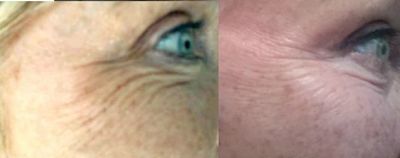 My retinol results: smoother lines and a healthier-looking tone around the eyes.
Retinol is a form of vitamin A and one of the better-studied skincare ingredients for improving the look of aging skin.
When I first tried retinol in my 40s, the biggest change I noticed was in that crepey texture around my eyes and upper cheeks. Over time, everything looked smoother and a little firmer.
With regular use, retinol may help soften the look of fine lines, smooth rough texture, and make old sun spots look less noticeable. I also like adding a little gentle exfoliation a few times a month when my skin can handle it because it helps with that dull, rough look.
You don’t need the strongest formula to see a difference. For me, slow, gentle, and consistent has always worked better.
Who should (and shouldn’t) use retinol over 40?
If you’re noticing fine lines, uneven texture, or dull-looking skin, retinol may be worth trying. But if your skin has gotten drier or more sensitive with age, just take it slow.
I used retinol for years without any real problems. But as I got older, my skin started looking drier and a little more saggy. I never had the usual redness, burning, or peeling, so I didn’t immediately blame the retinol. I actually backed off several skincare products before I finally realized retinol was the one causing the problem for me.
If your skin is already irritated, peeling, sunburned, or reacting to another product, I’d give it a break before adding retinol. And if you have a skin condition or you’re not sure whether retinol is a good fit for you, that’s a good time to check with a dermatologist.
How I use retinol for wrinkles (simple routine)
Here’s the simple way I use retinol without overdoing it:
- I use it at night, after cleansing with a gentle, non-stripping cleanser.
- I let my skin dry before applying it.
- I use a small amount and avoid getting too close to the corners of my nose, mouth, and eyes.
- I follow with a rich moisturizer. If your skin is sensitive, the “sandwich method” — moisturizer, retinol, moisturizer — can make it feel gentler.
- If you’re just starting, use it only once or twice a week at first and see how your skin responds before adding more nights.
- In the morning, I always use SPF.
My skin does better when I keep retinol nights simple and don’t pile on extra products.
Retinol formulas: creams, serums & oils
The texture you choose can make a difference, especially if your skin is getting drier or more sensitive with age. I’ve found that some formulas simply feel easier on my skin than others.
Retinol creams
This is usually where I’d start if your skin runs dry. I like creams because they feel more moisturizing and cushioned on the skin.
Retinol serums
These are lighter and usually absorb quickly. If you prefer a lighter feel, this may be a better fit. I’ve also tried this serum which can be mixed with your favorite moisturizer.It’s an easy way to adjust the texture and stretch the product a little further.
Retinol oils
I haven’t personally tried a retinol oil, so I can’t tell you how they compare on my skin. If you prefer oil-based skincare, it may be another option to look into — but this isn’t one I can speak to from experience.
Bottom line:
Don’t get too hung up on whether a cream, serum, or oil is supposed to be “best.” I’d choose the texture your skin actually likes and that you can use consistently.
Retinol vs retinal vs tretinoin
I started with gentle, over-the-counter retinol, and now I use retinal (retinaldehyde). For me, retinal gives me steady results without leaving my skin overly dry or irritated.
Retinol
Usually the gentler place to start. If your skin is dry or sensitive, this may be easier to work into your routine slowly.
Retinal (retinaldehyde)
Retinal is converted to retinoic acid in fewer steps than retinol, so it may work a little faster. But I wouldn’t assume stronger or faster is automatically better, especially as skin gets drier with age. I learned that the hard way. If you’re wondering whether retinal is worth the switch, I compare both on my Retinal vs Retinol Over 50 page.
Tretinoin (Retin-A)
Tretinoin is prescription-only. It’s more potent than over-the-counter retinol and retinal, but it can also be more irritating. Since it’s a prescription medication, this is one I’d leave to your dermatologist to guide.
How to choose a retinol
If you’re thinking, “OK, but what should I actually buy?”, here’s the simple version — and this is the type of gentle retinal cream I started with.
 I began with a 0.05% cream. My skin handled it well, but I still used it only twice a week that first month. Slow always works better.
If you want help figuring out what to look for on the label, percentages, and packaging, this OTC Retinol Skin Products guide goes into that in more detail.
- Beginner, dry, or sensitive skin: I’d start with a lower-strength cream and see how your skin responds before moving up.
- Very sensitive skin: You may want to look at a gentler alternative like bakuchiol, especially if regular retinol has been hard for your skin to tolerate.
- Already comfortable with retinol: If your skin is doing well, you can stay right where you are or move up slowly. I don’t think stronger is automatically better.
For specific product examples, check out this page on the Best Retinol Creams for Women Over 40 page has the creams and retinal formulas I’d consider for mature skin.
When to moisturize with retinol
You can moisturize before or after retinol. I usually keep it simple and use moisturizer after.
If your skin gets dry or easily irritated, the “sandwich method” — moisturizer, retinol, moisturizer — can make it feel gentler.
The main thing is finding a routine your skin is comfortable with. Whichever method you choose, a good hydrating moisturizer can help keep dryness in check so you can use retinol consistently.
How long does retinol take to work
Retinol is not a quick fix. You may notice your skin looking a little smoother first, but changes in fine lines and uneven tone usually take longer.
For me, the changes have always been gradual. I think it’s better to judge retinol over a few months instead of expecting to see a big difference in a few weeks.
If you want something that works more as a temporary cosmetic fix, I’ve personally found that some instant under-eye tightening serums can help blur or hide the look of fine lines for a while.
Just keep in mind they work very differently from retinol, and I’d be careful with them if your skin is already feeling dry or irritated.
Common side effects + how to avoid irritation
Dryness, flaking, redness, or stinging can happen with retinol, especially when you first start or use it too often.
I never had a dramatic “retinol burn.” My problem was more subtle. As I got older, my skin started getting drier and looking a little more saggy, and it took me a while to realize retinol was part of the problem.
Now I keep retinol nights very simple: gentle cleanser, retinol, moisturizer. I don’t use scrubs, acids, or other strong products on the same night.
If your skin starts feeling tight or unusually dry, or suddenly looks more crepey or saggy, I’d back off and give it a chance to settle before trying retinol again.
Can you mix retinol with vitamin C or acids?
You can use retinol, vitamin C, and exfoliating acids in the same routine, but I don’t like piling them all on at once.
I’ve found my skin does much better when I space stronger products out. I usually use vitamin C at a different time and keep acids off my retinol nights.
My glycolic and lactic acid guide explains how I space those out too.
Whenever I try to do too much at once, my skin lets me know. It starts feeling tight, dry, and just doesn’t look as good. So now I keep retinol nights simple.
If your skin is getting dry or irritated, that’s a good sign to back off and give it fewer actives at one time.
Advanced tips (eyes, neck, natural options)
Using retinol under the eyes
I do use retinol around my eye area, but I’m careful with it because that skin can get dry fast. I stay farther out from the lash line, use a small amount, and always follow with moisturizer or eye cream.
If under-eye lines and crepey texture are your main concern, these eye wrinkle treatment tips go into a few other options too.
Using retinol on the neck
I’ve seen a difference on my neck, but this is another area where I go slowly. If it starts feeling dry or looking irritated, I cut back rather than pushing through it.
If you’re trying to firm up this area without relying on retinol, I’ve also put together other ideas for sagging neck skin.
What about bakuchiol?
I haven’t used bakuchiol the way I’ve used retinol or retinal, so I can’t really compare the results from personal experience. It may be worth looking into if your skin doesn’t tolerate retinol well, but I wouldn’t automatically assume it’s a one-for-one replacement.
Takeaway
Retinol can be a great addition to a mature-skin routine, but I’ve learned that more is not always better.
For me, the biggest difference has come from using it slowly, keeping my routine simple, and paying attention to how my skin actually looks and feels.
If your skin starts getting unusually dry, crepey, or suddenly looks a little more saggy, don’t assume you just need to “push through.” I’d back off and see whether retinol may be part of the problem.
Retinol Skin Products: FAQ's
Got questions about retinol skincare products? We're happy to help. Send your questions here.
Can retinol really reduce wrinkles?
Can retinol really reduce wrinkles?
Retinol can help soften the look of fine lines over time. That’s one reason I’ve kept it in my routine for years, although how much of a difference you see depends on the product, your skin, and how consistently you use it.
How long does retinol take to work on wrinkles?
How long does retinol take to work on wrinkles?
Don’t expect a quick change. I’ve found that smoother-looking texture may show up first, while fine lines and uneven tone take longer. I’d give it a few months before deciding whether it’s doing anything for you.
What strength of retinol is best for wrinkles over 40?
What strength of retinol is best for wrinkles over 40?
I wouldn’t chase the strongest formula. If you’re new to retinol, I’d start on the gentler side and see how your skin handles it before moving up.
Is retinol or retinal better for wrinkles?
Is retinol or retinal better for wrinkles?
Retinal may work a little faster than retinol, but it can also be more irritating. I use retinal now, but if your skin is dry or sensitive, retinol may be the better place to start.
Stay Connected with Me
Want to see what I’m up to? I’ll keep you posted on new products I’m trying, little tricks I’ve discovered, new finds, and a few personal updates too.

About the Author:
Linda Robison is a Certified Facial Fitness Specialist and founder of Anti-Aging Beauty Zone, where she shares practical tips, products, techniques, and at-home options for women over 40. She personally tests many of the methods she writes about.
Experience: Linda spent nearly 15 years as an Anti-Aging Health Advisor at the Life Extension Foundation and has over 30 years of experience testing facial anti-aging techniques, including training in Carolyn’s Facial Fitness. Her work has been featured in GB News and Beauty Box Magazine. You can view her background on LinkedIn and follow her on Pinterest.
Found this helpful? Tap the ♡ in the bottom right corner.
FOLLOW OR SAVE

Stay Connected with Me
Want to see what I’m up to? I’ll keep you posted on new products I’m trying, little tricks I’ve discovered, new finds, and a few personal updates too.
Affiliate disclosure: As an Amazon Associate and affiliate for other brands, I may earn a commission from qualifying purchases, at no extra cost to you. [Read Disclosure.] A quick note: I create the content on this site and sometimes use AI tools for writing and images. I review everything for accuracy, and my before-and-after photos are my own.
Anti-Aging Beauty Zone (ABZ): Small Changes, Big Results!
ALL CONTENT COPYRIGHT© 2013-
ALL RIGHTS RESERVED REGARDLESS OF LINKS OR ATTRIBUTIONS
ALL CONTENT COPYRIGHT© 2013-
ALL RIGHTS RESERVED
REGARDLESS OF LINKS OR ATTRIBUTIONS