- Home
- Skincare Guide
- Skincare Ingredients
- Peptide Wrinkle Cream
Do Peptide Wrinkle Creams Work? What to Expect After 40

Peptide wrinkle creams promise smoother, firmer-looking skin. But if you're over 40 and already using a moisturizer, vitamin C, or retinol, you might wonder if adding another cream is really worth it.
The short answer is yes, peptide creams may help, but don't expect dramatic changes.
They may improve the appearance of fine lines and skin texture over time, depending on the ingredients and formula. But they won't erase deep wrinkles or lift sagging skin.
Are peptide creams worth trying for mature skin?
As we get older, our skin can become drier, thinner, and less firm. Fine lines may look more noticeable, and the skin around our eyes or cheeks can start looking a little crepey.
Here's where a peptide cream might help:
- Dry, crepey-looking skin: I'd look for a moisturizing peptide cream with ingredients like hyaluronic acid, glycerin, or ceramides. These help skin hold moisture, which can make fine lines look less noticeable.
- Deeper wrinkles or sagging: I'd keep expectations modest. Peptide creams won't replace lost facial fat or bone, and I wouldn't count on them to noticeably lift loose skin.
My take: If you're hoping to improve the overall look and feel of your skin, a peptide cream may be worth trying. But if your current skincare routine is already working well, you may not need another product.
What does the research say about peptide creams?
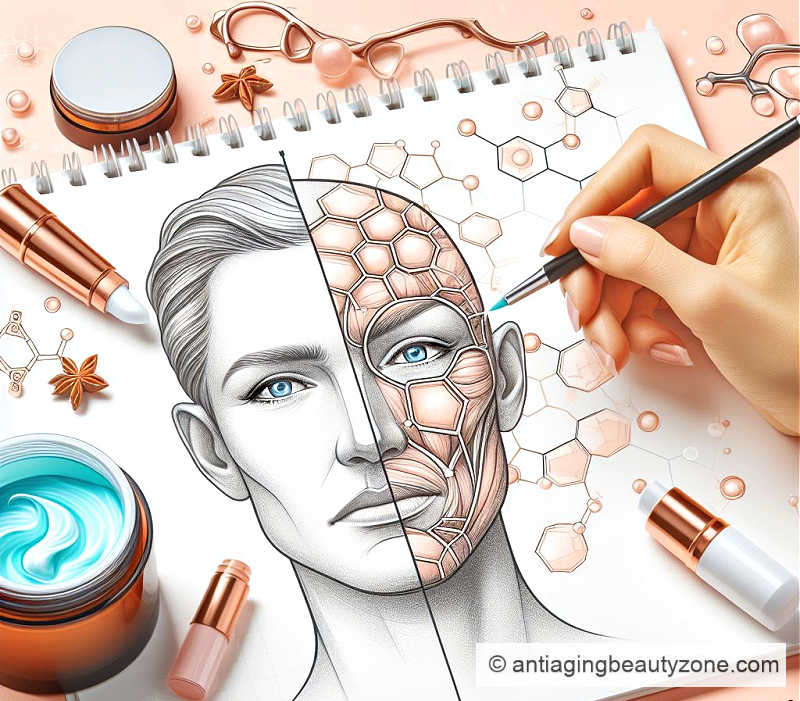
There is some promising research behind peptide skincare, but not all peptides work the same way. And the results aren't always dramatic.
For example, a small study published in the International Journal of Molecular Sciences looked at 22 women between the ages of 40 and 60 who used a skincare formula containing several peptides twice a day for two weeks.
That's interesting because the women were in the same age group as many of us dealing with changes in our skin.
The researchers measured improvements in the appearance of facial and neck wrinkles, including fine lines around the eyes and between the eyebrows.
The formula contained three peptides:
- Biotinyl hexapeptide
- Biotinyl tripeptide
- Ascorbyl succinyl tetrapeptide-21
So, what does this mean for you?
It's encouraging, but it doesn't mean every peptide cream will give you the same results. This was a small study using a specific combination of ingredients, and it didn't establish how well the results would hold up over time.
Some peptides may help your skin make more collagen, which is one reason they're used in wrinkle creams. But there's still a lot we don't know about how well different peptide creams work, especially on deeper wrinkles.
What do peptides do for aging skin?
Peptides are small pieces of protein called amino acids. Some act like little messengers, sending signals that help your skin maintain itself.
Why does that matter as we get older?
Well, our skin naturally makes less collagen as we age. Collagen is one of the things that helps keep skin firm and smooth. Certain peptides may encourage the skin to make more of it, although that doesn't mean a peptide cream can rebuild all the collagen we've lost.
And there's another benefit worth mentioning: moisture.
Many peptide creams also contain moisturizing ingredients that help skin feel softer and look a little plumper. That's especially nice when your skin is getting drier or fine lines are becoming more noticeable.
Just keep in mind that softer, smoother skin doesn't necessarily mean you've made more collagen. Sometimes a good moisturizer deserves much of the credit!
How to choose a peptide wrinkle cream
When shopping for a peptide cream, don't just look for the word peptide on the front of the jar. Think about what you're hoping to improve and what your skin actually needs.
After all, if your skin is dry and crepey, you may need something different from someone who has oily skin but wants to soften a few fine lines.
Choose based on your skin concerns:
Here's what I'd look for depending on your skin issue:
- Dry or crepey-looking skin: I'd look for a moisturizing peptide cream with ingredients like hyaluronic acid, glycerin, or ceramides. These help skin hold moisture, which can make fine lines look less noticeable.
- Fine lines and uneven texture: Consider a cream or serum containing Matrixyl peptides, such as palmitoyl tripeptide-1 and palmitoyl tetrapeptide-7. These are among the peptides studied for improving the appearance of aging skin, although results vary.
- Sensitive skin: Keep it simple. Look for a fragrance-free formula without too many extra ingredients. Even a gentle peptide cream can cause irritation, so it's worth doing a patch test first.
- Combination or oily skin: You may prefer a lightweight peptide serum rather than a rich cream. You can always follow it with your regular moisturizer if you need more hydration.
- Deep wrinkles or sagging: This is where I'd be careful about spending a lot of money. A peptide cream may help your skin look smoother, but it won't replace lost facial volume or give you a noticeable facelift.
Which peptides should you look for?
You don't need to memorize a long list of scientific names. But there are a few worth recognizing:
- Matrixyl peptides: Often used in products aimed at fine lines and skin texture. Matrixyl 3000 contains palmitoyl tripeptide-1 and palmitoyl tetrapeptide-7.
- Copper peptides: Usually listed as copper tripeptide-1. They're used in products designed to support skin repair and improve the appearance of aging skin.
- Other palmitoyl peptides: You'll see these in many anti-aging creams. Different types have different purposes, so don't assume they're all equally effective.
And don't worry if peptides appear farther down the ingredient list. Some are used in very small amounts, so their position doesn't necessarily tell you whether the product will work.
A few things I check before buying:
Look at the whole formula. A good peptide cream should also suit your skin type. Sometimes the moisturizing ingredients make just as much difference to how your skin looks and feels.
Look for actual product testing. It's nice when a company provides information about its finished product, not just general claims about peptides.
Don't assume expensive means better. A higher price doesn't guarantee better results, and a less expensive product isn't necessarily weaker.
The peptide serum I'm trying:
I'm currently using this Matrixyl 3000 DIY peptide serum from Amazon. It contains palmitoyl tripeptide-1 and palmitoyl tetrapeptide-7.
I haven't noticed a big overall change in my skin, but I do think my face looks a little plumper on the days I use it. Then again, I can't say for sure it's the serum. Some days my skin just looks better than others!
And I'll admit, I forget to use it every day, so I haven't really given it a consistent trial yet.
What I like about this type of product is that I can try peptides without buying a whole new face cream. Just be sure to follow the manufacturer's mixing directions rather than assuming you can add it to any skincare product.
Can you use peptides with retinol?
Yes, you can use peptide creams or serums along with retinol. In fact, if you're already using retinol, you may be wondering whether adding peptides is worth the extra step.
Retinol has more research behind it for improving fine lines and wrinkles. Peptides may offer some additional benefits, but that doesn't mean you need both.
So, how should you use them?
For most peptide products, you can use them in the morning or at night. Whether you can layer them directly with retinol depends on the particular formula and how well your skin tolerates it.
If your skin is sensitive, I'd keep things simple:
- Morning: Use your peptide serum or cream, followed by moisturizer and sunscreen.
- Evening: Use your retinol product and moisturizer, following the product directions.
There's no rule that says peptides must be used in the morning and retinol at night. I just think separating them can make your routine easier, especially if your skin gets irritated easily.
What about copper peptides?
Copper peptides are a little different from other peptides, and some manufacturers recommend keeping them separate from certain strong skincare ingredients. I'd check the directions for your particular product rather than assuming all peptide serums work the same way.
And if you're already happy with your retinol skincare routine, there's no reason to rush out and buy a peptide cream just because it's popular.
How long do peptide creams take to work?
Don't expect overnight results from a peptide cream. You may notice softer, more hydrated skin fairly quickly, but changes in fine lines or firmness usually take longer.
I'd give a peptide cream about 8–12 weeks before deciding whether it's making a difference, unless it irritates your skin.
And remember, not everyone will see noticeable results. A lot depends on the product you're using, your skin's condition, and what you're hoping to improve.
Here's a little tip I use sometimes: Take a picture before you start using a new cream, then another one a few weeks later in the same lighting. Sometimes small changes are easier to spot in photos than in the mirror.
Of course, no single cream does everything. Daily sunscreen, a good moisturizer, and a skincare routine that agrees with your skin are still important.
I wouldn't replace products that are already working for me just to make room for a peptide cream. I'd look at it as an optional extra, not something every woman over 40 needs.
Are peptide wrinkle creams worth the money?
When I look at products like peptide creams, I use what I call my Mature Face Evaluation Filter. Basically, I ask three questions:
- What can it realistically do?
- Does it make sense for mature skin?
- Is it worth trying?
For peptide creams, I think the answer is yes, they may be worth trying if dryness, fine lines, or rough texture are bothering you. But I wouldn't spend a fortune on one.
A good moisturizer may give you some of the same smoothing benefits. So before buying another product, think about what you want it to do that your current skincare routine isn't already doing.
And if you give it a fair try but don't notice much difference? There's no reason to keep buying it just because peptides are supposed to be good for aging skin.
Sometimes the best skincare decision is knowing when you don't need another product.
Want to learn more about other skincare ingredients? My Anti-Aging Cosmetics Ingredients Guide covers more ingredients and what they may do for mature skin.
Related Info:
- Retinol Skin Products: What to Know Before Trying Them
- Does Vitamin C Help Wrinkles?
- Antioxidant Facial Moisturizers
You might like these
LifeCell Ingredients: What’s Inside the Cream
See the main LifeCell ingredients, what they may do for your skin, and which well-known actives appear in surprisingly small amounts.
LifeCell Reviews: Does It Really Work and Is It Worth the Money?
I tried LifeCell myself. See what it did for my skin, common complaints, before-and-after notes, and whether I think it’s worth the cost.
Best Organic Facial Moisturizer for Mature Skin
Looking for an organic face moisturizer for mature skin? See my personal favorite, other options for dry skin, and what to check before buying.



Have a question or want to share your experience?

I'd love to hear from you! Visit my Questions & Comments page to ask a question, share a tip, or tell me what's worked for you.
Stay Connected with Me
Want to see what I’m up to? I’ll keep you posted on new products I’m trying, little tricks I’ve discovered, new finds, and a few personal updates too.

About the Author:
Linda Robison is a Certified Facial Fitness Specialist and founder of Anti-Aging Beauty Zone, where she shares practical tips, products, techniques, and at-home options for women over 40. She personally tests many of the methods she writes about.
Experience: Linda spent nearly 15 years as an Anti-Aging Health Advisor at the Life Extension Foundation and has over 30 years of experience testing facial anti-aging techniques, including training in Carolyn’s Facial Fitness. Her work has been featured in GB News and Beauty Box Magazine. You can view her background on LinkedIn and follow her on Pinterest.
Found this helpful? Tap the ♡ in the bottom right corner.
FOLLOW OR SAVE

Stay Connected with Me
Want to see what I’m up to? I’ll keep you posted on new products I’m trying, little tricks I’ve discovered, new finds, and a few personal updates too.
Affiliate disclosure: As an Amazon Associate and affiliate for other brands, I may earn a commission from qualifying purchases, at no extra cost to you. [Read Disclosure.] A quick note: I create the content on this site and sometimes use AI tools for writing and images. I review everything for accuracy, and my before-and-after photos are my own.

Anti-Aging Beauty Zone (ABZ): Small Changes, Big Results!
ALL CONTENT COPYRIGHT© 2013-
ALL RIGHTS RESERVED REGARDLESS OF LINKS OR ATTRIBUTIONS
ALL CONTENT COPYRIGHT© 2013-
ALL RIGHTS RESERVED
REGARDLESS OF LINKS OR ATTRIBUTIONS