- Home
- Skincare Guide
- Cleansers 40+
- Why Makeup Wipes Are Bad
Why Are Makeup Wipes Bad for Your Skin?

Are makeup wipes really bad for your skin? I'm not so sure. Some can cause irritation or leave residue behind, but that doesn't mean everyone needs to avoid them.
I actually like makeup wipes. They're quick, less messy than washing with soap and a washcloth, and some do a great job removing eye makeup.
So why do they get such a bad reputation? Let's look at what the concerns are, when they might matter, and how to tell if your wipes are working well for your skin.
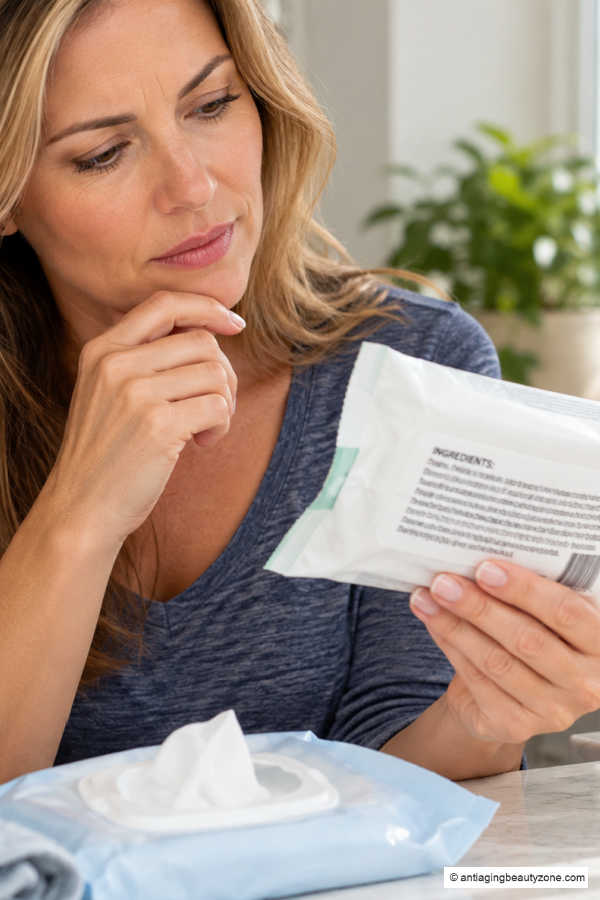
Why makeup wipes can irritate your skin
Not all makeup wipes are the same, and not everyone reacts to them.
But some ingredients can cause irritation, especially if your skin is already dry or sensitive. And sometimes it's not the ingredients at all. It's the rubbing needed to remove stubborn makeup.
An NBC Select article about makeup wipes also discusses these concerns, including why dermatologists say wipes may not be enough to thoroughly cleanse your face.
What I found in my old favorite makeup wipes

I used to think my favorite makeup wipes were a good choice because they contained ingredients like glycerin and rose extracts. But when I looked more closely at the label, I noticed fragrance and several cleansing ingredients, too.
That doesn't automatically make them bad. Glycerin helps hold moisture in the skin, and cleansing ingredients serve a purpose. The one I'd pay closer attention to is fragrance, especially if your skin is sensitive. It can cause irritation in some people.
Note: Here's the funny thing. Despite all those ingredients, I like those wipes! My skin never felt dry or irritated after using them.
So I'm not saying those ingredients are automatically bad. For me, the bigger lesson was that a long list of botanical ingredients doesn't necessarily tell you how gentle a product will be for everyone.
Can makeup wipes dry out your skin?
Some makeup wipes can leave your skin feeling dry or tight, especially if they contain ingredients your skin doesn't tolerate well.
And if you're scrubbing to remove stubborn mascara or foundation, the rubbing can make things worse.
If your face feels tight, stings, or looks red after using a wipe, that's a good sign to try a different makeup remover.
Allergic reactions and breakouts
Some people develop redness, itching, swelling, or a rash after using makeup wipes. Fragrance, preservatives, or other ingredients may be responsible.
If a wipe burns or stings your face, stop using it. That's not something you need to put up with just to remove your makeup.
What about breakouts? Some wipes may not remove makeup and sunscreen thoroughly, especially if you don't rinse afterward. If you're noticing more clogged pores or pimples, it may be worth switching to a rinse-off cleanser and seeing how your skin responds.
Do makeup wipe ingredients matter

Yes, especially if your skin is sensitive. But seeing preservatives or cleansing ingredients on a label doesn't automatically mean a wipe is bad.
Preservatives help keep bacteria and mold from growing in the package. Cleansing ingredients help remove makeup and oil. They serve a purpose.
The important thing is how your skin responds. If a wipe leaves your face red, itchy, or uncomfortable, check the ingredients and consider trying a fragrance-free option.
Better alternatives
If your makeup wipes work well for you, there's no reason to give them up completely. But if they leave your skin irritated or don't remove everything, here are a few other options worth considering.
Gentle cleansers and micellar water
Micellar water is a good option when you want something quick and gentle for removing makeup. I like it because you can use it without a lot of rubbing.
For a more thorough wash, especially if you’re wearing sunscreen or foundation, I’d use gentle facial cleansers made for your skin type. That way you can rinse everything away instead of leaving residue behind.
Double cleansing for heavier makeup
If you wear heavier or waterproof makeup, double cleansing can work really well.
Start with an oil-based cleanser or cleansing balm to loosen the makeup, then follow with your regular face wash.
Natural and homemade options
If you prefer something more natural, you can also try an oil-based remover or one of my homemade face cleanser ideas.
And if you still want the convenience of wipes, see my natural makeup remover wipes guide for other options.
Final: My take on makeup wipes
I actually like makeup wipes! They're easier and less messy than washing with soap and a washcloth, and they do a good job removing my eye makeup.
Despite the concerns I've read about, my favorite wipes have never left my skin feeling dry or irritated.
One thing I do when it's convenient is rinse and dry my face afterward, especially before applying my vitamin C serum or retinol. I just prefer starting with clean skin, without any leftover wipe residue, before applying my favorite actives.
What about you? Do you use makeup wipes? Have you had any problems with them? I'd love to hear your experience in the comments below.
For more beauty routine ideas, see my skincare guide for women over 40.
FAQs:
Are makeup wipes supposed to burn?
Are makeup wipes supposed to burn?
No. If a makeup wipe burns or stings your face, stop using it. Your skin may be reacting to an ingredient, or the rubbing may be irritating it. A fragrance-free makeup remover might be a better choice.
Why are makeup wipes bad for the environment?
Why are makeup wipes bad for the environment?
Many disposable wipes contain synthetic fibers and don’t break down easily. That means they can add to landfill waste and pollution.
You might like these
Blackhead Treatment for Older Skin: What Works After 50
Blackheads on mature skin need a gentler approach. Learn why they still happen later in life and how to clear pores without over-drying or irritation.
Best Organic Facial Moisturizer for Mature Skin
Looking for an organic face moisturizer for mature skin? See my personal favorite, other options for dry skin, and what to check before buying.
Omega-3 Face Cream: Benefits for Skin Health: How-To Use Guide
What can Omega-3 fatty acid face creams do for your skin? What to look for & how to use it.


Have a question or want to share your experience?

I'd love to hear from you! Visit my Questions & Comments page to ask a question, share a tip, or tell me what's worked for you.
Beauty Tips, Product Reviews & Little Things I've Learned
I share practical beauty tips for women over 40, along with products I've personally tested, what I liked (and didn't), and little tricks I've picked up along the way.
Get my latest tips, reviews, and occasional product updates delivered to your inbox.

About the Author:
Linda Robison is a Certified Facial Fitness Specialist and founder of Anti-Aging Beauty Zone, where she shares practical tips, products, techniques, and at-home options for women over 40. She personally tests many of the methods she writes about.
Experience: Linda spent nearly 15 years as an Anti-Aging Health Advisor at the Life Extension Foundation and has over 30 years of experience testing facial anti-aging techniques, including training in Carolyn’s Facial Fitness. Her work has been featured in GB News and Beauty Box Magazine. You can view her background on LinkedIn and follow her on Pinterest.
Found this helpful? Tap the ♡ in the bottom right corner.
FOLLOW OR SAVE
Affiliate disclosure: As an Amazon Associate and affiliate for other brands, I may earn a commission from qualifying purchases, at no extra cost to you. [Read Disclosure.] A quick note: I create the content on this site and sometimes use AI tools for writing and images. I review everything for accuracy, and my before-and-after photos are my own.
Anti-Aging Beauty Zone (ABZ): Small Changes, Big Results!
ALL CONTENT COPYRIGHT© 2013-
ALL RIGHTS RESERVED REGARDLESS OF LINKS OR ATTRIBUTIONS
ALL CONTENT COPYRIGHT© 2013-
ALL RIGHTS RESERVED
REGARDLESS OF LINKS OR ATTRIBUTIONS