- Home
- Skincare Guide
- Brighten Skin
- Why Skin Looks Dull
My Skin Looks So Dull: Why Skincare May Not Be Enough

✅ Quick answer
Skin can look dull when it is dry, dehydrated, covered with dead surface cells, or lacking in circulation and facial tone. After 40, slower cell turnover and changes in the structure underneath the skin can also make your complexion look flatter, grayer, or less reflective—even when you are using good skincare.
Why your skin still looks dull even with good skincare
If you’re looking for the usual dull-skin fixes — exfoliation, brightening ingredients, sunscreen, hydration, and masks — start with my skin brightening guide.
If a mask is what you’re looking for, I love this pearl powder face mask when my skin needs a little extra smoothing and glow. Pearl powder is one of those old-school beauty ingredients that most people never think about.
What does dull skin look like?
Dull skin usually looks flat, gray, tired, or less radiant than usual. What that means it doesn’t seem to catch the light the way healthy-looking, well-hydrated skin does.
That’s what happened to me. I ran into the same problem in my 40s.
My skin still felt smooth, but something seemed off. When I looked back at older photos, I noticed the light used to hit the tops of my cheeks differently. My cheeks looked higher and brighter, and my face seemed to have more of a glow.
That’s when I started wondering if the dull look wasn’t just about skin texture — maybe facial contour had something to do with it too.
I’ll show you how it affects your glow, what exercises helped me, and how to tell if this could be what’s holding your complexion back.
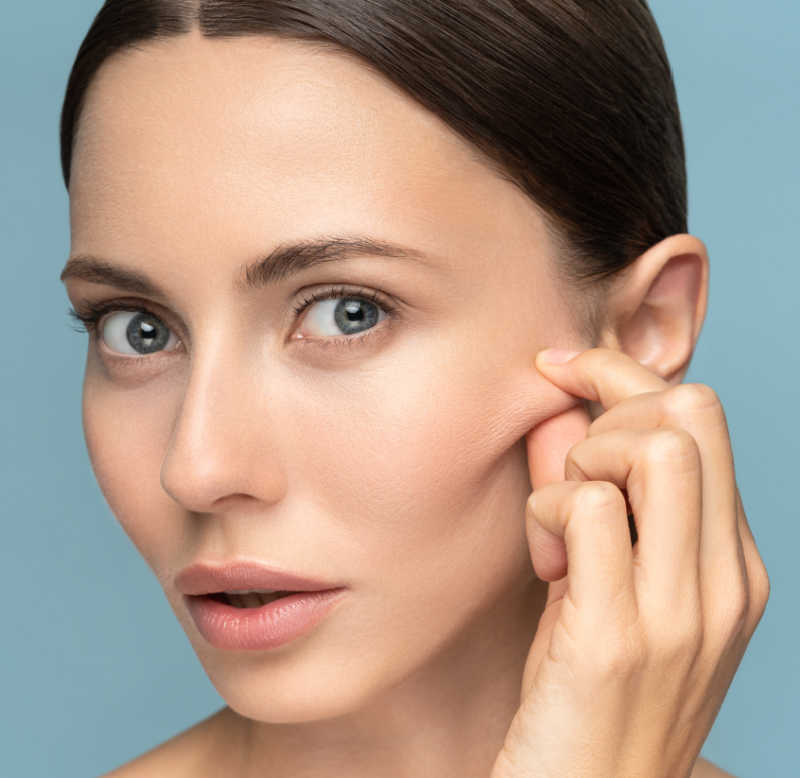
How to fix dull skin when skincare isn’t enough
For years, I used all the usual dull skin fixes—scrubs, peels, microdermabrasion, good moisturizers—and they worked… for a while.
But in my 40s, something changed.
No matter what I used, my skin just didn’t have that same glow. It looked flat. A little gray. Almost like the light wasn’t reflecting the way it used to.
That’s when I realized something important:
It wasn’t just my skin anymore.
It was what was happening underneath it.
Dull skin: Before and After
Before I show you what changed, I want you to see what I was dealing with.
My skin wasn’t dry. I was exfoliating, moisturizing, and using all the right products.
But it still looked… flat. A little gray. Like it had no life to it. Here’s what that looked like:
 Before and after facial exercises: fuller cheeks and a brighter-looking complexion
After a few months of facial exercises, something shifted.
My cheeks looked fuller, my skin looked smoother, and my complexion had more of a natural glow—even though I was about 10 years older in the after photo.
For me, this is when I realized it wasn’t just skincare—it was what was happening underneath it.
What changed: it wasn’t just skincare—it was facial tone
Here’s the part most people don’t think about.
You can exfoliate and moisturize all you want, but if the structure underneath your skin starts to flatten or lose support, your complexion can still look dull.
I noticed this myself.
My skin felt smooth… but it had that “too smooth” look. Almost like a waxy finish instead of a natural glow.
It looked polished—but not healthy.
You could still see the lack of support underneath. And that’s what affects how light hits your skin.
How facial exercises may help dull skin look brighter
Most facial muscles are attached directly to your skin. So when those muscles lose strength over time, your skin has less support.
That’s when things can start to look a little flatter… a little duller.
A simple way to picture it: Think of a ballon.
 When skin has more support, it reflects light better—similar to a full balloon vs one that’s deflating.
When it’s full and round, it reflects light and looks smooth and shiny. But as it deflates, it starts to sag, wrinkle, and lose its glow.
That’s very similar to what can happen in the face.
When I started building that support back up, my skin didn’t just feel better—it looked brighter.
Here’s what I noticed over time:
- My skin reflected light better
- My cheeks looked a little fuller
- My face had more natural color
- My skin looked smoother (not just “polished”)
- That flat, gray look started to fade
It wasn’t instant—but it was noticeable over time. If you want a deeper explanation of how facial muscles support the skin, my facial muscle toning page explains that connection in more detail.
Want to try it yourself? Skip down to the sample facial exercises below.
Best facial exercises to support a brighter look
You don’t need anything complicated—just a few simple movements that help wake up your face and bring back a little natural lift.

Almost any facial exercise can help—as long as it does two simple things:
1. Massage the face
This helps wake up your skin, boost circulation, and give your complexion that fresher look.
2. Build a little support underneath
When you gently work the facial muscles, it can help create a firmer, more lifted look over time.
The sample workout below is a great place to start. It focuses on the cheeks and mid-face, which is where I personally noticed the biggest difference.
Interested in trying more FREE samples? Visit CFF by clicking here…
Does face massage make skin glow?
Even a 1–2 minute massage can help wake up your skin, improve circulation, and make your face look fresher.
I like to do it in the morning or while applying moisturizer. It’s simple, quick, and it fits right into what you’re already doing.
Here’s a quick example you can try:
Video courtesy of Carolyn's Facial Fitness.
The bottom line: Why facial tone affects glow
If you’re exfoliating, moisturizing, and using good products—but your skin still looks flat or tired—it may not be just your skin.
It may be what’s happening underneath it.
Adding facial exercises and massage helped bring back a smoother, brighter look for me, especially around the cheek area.
You don’t need to overhaul your routine. Just add one small step and give it time.
Already exfoliating and moisturizing but still not seeing results? This page breaks down key brightening strategies that work alongside facial exercises.
Ready for a full lifestyle glow-up? Try these 12 dull skin fixes that go beyond just skincare.
You might like these
Blackhead Treatment for Older Skin: What Works After 50
Blackheads on mature skin need a gentler approach. Learn why they still happen later in life and how to clear pores without over-drying or irritation.
Minimize Pores: At-Home Tips to Clean Pores and Make Them Look Smaller
Want to minimize pores? There are a lot simple home remedies and makeup tips to create a smoother healthier complexion.
Can You Do Microdermabrasion At Home? What To Expect & Tips
Can you do microdermabrasion at home? Learn what to expect, how to use at-home devices safely, and whether results are worth it over time.


Question: Why does my skin still look dull even though I exfoliate and moisturize?
Question: Why does my skin still look dull even though I exfoliate and moisturize?
Answer: You’re not alone—this is exactly what happened to me. After a certain age, even with a good routine, your skin might still lack that healthy shine. One overlooked reason? Muscle tone. If the underlying facial structure is starting to sag, your skin can look flat and lifeless, even if it's well-moisturized and exfoliated. That’s where facial exercises can make a big difference.
Question: Is it possible to fix dull skin without expensive treatments?
Question: Is it possible to fix dull skin without expensive treatments?
Answer: Yes! I’ve personally seen better results from simple at-home techniques like facial massage, targeted exercises, and rotating gentle exfoliants than I did from some pricey peels and lasers. Don’t underestimate the power of consistent habits.
Question: How often should I exfoliate if I have dull skin?
Question: How often should I exfoliate if I have dull skin?
Answer: That depends on your skin type, but in general, 2–3 times a week is a good starting point. Mature or sensitive skin often does better with gentle exfoliation—like enzyme masks, sugar scrubs, or mild acids (think lactic or mandelic). And don’t overdo it—over-exfoliating can actually make skin look duller.
Question: Do facial exercises really help brighten your skin?
Question: Do facial exercises really help brighten your skin?
Answer: They absolutely helped mine. When facial muscles firm up, they lift the skin slightly and create a smoother surface that reflects light better. Think of it like inflating a balloon—it looks smoother, rounder, and shinier when it’s full. That’s what facial muscle tone can do for your glow.
Question: Can a simple face massage help my skin glow?
Question: Can a simple face massage help my skin glow?
Answer: Definitely. It boosts circulation, evens out oil distribution, and helps bring a natural flush to your skin. I love doing a quick 2-minute massage in the morning or while applying moisturizer—it wakes everything up.
Question: What causes dull skin in your 40s and 50s—even with good skincare?
Question: What causes dull skin in your 40s and 50s—even with good skincare?
Answer: In addition to slower cell turnover and collagen loss, your facial muscles play a surprisingly big role. When those muscles shrink with age, your skin has less to cling to. That flattens the surface, reduces radiance, and can make even healthy skin look tired.
Question: Why does my face look gray or tired even when I'm well rested?
Question: Why does my face look gray or tired even when I'm well rested?
Answer: Dull, grayish skin can be a mix of poor circulation, dehydration, and lack of facial tone. Even if you’re sleeping well, your skin may not be getting enough oxygen-rich blood flow. This is where massage and exercise can help bring color and life back to your complexion.
Question: Can what I eat really affect how bright my skin looks?
Question: Can what I eat really affect how bright my skin looks?
Answer: Absolutely. A diet high in sugar and refined carbs can lead to glycation, which dulls your skin and damages collagen. I notice a difference when I up my veggies, good fats, and hydration—it’s not just about skincare; glow also starts in your gut.
Question: Does dull skin mean I need more collagen?
Question: Does dull skin mean I need more collagen?
Answer: Not necessarily, but collagen loss can be part of it. If your skin feels thinner, drier, and less elastic, you might benefit from supporting your body’s collagen production. Facial massage, vitamin C, protein-rich foods, and yes—collagen supplements—can all help over time.
Have a question or want to share your experience?

I'd love to hear from you! Visit my Questions & Comments page to ask a question, share a tip, or tell me what's worked for you.
You might like these
How to Reduce Puffy Eyes: Causes, Remedies & Treatments
Discover causes of puffy eyes and the best fixes—natural remedies, quick tricks, serums, and medical treatments—in one guide.
Easy Eye Solutions - No Puffy Eyes - Free Shipping - SALE!
Easy Eye Serum for wrinkles, puffiness & crepey - FREE SHIPPING. See my before and after pictures.
7 Under-Eye Serums I Tested for Puffy Eyes (Including Plexaderm)
I tested 7 under-eye serums for puffiness and bags, including Plexaderm and Peter Thomas Roth. See which smoothed best, wore well, and which I’d skip.



Stay Connected with Me
Want to see what I’m up to? I’ll keep you posted on new products I’m trying, little tricks I’ve discovered, new finds, and a few personal updates too.

About the Author:
Linda Robison is a Certified Facial Fitness Specialist and founder of Anti-Aging Beauty Zone, where she shares practical tips, products, techniques, and at-home options for women over 40. She personally tests many of the methods she writes about.
Experience: Linda spent nearly 15 years as an Anti-Aging Health Advisor at the Life Extension Foundation and has over 30 years of experience testing facial anti-aging techniques, including training in Carolyn’s Facial Fitness. Her work has been featured in GB News and Beauty Box Magazine. You can view her background on LinkedIn and follow her on Pinterest.
Found this helpful? Tap the ♡ in the bottom right corner.
FOLLOW OR SAVE

Stay Connected with Me
Want to see what I’m up to? I’ll keep you posted on new products I’m trying, little tricks I’ve discovered, new finds, and a few personal updates too.
Affiliate disclosure: As an Amazon Associate and affiliate for other brands, I may earn a commission from qualifying purchases, at no extra cost to you. [Read Disclosure.] A quick note: I create the content on this site and sometimes use AI tools for writing and images. I review everything for accuracy, and my before-and-after photos are my own.
Anti-Aging Beauty Zone (ABZ): Small Changes, Big Results!
ALL CONTENT COPYRIGHT© 2013-
ALL RIGHTS RESERVED REGARDLESS OF LINKS OR ATTRIBUTIONS
ALL CONTENT COPYRIGHT© 2013-
ALL RIGHTS RESERVED
REGARDLESS OF LINKS OR ATTRIBUTIONS