- Home
- Products & Reviews
- LifeCell Worth It?
LifeCell Reviews: Is It Worth the Money?

✅ Quick answer
For me, LifeCell was not worth the money. I used it for a few weeks and didn’t notice enough improvement to justify the price. It did make my skin feel moisturized and can give a temporary smoothing effect, but I saw it more as an expensive moisturizer than a strong anti-aging treatment.
Below, I’ll show you what I noticed, what other users complain about, whether LifeCell is legit, and what I think it realistically does for the skin.
If you want a full breakdown of the ingredients and what each one does, you can see that here.
LifeCell pros, cons, and complaints
The reviews I found were mixed, but the same pros and complaints came up repeatedly.
Pros:
- Worked well as a moisturizer
- Helped make their complexion look better instantly
- Helped reduce the look of wrinkles instantly
Cons:
- Worthless compare to the cost → Not worth the cost
- No changes → Little or no noticeable change
- When they stopped using it, the skin returned to its normal state
- Too expensive for just a moisturizer
- Caused breakouts
- Peeled or rolled off, especially when applying makeup or other products on top
- Too drying
- Issues with cancelling order and/or auto-renewals
Lifecell reviews: does it really work?
When you look at LifeCell reviews, one thing stands out right away — they’re very mixed.
Some people say it makes their skin look smoother and more hydrated, while others say they didn’t see much change at all.
That was close to my experience too. I noticed some moisturizing and temporary smoothing, but not enough visible change to make me feel it was worth the price.
LifeCell is marketed as an anti-aging cream, but it doesn’t work anything like the instant tightening products I’ve tested (like Plexaderm or Peter Thomas Roth FirmX).
So if someone is expecting that quick, visible smoothing effect, they may feel like it “doesn’t work” even though it’s a different type of product.
What does LifeCell do for your skin?
LifeCell is designed mainly to moisturize, temporarily smooth the look of fine lines, and blur some unevenness with light-reflecting ingredients.
It also contains anti-aging ingredients, but the formula doesn’t work like an instant tightening product.
Does LifeCell contain expensive ingredients like retinol?
LifeCell does contain familiar anti-aging ingredients such as retinol, peptides, hyaluronic acid, DMAE, and vitamin C.
But the ingredient name alone doesn’t tell you how strong the formula is. Some of the better-known actives appear in very small amounts.
I break down the full ingredient list here: LifeCell Ingredients: What’s Inside the Cream
Is Lifecell legit or a scam?
Yes, LifeCell is a legitimate skincare product. The bigger question is whether it works well enough to justify the price.
In my experience, it behaved more like a moisturizer with temporary smoothing than a dramatic anti-aging treatment. That difference in expectations may explain some of the negative reviews and complaints.
LifeCell before and after: what I noticed
I only tried LifeCell for a few weeks, but I didn’t notice enough visible change to feel that it made a meaningful difference in my skin.
I also wasn’t able to find consistent before-and-after results that clearly showed dramatic long-term changes.
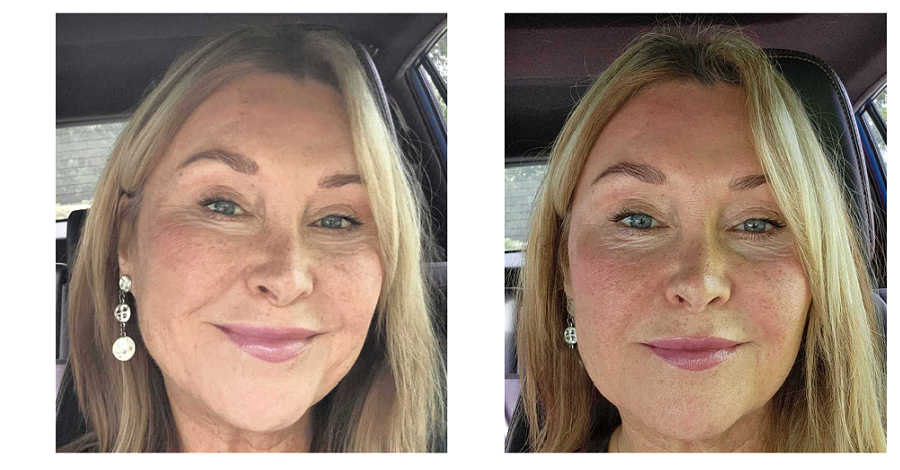 LifeCell Before and After.
What does LifeCell cost?
LifeCell has historically been a high-priced skincare product. When I bought it, a 2.54-ounce bottle was around $189.
The company markets it as an all-in-one product meant to replace several separate skincare steps, but for me, the results did not justify that price.
So, is Lifecell worth the money?
For me, no. I didn’t see enough improvement to justify the price.
It did make my skin feel moisturized and temporarily smoother, but I didn’t see the kind of visible anti-aging results I would expect from a product that cost close to $200 when I bought it.
Some people may still like it as an all-in-one moisturizer, but based on my experience, I would not buy it again at that price.
Want to try it without losing money? Here's a tip:
Before you buy, check the current refund and auto-renewal terms carefully. Policies can change.
If you do order it, save your receipt and note the return deadline so you don’t miss the refund window if it doesn’t work for you.
Looking for more skincare reviews and buying guides? See my Anti-Aging Skincare and Beauty Product Reviews.
You might like these
LifeCell Ingredients: What’s Inside the Cream
See the main LifeCell ingredients, what they may do for your skin, and which well-known actives appear in surprisingly small amounts.
What is Hyaluronic Acid: How to Use & Apply for Plumper, Bouncier Skin
What is hyaluronic acid serum and how to benefit from this anti-aging skin care ingredient.
Why Face Oil Made My Skin Look Worse (And How to Use It Correctly)
Why face oil made my skin look worse—and the simple fix that changed everything. How to use it right for smooth, non-greasy skin.


Stay Connected with Me
Want to see what I’m up to? I’ll keep you posted on new products I’m trying, little tricks I’ve discovered, new finds, and a few personal updates too.

About the Author:
Linda Robison is a Certified Facial Fitness Specialist and founder of Anti-Aging Beauty Zone, where she shares practical tips, products, techniques, and at-home options for women over 40. She personally tests many of the methods she writes about.
Experience: Linda spent nearly 15 years as an Anti-Aging Health Advisor at the Life Extension Foundation and has over 30 years of experience testing facial anti-aging techniques, including training in Carolyn’s Facial Fitness. Her work has been featured in GB News and Beauty Box Magazine. You can view her background on LinkedIn and follow her on Pinterest.
Found this helpful? Tap the ♡ in the bottom right corner.
FOLLOW OR SAVE

Stay Connected with Me
Want to see what I’m up to? I’ll keep you posted on new products I’m trying, little tricks I’ve discovered, new finds, and a few personal updates too.
Affiliate disclosure: As an Amazon Associate and affiliate for other brands, I may earn a commission from qualifying purchases, at no extra cost to you. [Read Disclosure.] A quick note: I create the content on this site and sometimes use AI tools for writing and images. I review everything for accuracy, and my before-and-after photos are my own.

Anti-Aging Beauty Zone (ABZ): Small Changes, Big Results!
ALL CONTENT COPYRIGHT© 2013-
ALL RIGHTS RESERVED REGARDLESS OF LINKS OR ATTRIBUTIONS
ALL CONTENT COPYRIGHT© 2013-
ALL RIGHTS RESERVED
REGARDLESS OF LINKS OR ATTRIBUTIONS