- Home
- Skincare Ingredients
- Retinol Guide
OTC Retinol Skin Products: How to Pick One That Actually Works

Choosing a retinol at the drugstore shouldn’t feel like chemistry class. If you’ve ever stood there thinking, “Which one actually works?” — you’re not alone. I’ve wasted money on weak formulas too.
Here’s the simple way to shop without getting tricked by fancy labels.

How to tell if a retinol product has enough retinol
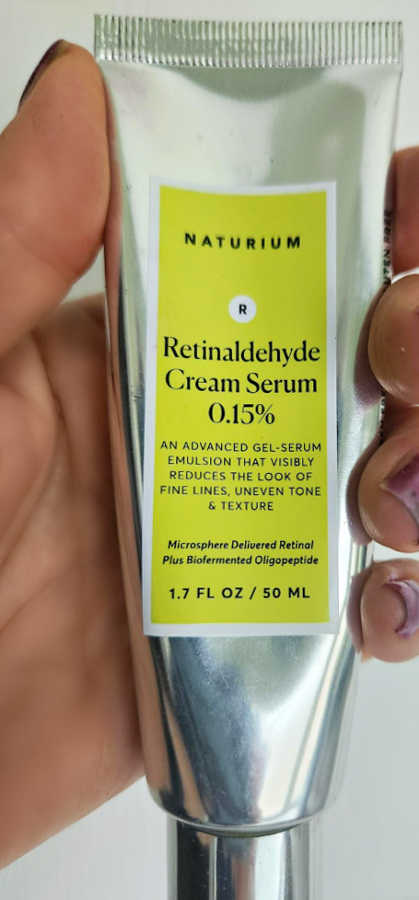
If the brand tells you the percentage (like 0.1%, 0.5%, 0.15% etc.) on the front label that's great.
If they don’t? It might not be a good sign.
Quick tip:
If it doesn't say it on the label, I usually look at the ingredient list. If “retinol” or “retinaldehyde” is way down at the bottom, it’s probably too weak to do much.
I learned this the hard way — lots of creams feel nice but don’t really change anything.
Packaging matters more than people think
Why is packaging so importnat? Because retinol breaks down fast when it hits light and air.
So skip anything in:
- clear bottles
- jars
- wide-open containers
Look for:
- airless pump bottles
- opaque tubes
- dark glass bottles (for serums)
These stay stronger and work longer.
Know your retinol type
Retinol types and what they actually mean.
There are only a few true over the counter (OTC) vitamin A options, and they all work a little differently. Here’s the straight, simple version:
- Retinyl esters – the gentlest and weakest. Good for super sensitive skin, but usually too mild for deep wrinkle changes.
- Retinol – the most common OTC option. A great starting point for most women over 40.
- Retinal (retinaldehyde) – the strongest OTC vitamin A. It converts faster into the active form, so results show up sooner—but it can also be a bit more irritating. If you’re over 50 or your skin runs dry or sensitive, my Retinal vs Retinol After 50 guide explains how to decide whether retinal is really the smarter choice.
- Bakuchiol – not vitamin A, but a nice, gentle alternative if your skin reacts to everything.
My experience:
I started with retinol in my 40s and honestly never saw much of a difference. It wasn’t until I switched to retinal (retinaldehyde) that things finally changed.
I began with 0.05%, moved up to 0.10%, and now I’m using 0.15% with no irritation and steady results.
A few OTC options that are worth trying
A few OTC options that are worth trying
These are just examples — not a big roundup — but they’re solid:
- Naturium Retinaldehyde Cream Serum – This is what I personally use. Gentle, effective, and no irritation for me.
- Obagi Retinol Cream – Time-release formula, great for beginners and sensitive skin.
- Green Cream (Levels 3–9) – Perfect if you like slowly working your way up in strength.
Keep it simple. You don’t need five products.
Don’t make these common mistakes
Keep these in mind when choosing a retinol skin product:
- Choosing the strongest formula “just because”
- Not wearing SPF in the morning
- Mixing retinol with acids on the same night
- Applying it on damp skin (stings like crazy)
- Using retinol every night right away
Slow and steady wins. Your skin will thank you.
Retinol Skin Products: FAQ's
Got questions about retinol skincare products? We're happy to help. Send your questions here.
Question: Can I use retinol if my skin is sensitive?
Question: Can I use retinol if my skin is sensitive?
Answer: Yes — just pick a cream formula or retinaldehyde, go slow, and moisturize well. If you want the step-by-step routine, my Retinol for Wrinkles Over 40 guide walks you through it.
Question: Do I need a strong percentage?
Question: Do I need a strong percentage?
Answer: No. Most women over 40 do better with lower strengths and consistency. Weak but steady beats strong and irritating.
Question: What if I already bought a weak drugstore retinol?
Question: What if I already bought a weak drugstore retinol?
Answer: You can still use it — just keep expectations realistic. It’s fine for maintenance or “off nights” when your skin needs something gentler.
Stay Connected with Me
Want to see what I’m up to? I’ll keep you posted on new products I’m trying, little tricks I’ve discovered, new finds, and a few personal updates too.

About the Author:
Linda Robison is a Certified Facial Fitness Specialist and founder of Anti-Aging Beauty Zone, where she shares practical tips, products, techniques, and at-home options for women over 40. She personally tests many of the methods she writes about.
Experience: Linda spent nearly 15 years as an Anti-Aging Health Advisor at the Life Extension Foundation and has over 30 years of experience testing facial anti-aging techniques, including training in Carolyn’s Facial Fitness. Her work has been featured in GB News and Beauty Box Magazine. You can view her background on LinkedIn and follow her on Pinterest.
Found this helpful? Tap the ♡ in the bottom right corner.
FOLLOW OR SAVE

Stay Connected with Me
Want to see what I’m up to? I’ll keep you posted on new products I’m trying, little tricks I’ve discovered, new finds, and a few personal updates too.
Affiliate disclosure: As an Amazon Associate and affiliate for other brands, I may earn a commission from qualifying purchases, at no extra cost to you. [Read Disclosure.] A quick note: I create the content on this site and sometimes use AI tools for writing and images. I review everything for accuracy, and my before-and-after photos are my own.
Anti-Aging Beauty Zone (ABZ): Small Changes, Big Results!
ALL CONTENT COPYRIGHT© 2013-
ALL RIGHTS RESERVED REGARDLESS OF LINKS OR ATTRIBUTIONS
ALL CONTENT COPYRIGHT© 2013-
ALL RIGHTS RESERVED
REGARDLESS OF LINKS OR ATTRIBUTIONS