- Home
- Skincare Guide
- Skincare Ingredients
- Benefits of Kojic Acid
Skin Care Benefits of Kojic Acid

Kojic acid is best known for helping fade dark spots, age spots, and uneven skin tone. But is it worth adding to your skincare routine, especially after 40?
It works by slowing the production of melanin, the pigment responsible for skin color. That may help gradually fade certain types of discoloration and leave your skin looking more even.
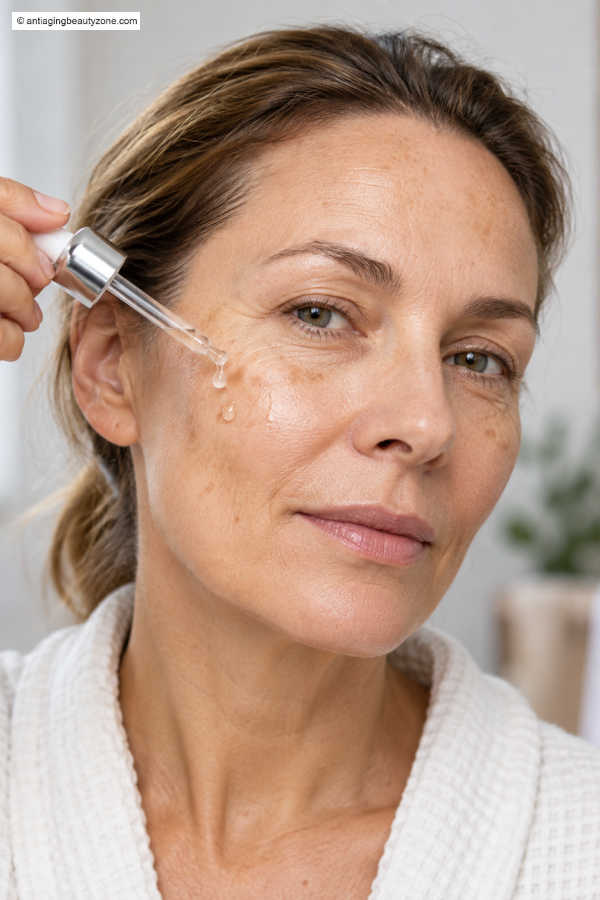
What it won't do is lift sagging skin or erase wrinkles. So if you're considering kojic acid, it helps to know what results are realistic, how to use it, and what to watch out for—especially if your skin is dry or sensitive.
My take
Kojic acid may be worth trying if you're bothered by sun spots, uneven skin tone, or lingering dark marks. But if your skin is dry or sensitive, especially after 40, I'd start slowly. It's not a quick fix, but with consistent use, it may help your skin look more even over time.
What is kojic acid?
Kojic acid comes from certain types of fungi and is also produced during fermentation. It's commonly used in skincare products to help fade dark spots and even out skin tone.
Here's a quick look at what it does, who it's best for, and what to know before trying it.
- Ingredient type: Skin-brightening ingredient that helps reduce excess pigment production.
- Best for: Dark spots, age spots, melasma, post-acne marks, and uneven skin tone.
- Skin types: Suitable for many skin types, but dry or sensitive skin needs extra care.
- Safety: Kojic acid has been evaluated as safe in certain cosmetic products at concentrations up to 1%. However, it can still cause irritation, especially if your skin is sensitive.
ABZ tip: Start slowly and be patient. It may take several weeks or longer to notice improvements in discoloration.
Kojic acid is just one option for uneven skin tone. If you're comparing ingredients, my skincare ingredients guide explains what some of the other popular ingredients do and which ones may be worth trying.
Kojic acid: Skin care benefits
1. Helps fade dark spots and hyperpigmentation
This is what kojic acid is best known for. It slows down an enzyme called tyrosinase, which plays a role in producing melanin (the pigment that gives your skin its color).
With regular use, kojic acid may help fade:
- Sun spots and age spots
- Melasma (patches of darker skin)
- Dark marks left behind by acne
- Other areas of excess pigmentation
Results depend on the type of discoloration, and some spots may respond better than others. If sun spots are a concern, I also share what helped fade my own brown spots, including the treatments I've tried and what I'd do differently.
2. Helps even out skin tone
If dark spots or patches make your complexion look uneven, kojic acid may help your skin look brighter and more balanced. But keep in mind, it works on pigmentation. If your skin looks dull because it's dry or rough, moisturizing or gentle exfoliation may help more.
Not sure whether you're dealing with dark spots or just dull-looking skin? My skin brightening guide explains the difference and what may help with each.
3. Can make mature skin look fresher
Kojic acid isn't going to tighten sagging skin or smooth away deep wrinkles. But reducing the appearance of dark spots can make your overall complexion look clearer and fresher.
Sometimes improving uneven skin tone is enough to make a noticeable difference.
4. An alternative to hydroquinone
Hydroquinone is another ingredient used to fade stubborn dark spots. Kojic acid may be worth considering if you're looking for an alternative.
But that doesn't mean it's automatically gentler or better for sensitive skin. Both can cause irritation, so choosing the right product and starting slowly matters.
How to apply kojic acid
If you're new to kojic acid, my advice is to start slowly, especially if your skin is dry or sensitive. You don't need to use it twice a day right from the beginning to get results.
Start with a patch test
Before applying it to your face, test a small amount on an area of skin, such as near your jawline or behind your ear. Follow the product's patch-testing directions and watch for redness, itching, or irritation over the next several days.
If your skin seems fine, start using it once or twice a week. You can gradually increase how often you apply it, depending on how your skin responds and what the product label recommends.
Where to apply it
You can apply kojic acid directly to dark spots or use a product designed for your entire face. Just avoid the delicate skin around your eyes and lips.
And don't forget your hands and chest! These areas can develop sun spots, too. Just make sure the product is suitable for those areas.
My tip: If your skin starts feeling dry, tight, or irritated, cut back or stop using it. There's no benefit to pushing through irritation, especially when you're trying to improve uneven skin tone.
Who should be careful with kojic acid?
Kojic acid isn't for everyone, especially if your skin is already sensitive or irritated.
I'd be extra careful if:
- Your skin is very sensitive or reactive. Even a low-strength product can cause redness or stinging.
- Your skin is dry, irritated, or peeling. Give your skin time to recover before adding another active ingredient.
- You have an eczema or dermatitis flare. Wait until your skin has calmed down.
- You're already using strong brightening treatments. Check before combining kojic acid with hydroquinone, retinoids, or exfoliating acids.
- You're pregnant or breastfeeding. There's limited safety information, so check with your healthcare provider first.
My advice: If your skin is already irritated, work on getting it comfortable again before worrying about dark spots. Adding another treatment may only make things worse.
Don't forget moisturizer and sunscreen
If you're using kojic acid to fade dark spots, these two steps are just as important as the treatment itself. You want to keep your skin comfortable and protect the progress you're making.
Moisturize
Kojic acid can sometimes leave skin feeling dry or irritated, especially if your skin is already on the dry side.
After applying your kojic acid serum or cream, follow with a gentle moisturizer. You don't need to wait for it to dry completely unless the product instructions say otherwise.
Wear sunscreen every day
This is a big one! Sun exposure can make dark spots worse and undo some of the progress you're trying to make.
Use a broad-spectrum SPF 30 or higher every morning, even if you're using kojic acid only at night. And remember to reapply when you're outdoors.
There's not much point in trying to fade dark spots if you're not protecting your skin from developing more.
Kojic acid creams, serums, or soaps: Which is better?
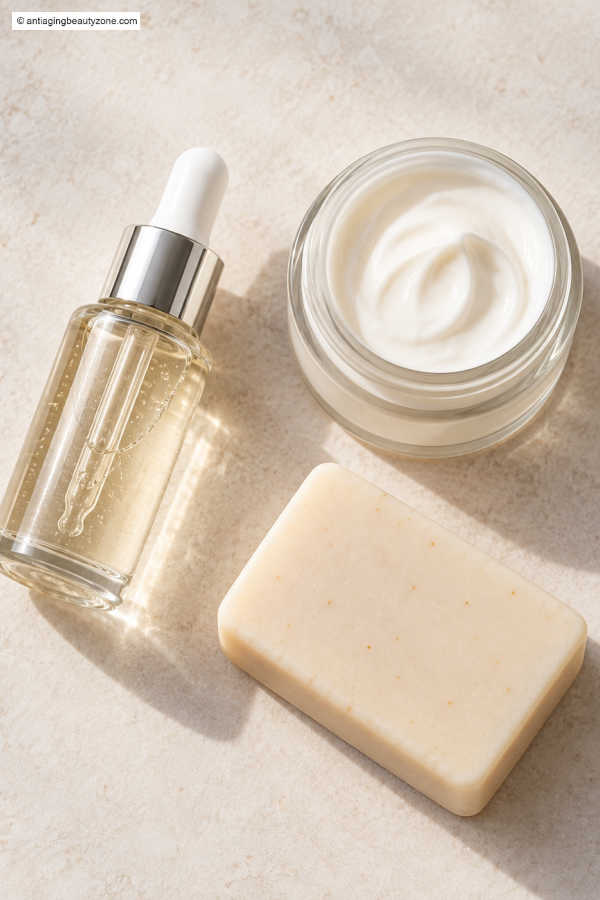
Not sure which type of kojic acid product to try? It depends on where you're using it and what you're trying to improve.
Creams and serums
If you're trying to fade dark spots on your face, I'd lean toward a serum or cream. These stay on your skin longer than a cleanser or soap, giving the ingredients more time to work.
- Serums: Often lightweight and easy to use under moisturizer.
- Creams: May be a better choice if your skin is dry and needs extra moisture.
Start a few nights a week and increase only if your skin tolerates it and the product directions allow.
Kojic acid soap
Kojic acid soap is another option, especially for areas like your hands or body.
But because you rinse it off, it has less contact time with your skin than a leave-on treatment. And some soaps can be drying, particularly if your skin is already sensitive.
My tip: If you're over 40 and dealing with dry or sensitive facial skin, I'd start with a gentle, low-strength cream or serum rather than a kojic acid soap bar.
Tips for getting the best results with kojic acid
A few small changes in how you use kojic acid can make a difference. Here are some things worth keeping in mind.
Store it properly
Kojic acid can break down when exposed to air and light. Keep the container tightly closed and store it away from direct sunlight and heat. And always check the expiration date.
Don't mix too many active ingredients
It's tempting to combine kojic acid with glycolic acid, retinol, or vitamin C, hoping to fade dark spots faster.
But using too many active ingredients at once can irritate your skin, especially if it's dry or sensitive.
My advice? Start with kojic acid alone before adding anything else. That way, you'll know how your skin responds.
Watch for irritation
A little tingling doesn't necessarily mean something is wrong, but it doesn't mean the product is working better, either.
If your skin starts burning, itching, or getting noticeably red, wash the product off and stop using it. Don't try to push through irritation.
Give it time
Dark spots don't usually disappear overnight. You may start noticing improvement after several weeks, but more noticeable changes can take 6–12 weeks or longer.
And don't be discouraged if a stubborn spot doesn't disappear completely. Sometimes fading it enough to make your skin tone look more even is a worthwhile result.
One last tip: Take a picture before you start, using the same lighting each time you check your progress. It's often easier to notice gradual changes in photos than in the mirror every morning.
Possible side effects of kojic acid
Kojic acid has been evaluated as safe in certain cosmetic products at concentrations up to 1%, according to the European Commission's safety assessment. But that doesn't mean everyone will tolerate it, especially if your skin is sensitive.
Possible side effects include:
- Redness or irritation
- Dryness or peeling
- Itching or burning
- A rash or swelling
If you notice irritation, stop using the product and give your skin time to recover. If you develop a persistent rash or swelling, contact a healthcare professional.
One thing to remember: Irritation can sometimes make dark spots worse rather than better. That's why it's worth starting slowly and avoiding kojic acid on broken or irritated skin.
FAQ: Benefits of Kojic Acid
Is kojic acid safe for sensitive skin?
Is kojic acid safe for sensitive skin?
It can be, but not everyone tolerates it well. If your skin is sensitive, look for a lower-strength product, start slowly, and watch for irritation. If your skin is already red, dry, or peeling, I'd wait until it's calm before trying kojic acid.
Can kojic acid prevent wrinkles?
Can kojic acid prevent wrinkles?
No. Kojic acid mainly helps with uneven pigmentation, not wrinkles or sagging skin. But fading dark spots may make your complexion look brighter and fresher.
Is kojic acid safe during pregnancy?
Is kojic acid safe during pregnancy?
There isn't enough research to say for certain whether kojic acid is safe during pregnancy or breastfeeding. I'd check with your dermatologist or healthcare provider before using it.
How long does kojic acid take to work?
How long does kojic acid take to work?
Don't expect overnight results. Some people notice their dark spots starting to fade within several weeks, but more noticeable improvements may take 6–12 weeks or longer.
And remember, stubborn pigmentation may fade without disappearing completely.
You might like these
What is Microdermabrasion: Benefits, Risks, and Treatments
What is microdermabrasion? How it works, benefits, costs, and at-home options for radiant, youthful skin. Learn more today
Lactic Acid Peel – How to Get Glowy Bouncy-Looking Skin Instantly
Get the benefits of lactic acid peels for glowing, youthful skin. Perfect for dry and aging skin, achieve instant results with gentle exfoliation!
Best At-Home Chemical Peel for Hyperpigmentation
Looking for the best at-home chemical peel for hyperpigmentation? Compare glycolic, lactic, and salicylic acid peels for dark spots, melasma, and uneven tone.



Have a question or want to share your experience?

I'd love to hear from you! Visit my Questions & Comments page to ask a question, share a tip, or tell me what's worked for you.
Stay Connected with Me
Want to see what I’m up to? I’ll keep you posted on new products I’m trying, little tricks I’ve discovered, new finds, and a few personal updates too.

About the Author:
Linda Robison is a Certified Facial Fitness Specialist and founder of Anti-Aging Beauty Zone, where she shares practical tips, products, techniques, and at-home options for women over 40. She personally tests many of the methods she writes about.
Experience: Linda spent nearly 15 years as an Anti-Aging Health Advisor at the Life Extension Foundation and has over 30 years of experience testing facial anti-aging techniques, including training in Carolyn’s Facial Fitness. Her work has been featured in GB News and Beauty Box Magazine. You can view her background on LinkedIn and follow her on Pinterest.
Found this helpful? Tap the ♡ in the bottom right corner.
FOLLOW OR SAVE

Stay Connected with Me
Want to see what I’m up to? I’ll keep you posted on new products I’m trying, little tricks I’ve discovered, new finds, and a few personal updates too.
Affiliate disclosure: As an Amazon Associate and affiliate for other brands, I may earn a commission from qualifying purchases, at no extra cost to you. [Read Disclosure.] A quick note: I create the content on this site and sometimes use AI tools for writing and images. I review everything for accuracy, and my before-and-after photos are my own.
Anti-Aging Beauty Zone (ABZ): Small Changes, Big Results!
ALL CONTENT COPYRIGHT© 2013-
ALL RIGHTS RESERVED REGARDLESS OF LINKS OR ATTRIBUTIONS
ALL CONTENT COPYRIGHT© 2013-
ALL RIGHTS RESERVED
REGARDLESS OF LINKS OR ATTRIBUTIONS