Sagging Neck: What Causes Loose Neck Skin (and What Helps)

What causes a sagging neck, loose skin, or that crepey look so many of us start to notice over time?
Quick answer:
Most neck sagging isn’t just about skin. It’s a combination of muscle changes, collagen loss, and how the platysma behaves as we age.
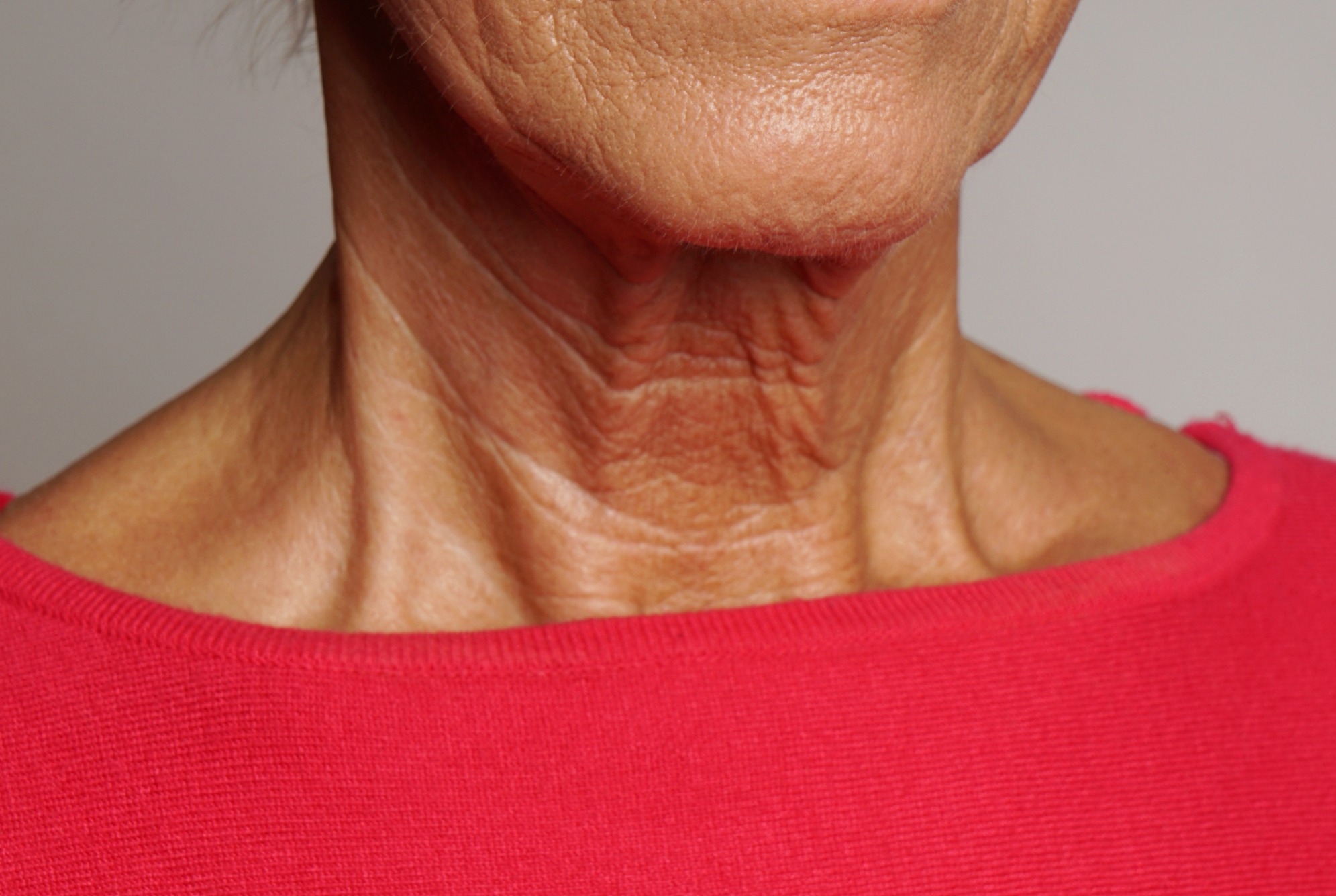
If you’ve been noticing your neck looking a little softer or less defined, you’re not imagining it—and you’re definitely not alone.
The good news is, once you understand what’s happening under the surface, it all starts to make more sense.
If you're mainly looking for simple ways to firm your neck at home, I’ll point you in the right direction as we go.
Here’s what’s going on under the surface.
What is the platysma muscle?
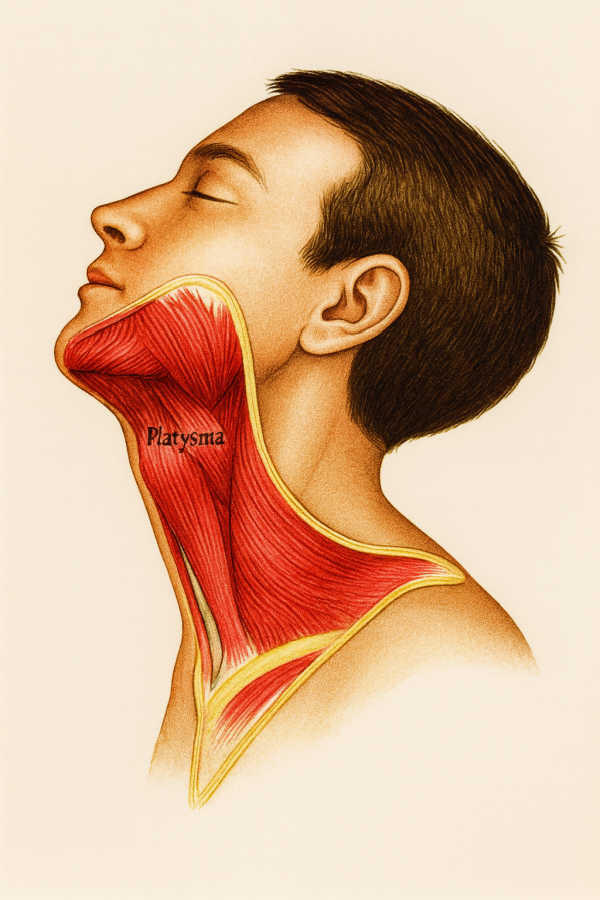
The platysma is a thin, flat muscle that runs from the upper chest and collarbone up along the sides of the neck and under the jaw.
It helps move the lower face and neck, but it also plays a big role in how supported this whole area looks.
As this muscle weakens and changes with age, the neck can start to look looser, more lined, and more saggy.
How platysma bands change the look of your neck
To understand why the neck starts to sag, it helps to look at what happens to this muscle over time.
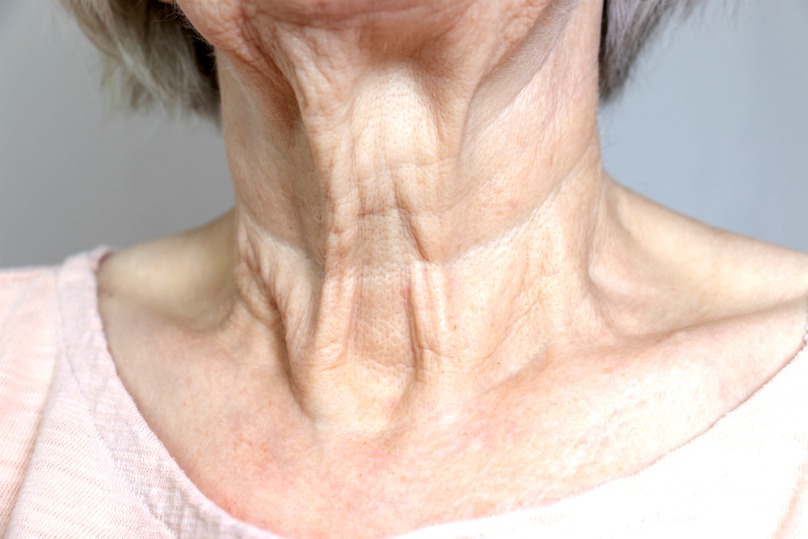
The platysma isn’t anchored the same way other muscles are. It’s often called a “floating muscle,” which means it doesn’t have strong support holding it in place.
As the years go by, this muscle can start to tighten, shorten, and pull downward.
At the same time, the two sides of the muscle begin to separate. That’s when you start to see those vertical lines or bands in the neck—sometimes called neck cording or turkey neck.
When you combine that with thinner skin and less collagen, the whole area can start to look looser, softer, and less defined. If you’ve ever wondered why your neck can look different from one year to the next, this is a big part of the reason.
Neck sagging is often part of a bigger pattern of facial aging — if you want the full picture, take a look at my sagging face guide.
So what can you actually do about sagging neck skin
If you want to start with simple, at-home ways to support your neck, I walk through those step-by-step on my page about natural ways to improve sagging neck skin.
Or, continue reading for the different options—including in-office treatments—so you can see what makes sense for you.
In office & professional treatments
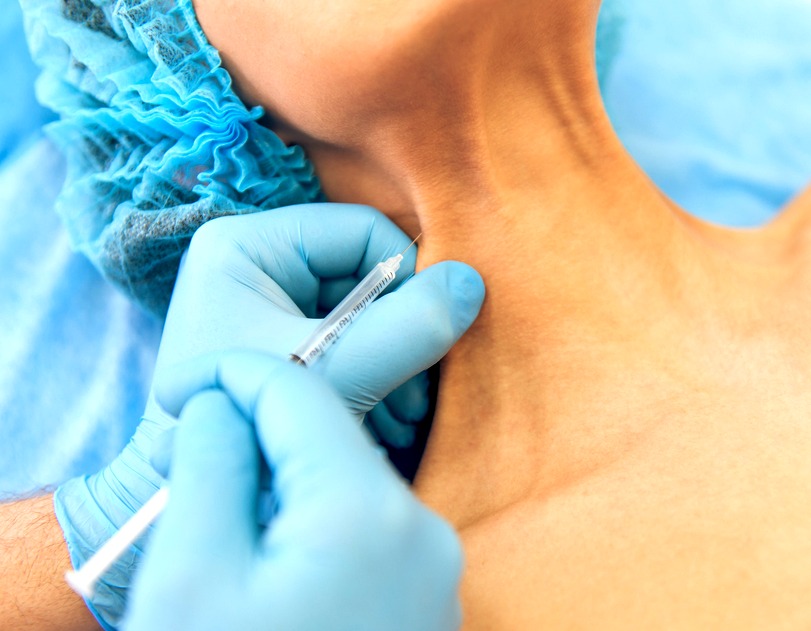
If you’re dealing with sagging neck skin, there are a few different ways to approach it.
Some people start with simple, at-home methods. Others look into professional treatments—especially if the sagging feels more noticeable or stubborn.
You don’t need to jump into anything right away. But it helps to know what’s out there.
Here’s a simple way to break it down:
Most in-office treatments fall into two basic groups:
- Treatments that lift and tighten
- Treatments that improve how the skin looks
Some people combine both, but you don’t have to.
Treatments that lift and tighten
These are the options people usually look at when the neck feels looser, heavier, or less defined and they want more visible firming.
Botox: Relaxes tight neck muscles, especially the vertical bands some people notice over time.
Nefertiti neck lift: A targeted Botox technique that helps soften the jawline and neck area.
Fillers: Add volume under the skin to improve areas that look hollow or saggy.
Ultherapy: Uses ultrasound energy to gradually lift and firm deeper layers of the skin.
Radiofrequency (RF): Uses heat to stimulate collagen and improve firmness over time.
Microneedling with RF: Combines tiny needles and heat to support tightening and smoothing.
Thread lift: Uses dissolvable threads under the skin to create a subtle lifting effect.
Neck lift surgery: Removes excess skin and tightens underlying muscles. This is the most dramatic option, but also the most involved.
Treatments that improve the look of the skin
These don’t usually lift the neck directly, but they can help the skin look smoother, brighter, and more even.
CO2 laser: Resurfaces the skin and helps improve deeper wrinkles and texture.
Erbium laser: A gentler option that improves tone and texture with less downtime.
Fractional laser: Targets small areas of skin to boost collagen while allowing faster healing.
IPL (intense pulsed light): Helps reduce sun damage, redness, and uneven tone.
Which option makes the most sense?
That really depends on what you’re seeing in the mirror.
If the skin feels very loose, or there’s extra fullness under the chin, more advanced treatments (or even surgery) may be the better fit.
But if things are still mild to moderate—and you’re noticing early sagging or softening—this is where many women start looking at simpler options first.
You don’t need to do everything at once.
You can start with one approach, see how your skin responds, and go from there.
Prefer natural options?
If you’re not quite ready for in-office treatments—or you just want to start with something simple—you can begin with natural methods at home. For a more complete at-home approach, see my natural skin tightening tips.
That’s actually where I started.
I found that a combination of gentle exercises and massages along with good skin care treatment (like vitamin C serums) are effective anti-wrinkle solutions that can help improve the look of saggy skin.
Improving skin texture can also help the neck look smoother — see the benefits of gentle exfoliation.
If you’re not sure where to start, I walk you through exactly what I did (and what helped the most) in my Turkey Neck Rescue page.
FAQ: How do you lift sagging neck?
Q: When does neck skin start to sag?
Q: When does neck skin start to sag?
A: It's hard to say what age a neck starts to sag, as this will vary from person to person.
But generally speaking, neck sagging or laxity becomes noticeable in the late 40s or early 50s.
Also, if you take care of your skin by:
- using sunscreen
- massage it and exercise neck muscles
- feed it with good antioxidant creams
- vitamin C serums
You can delay or minimize the appearance of neck sagging.
Q: Do chin straps work for turkey neck?
Q: Do chin straps work for turkey neck?
A: No. Chin straps can't lift and firm underlying muscles that causes turkey neck look. Also, it won't help firm the skin either.
Q: Does Botox get rid of saggy neck?
Q: Does Botox get rid of saggy neck?
A: No. Botox can be used to relax straining muscles that contribute to certain neck lines and wrinkles. But it won't have any effect on sagging neck muscles.
The best candidate for this treatment is someone with fairly firm neck skin. However, if your muscles are weak and the neck area is crepey, Botox won't do much but empty your wallet.
Want More?
I share quick routines, beauty tweaks, and what’s working for me — straight to your inbox. Join the Club and get this free Cheek Shaper Video.


About the Author:
Linda Robison is an anti-aging advisor for women over 40, sharing natural methods, facial exercises, and beauty routines she's personally tested over the years for smoother, firmer-looking skin. She spent nearly 15 years as an Anti-Aging Health Advisor at the Life Extension Foundation and has been testing facial anti-aging techniques for over 30 years, including training in Carolyn’s Facial Fitness. Her tips have been featured in GB News and Beauty Box Magazine. You can also view her background on LinkedIn. For more everyday tips follow along on Pinterest.
Found this helpful? Tap the 💙 in the bottom right corner
SHARE OR SAVE THIS 💗
SHARE OR SAVE FOR LATER:
A Quick Note: I personally create the content on this site but sometimes use AI tools to help with writing and image creation. I do my best to keep everything accurate, helpful, and especially true to my own experience. While some images may be AI-generated, my before-and-after photos are my own. As always, I recommend double-checking anything important, since information can change or be interpreted differently.

Anti-Aging Beauty Zone (ABZ): Small Changes, Big Results!
ALL CONTENT COPYRIGHT© 2013-
ALL RIGHTS RESERVED REGARDLESS OF LINKS OR ATTRIBUTIONS
HOME DISCLAIMER
PRIVACY / AFFILIATE POLICY
SITEMAP CONTACT
ALL CONTENT COPYRIGHT© 2013-
ALL RIGHTS RESERVED
REGARDLESS OF LINKS OR ATTRIBUTIONS