- Home
- Reduce Puffy Eyes
- Malar Bags Vs Festoons
- Massage for Malar Bags & Festoons
Can Massage Help Malar Bags or Festoons?

✅ Quick answer
Massage may help if the puffiness is mostly fluid-related and comes and goes. But it won’t remove true malar bags or festoons if they’re caused by loose skin, fat pad changes, or facial structure. The first step is figuring out what kind of puffiness you’re seeing before you start massaging.
If you've searched online about malar bags or festoons, you've probably seen videos claiming that massage can make them disappear. Other sources say it won't help at all.
The truth is usually somewhere in the middle. But malar bags and festoons are different.
That's why it's important to understand what you're looking at before you spend time massaging the area.
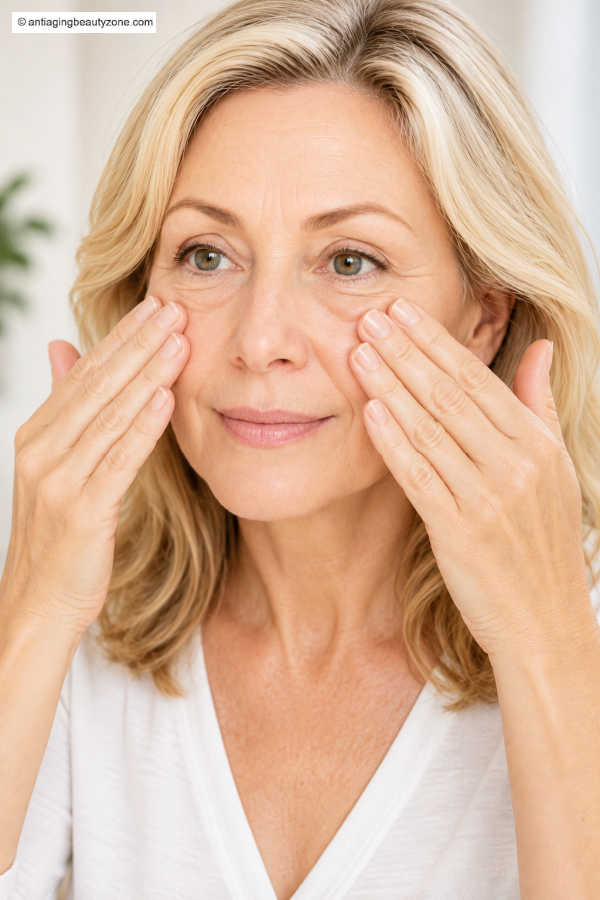
First, know what kind of puffiness you’re seeing
If you're not sure whether you're seeing malar bags, festoons, or regular under-eye puffiness, this page on Malar Bags vs. Festoons can help you tell the difference before you spend time massaging the area.
If the puffiness sits directly under your eyes instead of lower on your upper cheeks, you may find How to Reduce Puffy Eyes more helpful.
Still not sure what you’re seeing?
Before you start massaging the area, watch how the puffiness behaves for a few days. My guide on how to tell if cheekbone puffiness is fluid or malar bags walks you through the clues.
Fluid puffiness
Fluid puffiness is the type most likely to change.
It may look worse in the morning, after salty foods, allergies, crying, or poor sleep. It may also improve later in the day.
This is the type of puffiness where gentle massage may help a little.
Malar bags or festoons
Malar bags and festoons usually sit lower than regular under-eye puffiness, closer to the upper cheek or cheekbone area.
They may look like a soft mound, fold, or draped area. Some days they can look puffier if fluid is involved, but the shape often stays in the same general place.
Massage may help a little if extra fluid is making them look worse. But it won’t remove the underlying mound, fold, or loose skin.
Can massage reduce malar bags or festoons?
Massage may reduce some of the puffiness around malar bags or festoons if fluid is part of the problem, but it won’t remove the actual malar bag or tighten loose skin.
Gentle massage may help if some of the fullness is caused by temporary fluid that comes and goes. That's why some people notice the area looks a little less puffy after a light massage, especially first thing in the morning.
What massage can't do is remove loose skin, shrink fat pads, or change the underlying structure of true malar bags or festoons.
That doesn't mean it's not worth trying.
If massage helps reduce even a little temporary puffiness, your eyes and upper cheeks may look a bit less heavy or tired. Sometimes those small changes are enough to make your whole face look a little more rested.
When gentle massage may make sense
Massage is most likely to make sense when temporary fluid seems to be part of the problem. Here are a few signs to look for:
- Looks worse when you wake up but improves as the day goes on.
- Changes after salty foods, alcohol, allergies, or a poor night's sleep.
- Feels soft rather than firm.
- Improves at least a little with a cool compress or when you're less congested.
If that sounds familiar, gentle massage may help move some of the excess fluid and soften the appearance for a while.
Signs massage is less likely to help
On the other hand, these signs usually point to puffiness that massage is less likely to change:
- Stays in the same place every day.
- Looks more like a fixed mound or loose fold than temporary swelling.
- Doesn't change much from morning to night.
- Doesn't seem affected by sleep, allergies, or other common puffiness triggers.
That doesn't mean massage will hurt the area when it's done gently. It simply means your expectations should be different.
When massage is likely the wrong expectation
Facial massage has its place, but it isn't the answer for every type of puffiness.
If the fullness is mostly caused by loose skin, changes in the fat pads, or your natural facial structure, massage isn't going to make it disappear. That's because you're not dealing with extra fluid that can simply be moved.
More pressure won't work better
It can be tempting to think that pressing harder or massaging longer will give you better results.
In my experience, that's usually the opposite of what happens.
The skin around your eyes and upper cheeks is delicate. Too much rubbing or pressure can leave the area looking more irritated or even puffier than when you started.
Gentle massage should never feel like you're trying to "break up" the tissue or force the swelling away.
It's okay if massage isn't the answer
If massage doesn't make much difference, don't assume you're doing it wrong.
Sometimes the issue simply isn't one that massage can change. That doesn't mean you've wasted your time—it just means you've learned more about what you're seeing and can focus your energy on approaches that are more likely to help.
If you do try massage, keep it gentle and brief
If you decide to try massage, think of it as a way to encourage movement of temporary fluid—not as a way to reshape the area.
If you want to see the gentle technique I use, here’s my facial massage routine for aging skin.
One thing I've learned over the years is that gentle almost always works better than aggressive pressure, especially around the eyes.
Use a light touch and keep it short
Use just enough pressure to move the skin without dragging or stretching it.
You're not trying to push fluid out with force. Gentle, slow movements are usually all that's needed.
A minute or two is plenty. I've found there's no benefit to standing in front of the mirror massaging the same area over and over. If it hasn't responded after a short session, more rubbing is unlikely to change the result.
Don't judge the results after one try
The goal isn’t to make malar bags or festoons disappear. It’s simply to see whether gentle massage helps reduce any temporary puffiness that may be making the area look worse. Even a small improvement may be enough to help your eyes look a little less tired.
What to do if massage isn’t helping
If gentle massage doesn’t change what you’re seeing, don’t keep pushing harder.
That’s usually a sign to step back and reassess what kind of puffiness you may be dealing with.
Look for the pattern
If you’re still unsure whether the puffiness is fluid-related or more fixed, this is where it helps to step back and watch the area for a few days.
My guide on how to tell if cheekbone puffiness is fluid or malar bags walks you through that part more clearly.
Focus on what you can improve
Even if massage doesn’t change the mound or fold itself, you can still help the area look better overall.
That may mean reducing general puffiness, keeping the skin calm and moisturized, using sunscreen, or softening shadows with makeup. If you're looking for a temporary cosmetic fix, you might also like my review of 7 under-eye tightening serums I tested.
Sometimes the goal is not to erase one feature. It’s to help the whole eye area look a little smoother, calmer, and less tired.
Learn more about what you’re seeing
If you're still unsure whether you're looking at malar bags, festoons, or regular under-eye puffiness, Malar Bags vs. Festoons can help you compare the differences more clearly.
That page goes deeper into location, texture, and why some types of puffiness respond differently than others.
Stay Connected with Me
Want to see what I’m up to? I’ll keep you posted on new products I’m trying, little tricks I’ve discovered, new finds, and a few personal updates too.

About the Author:
Linda Robison is a Certified Facial Fitness Specialist and founder of Anti-Aging Beauty Zone, where she shares practical tips, products, techniques, and at-home options for women over 40. She personally tests many of the methods she writes about.
Experience: Linda spent nearly 15 years as an Anti-Aging Health Advisor at the Life Extension Foundation and has over 30 years of experience testing facial anti-aging techniques, including training in Carolyn’s Facial Fitness. Her work has been featured in GB News and Beauty Box Magazine. You can view her background on LinkedIn and follow her on Pinterest.
Found this helpful? Tap the ♡ in the bottom right corner.
FOLLOW OR SAVE

Stay Connected with Me
Want to see what I’m up to? I’ll keep you posted on new products I’m trying, little tricks I’ve discovered, new finds, and a few personal updates too.
Affiliate disclosure: As an Amazon Associate and affiliate for other brands, I may earn a commission from qualifying purchases, at no extra cost to you. [Read Disclosure.] A quick note: I create the content on this site and sometimes use AI tools for writing and images. I review everything for accuracy, and my before-and-after photos are my own.
Anti-Aging Beauty Zone (ABZ): Small Changes, Big Results!
ALL CONTENT COPYRIGHT© 2013-
ALL RIGHTS RESERVED REGARDLESS OF LINKS OR ATTRIBUTIONS
ALL CONTENT COPYRIGHT© 2013-
ALL RIGHTS RESERVED
REGARDLESS OF LINKS OR ATTRIBUTIONS