- Home
- Lower Face
- Can Weight Loss Make Jowls Worse
Can Weight Loss Make Jowls Worse After 40?

If you’ve ever lost weight and thought, “Why do my jowls suddenly look worse?” — there’s a real reason for that.
Yes, weight loss can make jowls look worse or more noticeable. I find this especially true after 40, when the face may lose fullness faster than the skin can adjust.
But it’s not because you did anything wrong, and it doesn’t mean your skin is ruined.
If your whole jawline—not just the jowl area—is starting to look softer, my guide on lower face sagging explains what’s really going on and how to support it.
In many cases, it comes down to losing fullness in the cheeks and how that changes the look of the lower face.
Below, I’ll explain why jowls can look worse after weight loss and what may help.
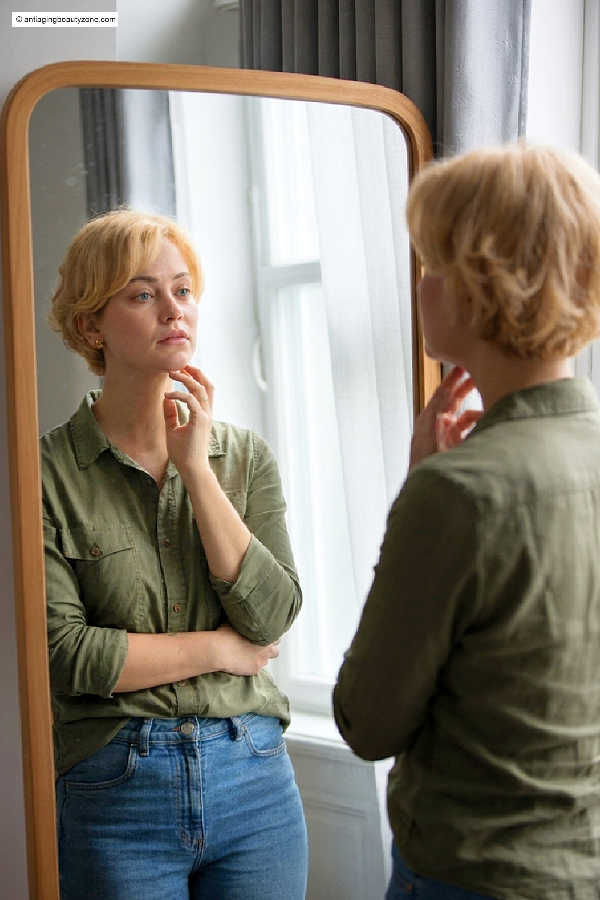
Can weight loss make jowls look worse?
Yes. Jowls after weight loss can look more noticeable when the cheeks and lower face lose fullness. After 40, the skin may not tighten as quickly, so the jawline can look looser or softer.
But that’s only part of the story. It also helps to understand why the change happens.
Here are a few reasons this can happen:
Why jowls can look worse after weight loss
Several changes may be happening at the same time:
Loss of cheek volume: When the cheeks lose fullness, the lower face may look less supported and the jowls can stand out more.
Less skin elasticity after 40: The skin may not snap back as quickly after weight loss, so some looseness can remain.
Changes in facial shape: A slimmer face can make loose skin around the jawline easier to see.
Faster weight loss: Rapid weight loss may make changes in the face look more sudden. This can also happen with weight-loss medications such as Ozempic.
This is the part most people don’t realize.
The cheeks help shape the whole face. When they lose fullness, changes around the jawline may become easier to see.
But when you lose volume in the cheeks, it can create a more “deflated” look… and that’s when jowls tend to stand out more.
So it’s not just about sagging—it’s about where support has been lost.
Jowls before and after weight loss: what may change
Before weight loss, fullness around the face and jawline may partly hide loose skin. After weight loss, the face may look slimmer, but the jowls can also become easier to see.
This doesn’t happen to everyone. It depends on how much weight you lose, how quickly you lose it, your skin elasticity, and where your face naturally carries fat.
Some people do see more jawline definition after losing weight. But if loose skin or lost cheek fullness is the main issue, weight loss may not get rid of the jowls.
What actually helps and what doesn’t
Once you understand what’s happening, the next step is to look at the whole lower face—not only the jowl area.
What may help
- Losing weight slowly and steadily when possible
- Keeping the skin well moisturized
- Using sunscreen regularly
- Gentle facial massage
- Facial exercises done consistently
What usually doesn’t help much
- Focusing only on the jawline
- Expecting a quick fix
- Ignoring changes in the cheeks and mid-face
- Expecting skincare to replace lost facial volume
I go into that more in my pages on cheek exercises and simple at-home routines that help lift and support the lower face.
Will losing weight always make jowls worse?
No. Some people notice a slimmer, more defined jawline after losing weight. Others notice that loose skin or jowls stand out more.
It depends on your age, skin elasticity, facial shape, how much weight you lose, and how quickly you lose it.
So while weight loss can help reduce fullness around the lower face, it does not always get rid of jowls.
If you’re looking for practical next steps, start with my page on jowl lift without surgery.
A lot of it comes down to how the cheeks, skin, and lower face look together. When the cheeks lose fullness, the jawline may look softer. You may even notice a difference when you gently lift the cheek area with your fingers.
Gentle cheek exercises, light massage, moisturizer, and sunscreen may help the face look a little more toned and supported over time. They cannot replace lost facial fat or remove loose skin, but they may still improve the overall look of the area.
Want a simple place to start?
I share one of my favorite cheek-lifting exercises (with a short 1-minute demo) in my newsletter—it’s easy to follow and a great place to begin if your lower face is starting to look a little softer.
FAQs
Will my jowls go back to normal after weight loss?
Will my jowls go back to normal after weight loss?
They may look a little better after your weight has been stable for a while, especially if your skin still has good elasticity. But the result depends on your age, facial structure, and how much weight you lost.
Does slower weight loss help prevent jowls?
Does slower weight loss help prevent jowls?
Slower weight loss may give the skin more time to adjust. But it cannot completely prevent jowls caused by loose skin, age-related changes, or lost facial volume.
Do facial exercises really help?
Do facial exercises really help?
Facial exercises may help improve muscle tone and definition, especially around the cheeks and lower face. But they cannot replace lost fat or completely tighten loose skin.
Will losing weight get rid of jowls?
Will losing weight get rid of jowls?
Not always. Weight loss may reduce fullness around the jawline, but it will not tighten loose skin. In some people, losing facial volume can actually make the jowls easier to see.
Can weight loss help jowls?
Can weight loss help jowls?
It may help if extra fullness around the lower face is hiding the jawline. But if loose skin or lost cheek volume is the main problem, weight loss alone may not improve the jowls.
Stay Connected with Me
Want to see what I’m up to? I’ll keep you posted on new products I’m trying, little tricks I’ve discovered, new finds, and a few personal updates too.

About the Author:
Linda Robison is a Certified Facial Fitness Specialist and founder of Anti-Aging Beauty Zone, where she shares practical tips, products, techniques, and at-home options for women over 40. She personally tests many of the methods she writes about.
Experience: Linda spent nearly 15 years as an Anti-Aging Health Advisor at the Life Extension Foundation and has over 30 years of experience testing facial anti-aging techniques, including training in Carolyn’s Facial Fitness. Her work has been featured in GB News and Beauty Box Magazine. You can view her background on LinkedIn and follow her on Pinterest.
Found this helpful? Tap the ♡ in the bottom right corner.
FOLLOW OR SAVE

Stay Connected with Me
Want to see what I’m up to? I’ll keep you posted on new products I’m trying, little tricks I’ve discovered, new finds, and a few personal updates too.
Affiliate disclosure: As an Amazon Associate and affiliate for other brands, I may earn a commission from qualifying purchases, at no extra cost to you. [Read Disclosure.] A quick note: I create the content on this site and sometimes use AI tools for writing and images. I review everything for accuracy, and my before-and-after photos are my own.
Anti-Aging Beauty Zone (ABZ): Small Changes, Big Results!
ALL CONTENT COPYRIGHT© 2013-
ALL RIGHTS RESERVED REGARDLESS OF LINKS OR ATTRIBUTIONS
ALL CONTENT COPYRIGHT© 2013-
ALL RIGHTS RESERVED
REGARDLESS OF LINKS OR ATTRIBUTIONS